







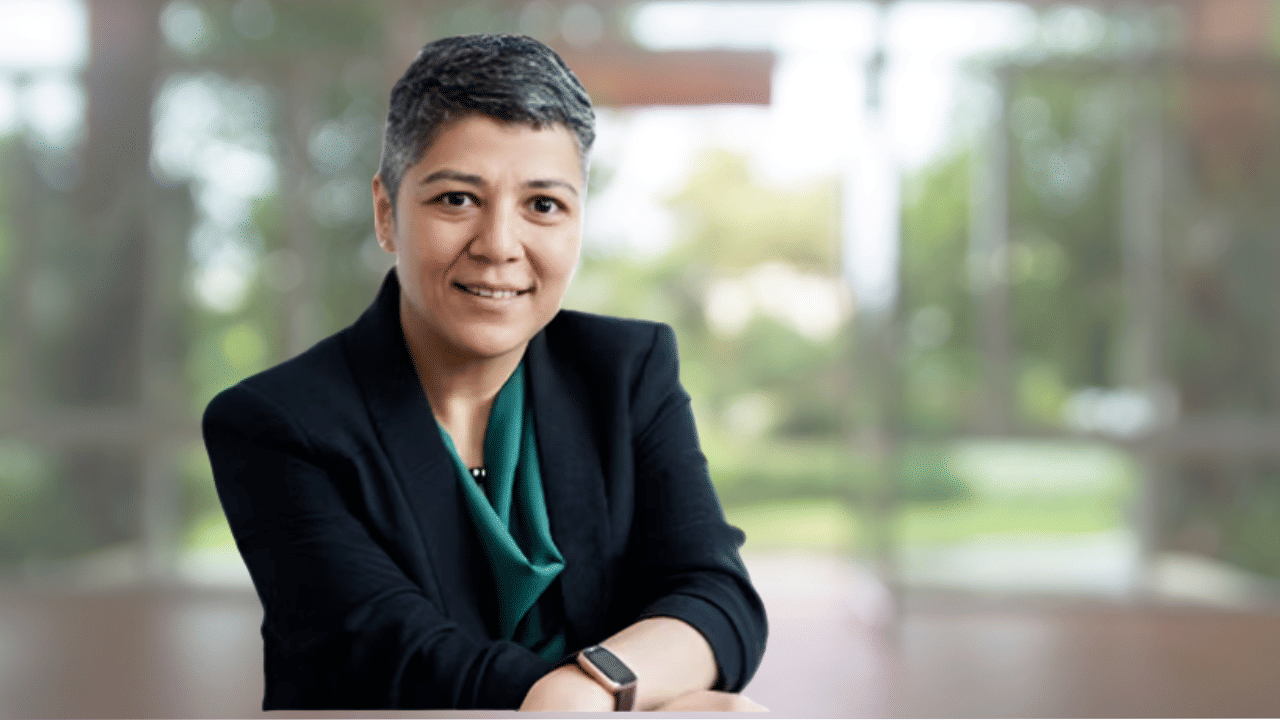
As technology, science and industries increasingly intersect, organisations are rethinking the capabilities they need, and how they build them. For Somya Sugandha, Vice President of Human Resources – APMEA at Thermo Fisher Scientific, this goes beyond traditional hiring and training. It means building a culture of continuous learning, creating opportunities for experiential development and mobility, and bringing business, academia and talent ecosystems closer together.
In this exclusive conversation with us, Sugandha discusses how HR is evolving from managing talent processes to solving business challenges, why future skills will increasingly sit at the intersection of disciplines, and how AI can help people work more effectively and build new capabilities. She also shares her perspective on fairness, responsible AI adoption and what it takes for HR to become a true business enabler.
Read the edited excerpts below:
Purpose, people and the opportunities shaping tangible experiences
Thermo Fisher’s Mission to enable our customers to make the world healthier, safer and cleaner is what truly resonated with me because the impact is very tangible. Whether it is testing food purity, analyzing water or air, developing drugs, or supporting customers through testing and commercialization, our technology is part of that ecosystem.
There was also a personal connection. I’ve had family members deal with different health issues, including breast cancer, so the mission felt very real to me. It wasn’t just a statement; I could see the real-world impact behind it.
From an HR perspective, I saw an opportunity to make that Mission more tangible for our colleagues. People can get caught up in their day-to-day work and lose sight of how their role connects to the bigger purpose.
The APMEA region adds another layer of complexity, with its diversity, growth and different market dynamics. Inorganic growth has been an important part of Thermo Fisher’s growth strategy, making effective integration a critical capability for realizing sustained value.. Our Practical Process Improvement (PPI) business system provides consistency, but integration is not about making an acquired company 100% Thermo Fisher. There is a reason we acquired that business, and we need to preserve and leverage what makes it valuable without losing its identity.
That balance is what makes the region interesting. I previously managed China, while my current scope includes the Middle East and Africa, with their own market and geopolitical complexities. We are also building out the country model and thinking about how to make it work within a matrix organisation.
The regional team brings the customer and market lens, while the divisions bring deep capability and expertise. The opportunity is to bridge the two, bringing together that depth with a stronger understanding of the customer and the market.
How leadership priorities are evolving in a changing HR landscape
Broadly, the HR agenda hasn’t changed; it is still about business partnership. But what has changed is the way that partnership creates impact when it comes to resolving challenges.
Take talent acquisition, for example, as we expand, we need to hire the right people and skills. But in many emerging markets in this region, those skills simply don’t exist at scale. So, we can’t look at it purely as an HR issue, rather have to look at the business impact.
How does the business align with the talent agenda, and how do HR and the business work together to ensure that hiring is not just about meeting a headcount target, but ultimately about helping the business meet its revenue goals?
That changes the frame of reference, and the dialogue becomes much more business-focused, and that is where I see the evolution happening.
The other shift for me has been around HR priorities. There are always multiple things to do from an HR standpoint, but we’ve become much more conscious about asking: what truly matters to the business right now?
Is this aligned with the company’s broader objectives or with the regional leader’s priorities? Is it solving something that will make us more efficient or effective? If not, should I really be spending my time on it?
That is not always easy because you can easily get pulled into operational issues and everything that comes your way. But I’ve become much more intentional about stepping back and asking, “Am I spending my time on the right things?”
That, for me, has been an important part of the evolution, being more conscious about where I focus my time and how directly it connects to the business.
AI, people transformation and the future of high performance
Honestly, I had my own fears about AI too. There was discomfort and uncertainty about what it would mean for my effectiveness and role. But we each go through our own pace and emotional curve before adopting something new.
For me, AI is a powerful opportunity to rethink how work gets done and enable our colleagues to create greater impact. I see more as making people and organisations more efficient. That is also how we are approaching AI at Thermo Fisher, across three broad areas.
The first is operational efficiency, using AI to streamline internal processes and improve productivity. Take meetings: AI can help capture notes, decisions and actions, reducing the time spent on administrative work. The same applies to performance management. You still provide the thinking, but AI can help improvise your content, and make it more constructive. A process that once took two hours could potentially take half an hour. It is not about AI doing the work for you; it is about simplifying the work.
The second is product and service enhancement, where we are integrating AI into our instruments and services to improve customer outcomes.
The third is customer experience, using AI to make interactions and support more seamless.
We are also focused on adoption. Through our collaboration with OpenAI, employees globally have access to a premium version of ChatGPT, and we are building mechanisms to encourage adoption, help people use it effectively and understand how it is being used.
I experienced that value myself when I joined. A senior leader made sure I had ChatGPT access within my first few days. As someone new to the organisation, I found it incredibly useful for quickly understanding unfamiliar terms and concepts without disrupting meetings. For example, people kept referring to “media”, which I understood very differently; in the organisation’s context, it refers to a substance used in laboratory processes. AI helped me bridge that knowledge gap instantly.
Ultimately, I see AI as a tool for enhancement and capability building. Some jobs will change, but the bigger question is whether people are adapting and rebuilding their skills as work evolves. AI is much more of an enabler than something to be afraid of.
The workforce challenges shaping the next decade
Across APAC and the Middle East and Africa, we are navigating very different challenges around age groups, skills availability, career aspirations and expectations. We need the right skills, but also a culture of continuous learning and adaptability.
With the pace of change today, you have to keep learning, experimenting and adapting. At Thermo Fisher, our four values i.e. integrity, intensity, innovation and involvement, provide a strong framework for this.
Integrity is about doing the right thing, without shortcuts. With AI, that means using it responsibly to improve efficiency. Through our OpenAI partnership, employees can use AI securely rather than putting company information into public tools.
Intensity means acting with urgency and anticipating future needs. In HR, our conversations are increasingly about the skills we will need for future growth, not simply how many people we need to hire. If those skills are not available, we need to act now, through university partnerships, internal development or other talent strategies.
Innovation is about using technology to automate repetitive work so people can focus on higher-value activities. Instead of spending hours creating a job description, for example, I can use AI for the initial work and spend more time with the business understanding what it really needs.
Involvement is about giving employees greater ownership of their careers. Through our career platform, employees can find mentors across the organisation based on the skills they want to develop, while our AI tools can suggest practical development opportunities beyond formal training.
For me, that is what capability building looks like today, giving people more tools, choice and ways to learn, so they can move faster and make better decisions about their development.
Building a collaborative ecosystem for the future of work
Our mission to enable our customers to make the world healthier, cleaner and safer anchors how we think about the future. Achieving that will require greater convergence across science, technology and capabilities.
We are moving away from looking at skills in isolation, such as hiring someone with a specific engineering degree, to finding people who can combine capabilities, such as AI and technology with pharma or biotech expertise.
Those skills may not exist at scale today, but they can be built. That is why we are investing more in learning through experiences and mobility, rather than relying only on formal training. We are also working more closely with academia and initiatives such as Singapore’s SkillsFuture to help shape the skills needed for the future.
Universities and industry can also work together to bridge capability gaps through real-world projects, giving students exposure while helping organisations build the talent they will need.
This is also where HR’s role needs to evolve. At Thermo Fisher, we look at capability building less as an HR issue and more as a business opportunity. Our participation in India’s Biotech Innovation Challenge, which brought together government, industry, startups, incubators and the scientific ecosystem, is one example.
The key shift is to ask: are we looking at this as an HR problem, or as a business problem that HR can help solve? That shift can create much stronger momentum across the organisation.
The bold commitment HR leaders need to make for a future-ready workforce
One of my core values is fairness, and it is something I try to uphold consistently. It starts with our policies and hiring practices, but it matters just as much when you have to let people go.
Sometimes you make a strategic decision, and later realise it is not going to work as expected. But can you still be fair, honest and humane in how you handle that?
Another thing I feel strongly about is how, as an HR leader, I partner with the business.
Sometimes HR can become a roadblock, and I say that as an HR person who has seen it happen. You can always hide behind a policy or a process and say, “This can’t be done.” But that doesn’t mean you are solving the business problem.
If business head comes to you with a particular solution, first understand what they are actually trying to achieve. Maybe the solution they have in mind isn’t the right one, and that’s where HR can add value by helping find a better way forward.
For me, being an HR partner is about enabling the business, and our role is to understand the problem, challenge where necessary, and then help the business find a solution that works.