







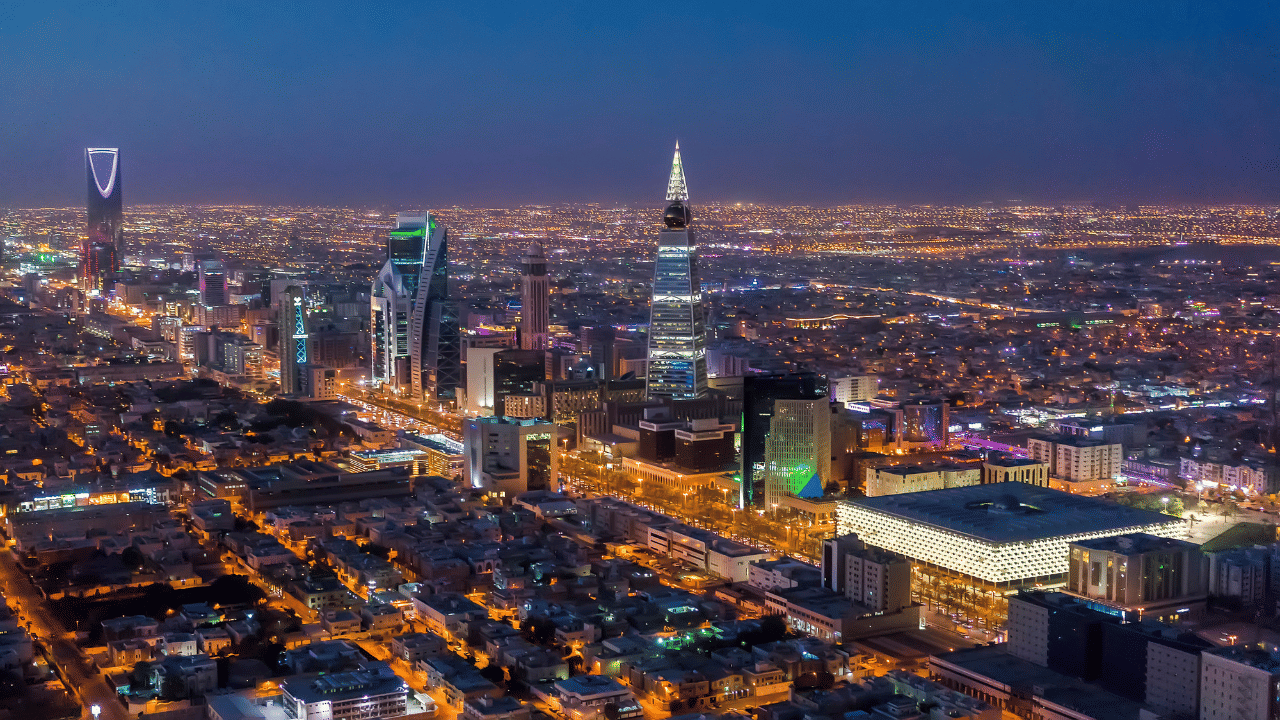
As Saudi Arabia marks its 96th National Day, the Kingdom is looking back on a nation-building journey while increasingly defining its next chapter through talent, technology, industrial development and economic diversification.
The National Day commemorates the unification of the Kingdom in 1932 under the founder, King Abdulaziz Al Saud. Nearly a century later, Saudi Arabia is pursuing another form of transformation, shifting from an economy historically anchored in oil towards one built around a broader industrial base, private-sector growth, national talent, technology and new sources of global competitiveness.
Mohammed Al-Fraih, CEO of STC Bank, described the transformation as a continuation of the ambition that shaped the Kingdom from its foundation.
“On the 96th Saudi National Day, we recall the story of a nation that began with the determination of a leader and continued with the ambition of generations,” Al-Fraih said.
“Today, we live in a prosperous era … in which great ambitions have become reality, the Saudi people have become at the heart of transformation, and the Kingdom has established its presence through its achievements and vision for the future.”
From Vision 2030 to a more diversified economy
A major inflection point came in 2016 with the launch of Saudi Vision 2030, which set out a long-term agenda to reduce dependence on oil revenues, diversify economic activity, strengthen the private sector and develop human capabilities.
The scale of the economic shift is now measurable. According to the 2025 Vision 2030 annual report, Saudi Arabia’s economy has surpassed US$1 trillion, while non-oil activities account for more than half of total output. Real non-oil GDP reached US$892 billion in 2025, compared with a baseline of US$598 billion, while the private sector’s contribution to GDP rose to 51%, against a 44% baseline.
The diversification extends across tourism, technology, logistics, manufacturing, mining, entertainment, culture, financial services and renewable energy. Industrial cities, special economic zones and major investment programmes are being used to attract capital and develop sectors beyond hydrocarbons.
For Osama Alkhunaizi, CEO and board member of Dar wa Emaar Real Estate Development Company, the transformation represents a broader national shift.
“On Saudi National Day, we reflect on the journey of a nation that has made ambition a way forward, development a responsibility, and the future a clear destination we pursue with confidence,” he said.
“The Kingdom is experiencing an exceptional transformation, and at Dar wa Emaar, we are proud of our role as a Saudi company contributing to this journey, striving to ensure that what we build today reflects the ambitions of our nation and the future of its generations.”
Putting national talent at the centre
Economic diversification is also changing the type of talent the Kingdom needs. The Human Capability Development Programme, one of Vision 2030’s programmes, focuses on strengthening basic and future skills, lifelong learning, innovation and entrepreneurship, while aligning education and training more closely with changing labour-market requirements.
The Kingdom is increasingly moving towards a skills-based approach to workforce development. Sectoral Skills Councils are bringing government, employers and training institutions together to align training with industry requirements, while initiatives such as the Skills Accelerator target workforce development across sectors including tourism, industry, transport, retail, energy and mining, finance and healthcare.
The scale of this effort is reflected in labour-market and training initiatives. The Ministry of Human Resources and Social Development (MHRSD) reported that, during 2025, more than 30 localisation decisions covering over 600 professions were issued. Its national Waad training initiative had also provided more than 2 million training opportunities, against a target of 4.5 million by 2028.
But the transformation is not only creating demand for new skills; it is also opening career paths in industries that are relatively new to the Kingdom’s economic landscape.
Raed Albasseet, Group Chief Environment and Sustainability Officer at Red Sea Global, described how the Vision 2030 transformation is creating career pathways that would have been difficult to imagine under the Kingdom’s traditional economic model.
“I did not grow up imagining a career spent between coral nurseries and construction sites, balancing marine science against master planning. But that is what Vision 2030 has asked of people like me, and it is the most meaningful work I have done,” Albasseet said.
He pointed to “every Saudi national trained into a hospitality or engineering career” as part of a wider national story, alongside efforts to regenerate reefs and plant mangroves at destinations such as AMAALA’s Triple Bay.
His experience illustrates another dimension of the talent transition: preparing Saudi nationals not only for established industries, but also for emerging sectors spanning tourism, hospitality, engineering, environmental science and sustainability.
2026: Making AI a national priority
The next phase of that transformation is increasingly being shaped by artificial intelligence. Saudi Arabia designated 2026 as the Year of Artificial Intelligence, following a Cabinet decision in March.
The initiative is intended to accelerate AI adoption, develop national capabilities and strengthen the Kingdom’s position in advanced technologies.
The move builds on the National Strategy for Data and AI, approved in 2020, and a broader effort to develop more than 20,000 data and AI specialists and experts, attracting around SAR75 billion in data and AI investment and creating more than 300 AI & emerging tech startups.
AI is also becoming part of the future-of-work conversation. The Kingdom's workforce agenda increasingly emphasises continuous skills development as technology changes the nature of jobs and the capabilities employers require.
This combination, technology investment alongside human capability, is becoming central to Saudi Arabia’s future-readiness agenda.
Preparing for the next chapter
The transformation underway is therefore broader than economic diversification. It is an attempt to connect industrial development, investment, education, workforce policy, digital infrastructure, sustainability and national talent into a long-term development model.
For Saudi Arabia, the journey from an oil-led economy to a more diversified one is still underway. But the direction is increasingly visible: the Kingdom is investing not only in the industries of tomorrow, but also in the people who will build and lead them.
As Al-Fraih put it, “We are proud of our past, proud of our present, and confident in the future of a nation whose ambition reaches the sky.”
And as Albasseet’s experience illustrates, that future is being shaped in fields that extend well beyond the Kingdom's traditional economic foundations, from AI and advanced technology to tourism, engineering, sustainability and environmental regeneration.
At 96, Saudi Arabia’s National Day is therefore not only a reflection on how far the Kingdom has travelled since 1932. It is also a marker of the capabilities, industries and ambitions it is building for the decades ahead.