







While SMEs form the backbone of Oman’s private sector, contributing over 15% of non-oil GDP and making up more than 90% of registered businesses, most remain early-stage adopters of digital HR tools. This highlights a critical opportunity to bridge gaps and build future-ready people practices.
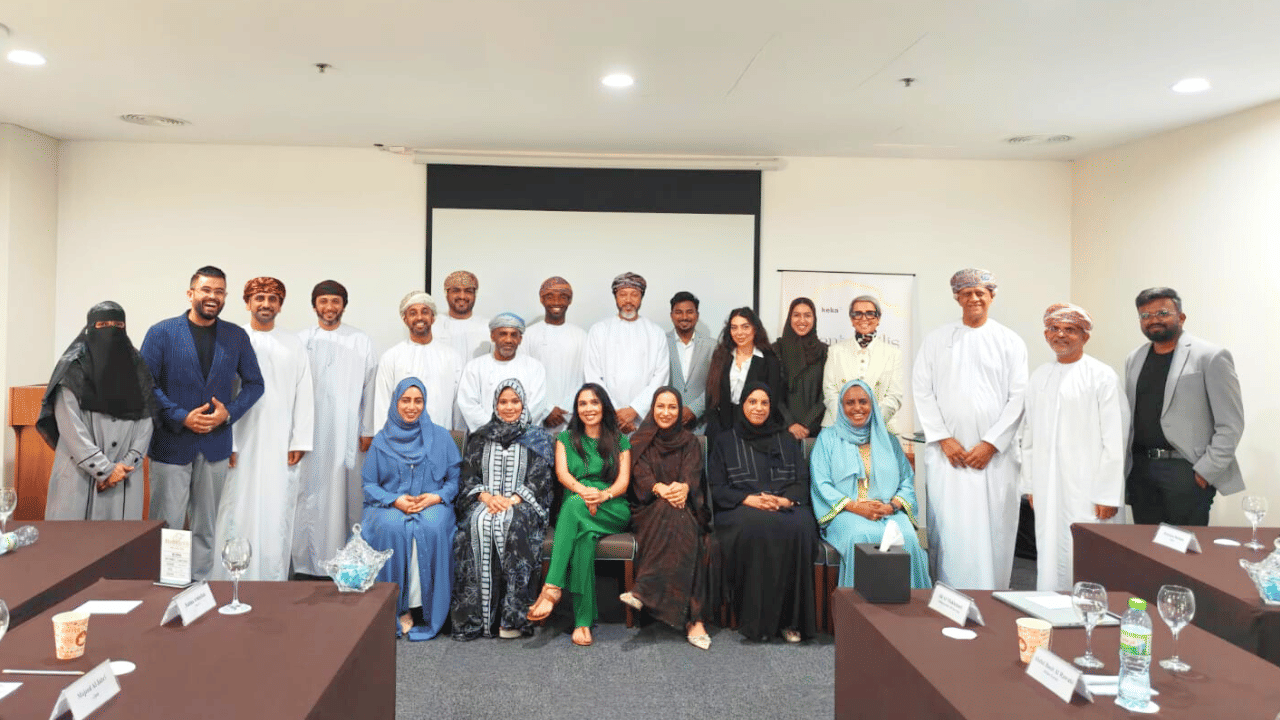
In this Oman edition of Talent Majlis, hosted by People Matters Middle East in collaboration with forward-thinking partner Keka, leaders explored the digital HR readiness of SMEs – a key driver for national competitiveness and workforce development in line with Vision 2040.
"The Talent Majlis aims to bring together leaders in an intimate, high-trust space to explore the future of work, share insights, and shape strategies that drive meaningful transformation," commented Aditya Chopra, Head of New Markets at People Matters, who moderated the session. "It’s about creating practical, people-focused strategies that help organizations navigate today’s challenges and thrive tomorrow."
Praveen Seelam, Regional Head- Middle East, Keka said, "The Oman Talent Majlis for us is more than just an event- it is a collective movement curated by People Matters ME and Keka for HR leaders to come together and reimagine Oman's Digital Transformation in the SME talent space as per the vision 2040. The objective is to help organisations become truely people first and utilise technology efficiently to transform into future- ready organisations. "
Digital HR readiness in Omani SMEs
Sharing their perspectives on digital HR readiness in Oman’s SMEs, the leaders highlighted the leaps, gaps, and roadmaps:
"Omani SMEs need to adopt digital technologies across HR functions, moving from manual to automated, data-driven processes to enhance efficiency, employee experience, and strategic impact. Digital HR readiness supports better decision-making, agility, and innovation. Transformation should be phased, focusing on quick wins like automating recruitment, adopting e-signatures, and leveraging AI for employee engagement," shared AbdulBasit Said AlRawahi, Head of People, Organization and Development at Helios Towers.
Insherah Bawazir, Country Head of HR at Standard Chartered Bank Oman, added, “Digital HR readiness in Omani SMEs is a story of progress and potential-with encouraging leaps, visible gaps, and a roadmap that calls for resilience, capability building, and future-focused leadership.”
"In many ways, Omani SMEs are ahead of the curve when it comes to digital HR readiness. Their agility, lean structures, and fewer governance layers allow them to adopt new technologies quickly, staying up to date and competitive against larger players in the market," shared Luluwa Al Ismaili, HR Director at Zubair Investment Corporation.
Shifa Al Hinai, Head of Human Capital Development at Oman Energy Association (OPAL), noted, “Digital HR readiness will add value to OPAL by strengthening its role as the national workforce enabler. It ensures SME partners comply with labor and data laws and improves transparency in payroll and trainee management. At the same time, it provides OPAL with better visibility into training outcomes, placement rates, and workforce skills analytics, enabling it to shape a competitive Omani workforce.”
"Automation is now growing in Oman. In general, companies are either adopting or exploring ways to automate and integrate their systems. Digital transformation is underway, and SMEs are quickly catching up with global trends," observed Nabila Al Amri, Culture & Employee Engagement HR Specialist at Oman Flour Mills Company.
Sharing practical mechanisms to minimize gaps, Manal Al Raisi, Head of HR at National Finance Oman, said, "Oman SMEs should elevate digital HR readiness to boost productivity, compliance, and alignment with Vision 2040, while tying HR data to financial planning. Key gaps include manual processes, disconnected systems, weak strategy, and data/privacy risks. A phased approach: assess, build foundations, automate and analyze, then optimize and scale, can help SMEs adopt secure, cloud-based HR solutions with measurable impact.”
Key Takeaways
Key insights from the session included:
- Not all SMEs are at the same stage: Some are digital-first; others are still navigating Excel sheets. Digital maturity is less about size, more about leadership mindset.
- Start with what hurts most: Fix daily friction, and adoption will follow.
- Digital HR must be led from the top: CEO, CHRO, or CTO commitment is essential. No leadership push = no lasting change.
- Adoption > automation: Tools only work if people use them. Simplicity and user experience matter, clunky systems won’t stick.
- HR maturity doesn’t depend on headcount: 30-person firms can thrive digitally while 300-person firms struggle. It’s about readiness, not size.
- Compliance nudges, culture sustains: Regulatory pressures spark change, but culture ensures it lasts. Use the moment to redesign, not just digitize.
- HR teams need to empower themselves: Without upskilling and clarity, no tool or system will deliver value.
- Your first dashboard should speak human, not tech: Managers need insights, not spreadsheets in disguise.
- Peer learning accelerates readiness: Sharing real stories helps leaders see that progress is messy but possible.
- Digital transformation isn’t just a system rollout: Technology is only 20% of the challenge. The rest is change, how people work and adapt.