







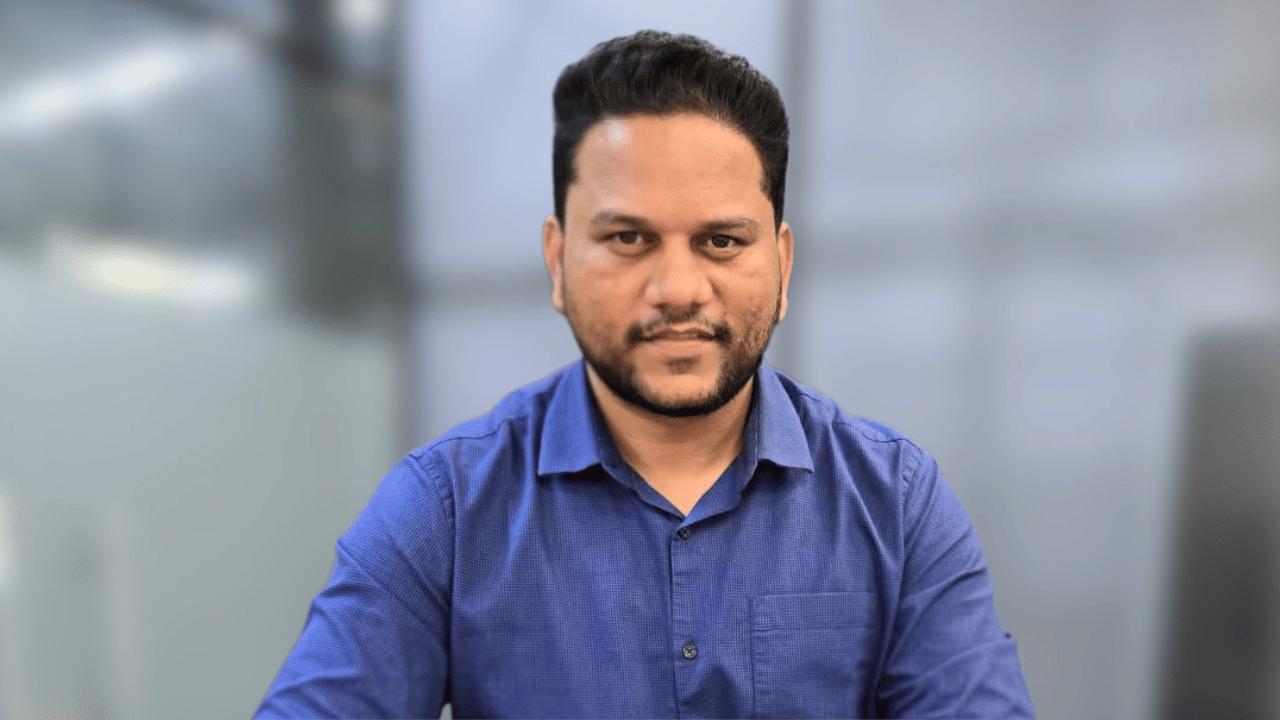
From managing complex manufacturing ecosystems to building leadership pipelines in high-growth environments, this conversation with Tabrez Khan, Group Head of HR - Industries at Noble Group SA, offers a grounded look at what modern HR leadership truly demands today.
Drawing from his experience across startups and legacy organisations, Khan reflects on the realities of driving transformation where business growth, frontline capability, expatriate management, and people strategy intersect.
Khan discussed why HR must move beyond policy-making to become deeply embedded in business realities, how organisations can balance global expertise with local talent development, and why frontline capability building is critical to creating high-performance cultures.
From navigating labour union negotiations during acquisitions to rethinking leadership development in the age of AI, Khan’s insights underline the growing need for HR leaders to combine business acumen with human understanding.
Read edited excerpts from the interview:
Toughest lesson in building one high-performance culture across different environments
One of the toughest lessons for me has been realising that high-performance culture cannot be built only at the leadership level. It has to be built equally strongly on the frontline, especially in manufacturing businesses where operational disruptions directly impact business outcomes.
What I observed is that business growth often moves faster than capability building.
Organisations invest heavily in new machinery, automation, and expansion, but many times the frontline workforce is not trained adequately to operate or troubleshoot those systems independently.
We faced this challenge ourselves across multiple manufacturing units. In one instance, a newly installed beverage production line remained shut for nearly two weeks because the internal team lacked the technical capability to resolve a machine issue, and we had to wait for OEM technicians to arrive. That single disruption led to significant production and revenue loss.
That experience reinforced a critical lesson for me: in manufacturing, capability building is not just an HR initiative, it is directly linked to business continuity and performance.
That is why one of my biggest priorities today is building a strong frontline learning ecosystem across our factories, with structured technical training, machine-operation capability building, and multi-skilling programmes for operators.
Because ultimately, high-performance culture is not built through presentations or vision statements. It is built when people on the ground feel capable, confident, and equipped to perform effectively.
Making people strategy actually land on the shop floor – frontline
One of my biggest learnings over the last 13–14 years is that HR can only become a true strategic partner when it stays closely connected to business realities on the ground.
For me, HR cannot operate from conference rooms alone. You have to be on the shop floor, in the field, alongside teams, understanding the real challenges employees face every day.
That is why we have built both formal and informal mechanisms where HR business partners and learning teams regularly interact with frontline employees, sales teams, and manufacturing staff. HR teams spend time in the field, observe operations closely, and have direct conversations with employees before designing any learning, engagement, or capability-building intervention.
I realised early in my career that many HR programmes fail because they are created in isolation from operational realities. When HR stays connected to the ground, interventions become far more practical, relevant, and impactful. It also builds credibility. Employees trust HR when they see that you genuinely understand their environment and challenges.
For me, the closer HR stays to the shop floor, the stronger and more effective the people strategy becomes.
Balancing global expertise with local talent development
In our business, nearly 80% of the workforce is local talent, while much of the senior leadership and middle management consists of expatriates with global experience. Naturally, the needs of these two groups are very different, which means a one-size-fits-all approach simply does not work.
For expatriates, the focus is often on global mobility, leadership integration, and specialised expertise. For the local workforce, the priority is capability building, leadership development, succession planning, and workforce integration. Everything, from learning programmes to communication styles and employee benefits, has to be tailored to local laws, cultural nuances, and language realities.
That is why we operate with dedicated frameworks and specialised teams for both groups. At the same time, the intent is always integration, not separation.
Of course, questions around equity do arise, particularly around compensation and benefits. As HR leaders, our responsibility is to bridge those gaps as much as possible and create systems that feel fair, transparent, and respectful, even if complete uniformity may not always be practical.
What I have learned is that the goal is not to choose between global expertise and local talent.
The real objective is to create an ecosystem where global talent helps build local capability, while local talent steadily becomes part of the leadership pipeline over time.
That balance is what ultimately creates sustainable organisations in emerging markets.
HR’s role in critical leadership decision making
Getting a seat at the leadership table is never automatic for HR, it has to be earned through deep business engagement.
HR can influence CEOs and CFOs only when it speaks the language of business.
Leadership teams think in terms of numbers, risks, and outcomes, so HR must translate people, culture, and organisational issues into clear business impact.
In my own approach, I have always focused on bringing data, insights, and ground intelligence into decision-making, not just people perspectives.
A recent example was a factory acquisition in the beauty and cosmetics space. Strategically, it was a strong opportunity that would significantly strengthen our portfolio, including market-leading brands. However, due diligence flagged a major concern, a history of strong labour union activity and potential industrial relations risk. The initial assessment suggested possible resistance during transition, which made leadership understandably cautious despite the business upside.
Given my experience in labour relations, I felt it was important to go beyond the report. I personally engaged with union representatives and key stakeholders, holding open conversations outside formal settings to understand their concerns.
What emerged was important – the perceived risks were largely overstated. The unions were not opposed to the acquisition; they were seeking resolution of long-pending, manageable issues.
When these insights were brought back to leadership, the risk perception changed significantly. What initially looked like a high-risk transition was reassessed as manageable, and the acquisition ultimately moved forward successfully.
That experience reinforced a key belief for me, HR creates real value when it brings perspectives others cannot easily see. While other functions look at financial, operational, or legal dimensions, HR brings the people, culture, and ground reality lens.
For HR to influence critical business decisions, it must be commercially aware, deeply embedded in the business, and resourceful in gathering insight. That is what turns HR from a support function into a true strategic partner.
Building speed with substance in leadership development
Leadership pipeline building cannot be left to chance, especially in a business that is scaling rapidly. The foundation starts with identifying critical roles, critical talent, and putting a clear succession planning framework in place.
A key part of our approach is early identification of high-potential and high-performing individuals. We use the nine-box talent framework to map performance and potential, but the real value lies in how seriously those insights are acted upon.
Employees in the high-performance and high-potential category are treated as our future leaders. We invest heavily in their development through stretch assignments, on-the-job learning, coaching, mentoring, and exposure to larger business responsibilities.
In fact, nearly 80% of our capability building is experiential. We strongly believe leadership is developed through real business challenges, not just classroom learning. So we deliberately place people in high-responsibility situations to test and build their capability.
Alongside this, we also run structured assessment centres with external partners such as Mercer and other specialists to objectively assess leadership readiness and build targeted development plans.
Typically, leadership development journeys run over 9–11 months and are highly role-specific. For example, a plant manager may be groomed for a broader multi-plant leadership role, or a manufacturing head may be prepared for a group-level technical leadership position.
The key principle is simple: leadership development today cannot be generic , it has to be intentional, structured, and aligned to future business needs.
For us, it ultimately comes down to disciplined succession planning and creating real, meaningful development experiences that prepare leaders for scale before the business demands it.
Startups vs legacy organisations: what really changes in transformation
People remain fundamentally the same whether you are in a startup or a legacy organisation. What really changes is the speed of execution.
In startups, decisions move fast. There is minimal bureaucracy. You align quickly with founders or key stakeholders and move straight into execution. The environment is agile, with a strong bias toward experimentation, fast failure, and rapid iteration.
In legacy organisations, the context is very different. These are large, established businesses with multiple stakeholders and long-standing influence networks. Because people have built and shaped the organisation over time, alignment and buy-in become critical before any transformation can move forward.
As an HR leader, the key realisation is that transformation in such environments cannot be driven in isolation. You have to bring stakeholders along, respect existing influence centres, and build consensus before execution. That naturally means more structured discussions, multiple approvals, and sometimes resistance.
But I don’t see that as a limitation. In fact, the scale of decisions in legacy organisations is much larger, and so is the risk. A more measured approach is often necessary.
So while startups thrive on speed and iteration, legacy organisations require patience, alignment, and structured execution.
Neither model is better, they are simply different.
The real leadership skill is adapting your approach to the context. In short, the speed of transformation changes, but the need to bring people along never does.
The future of people, culture, and performance
The biggest shift is already happening around us. Organisations can no longer rely on traditional models of managing people, learning, or capability building because today’s workforce is far more informed, connected, and aware than ever before.
People have access to everything on their devices, they learn differently, think differently, and their expectations from work are evolving rapidly.
This means organisations must evolve with them. The way we design employee experiences, engagement models, and learning systems has to reflect changing aspirations. The “one-size-fits-all” approach is no longer relevant.
Traditional learning and capability-building models are becoming outdated. Organisations will need to embrace technologies like artificial intelligence and embed them meaningfully into everyday HR systems and experiences. The future of HR will be more personalised, agile, and tech-enabled.
At the same time, one thing remains constant, organisations are still fundamentally about people. No matter how advanced technology becomes, the human connection will remain critical. Conversations, relationships, and listening will continue to define strong workplaces.
With newer generations entering the workforce, organisations will also need greater flexibility in how they think about culture, policies, and workplace norms. Expectations have clearly shifted, especially post-COVID, where employees are far more conscious of wellbeing, rights, and the value they expect from employers.
While AI is part of almost every conversation today, I try not to over-index on it because technology is ultimately an enabler. Yes, it is reshaping how we work, but the fundamentals remain unchanged, it is still people who build organisations, shape culture, and drive outcomes.
For me, the future of HR is not about choosing between people and technology. It is about using technology to strengthen the people agenda. The organisations that stay truly people-first will always stand out.