
Workplace wellbeing is increasingly being treated not as a peripheral HR benefit, but as a core leadership and productivity issue.
That was the central thread of a recent episode of People Matters Unplugged, hosted by Cheshta Dora, Head of Content Community at People Matters. She positioned employee health, safety and wellbeing as part of a wider systems challenge, shaped by the intersection of “talent, business, society and the planet”.
To underline the scale of the issue, she cited International Labour Organization research showing that the global rate of non-fatal occupational injuries averages close to 1.2 per cent. The figure, she noted, refers only to physical injury and excludes mental health, social disruption and financial wellbeing.
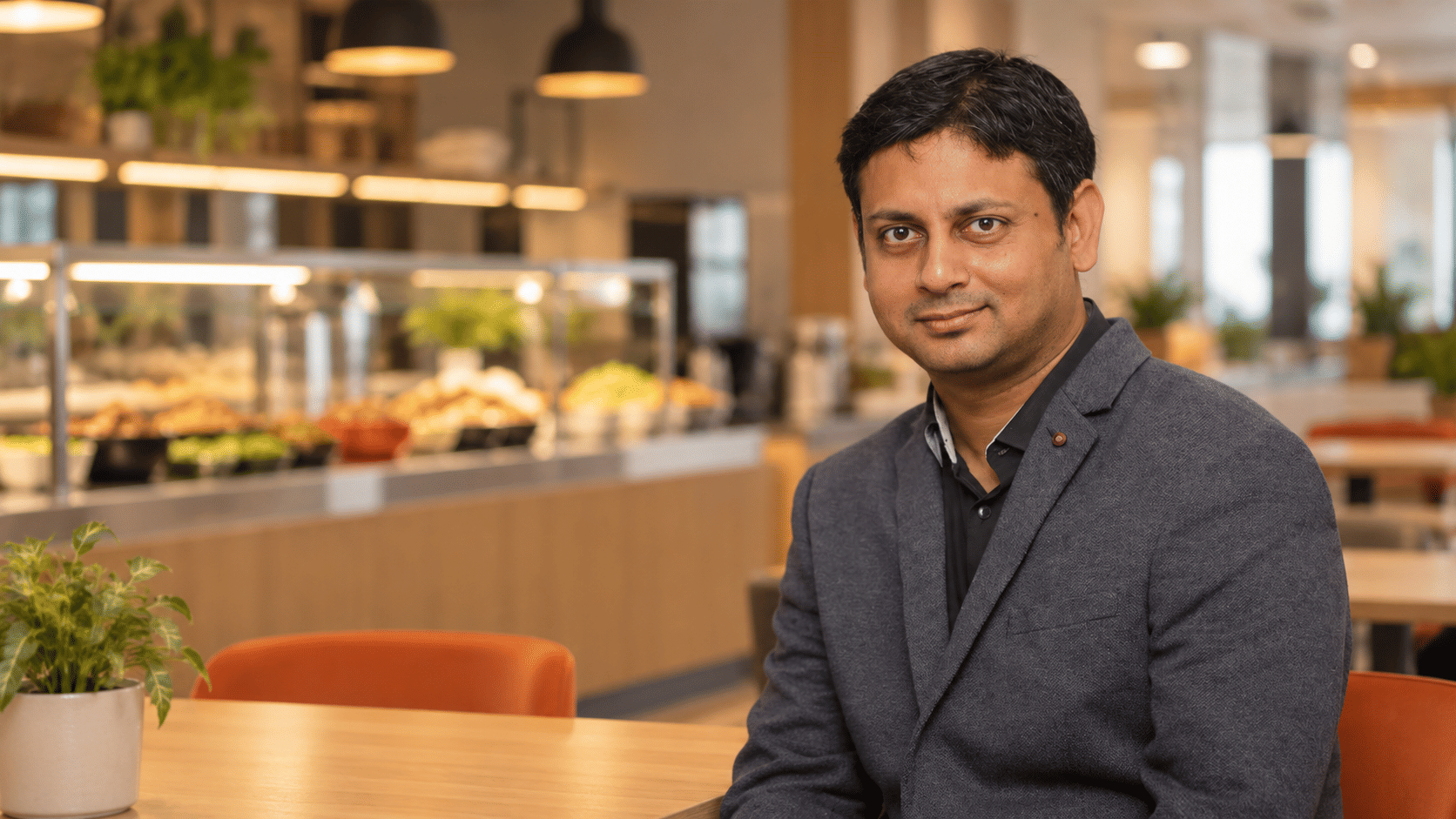
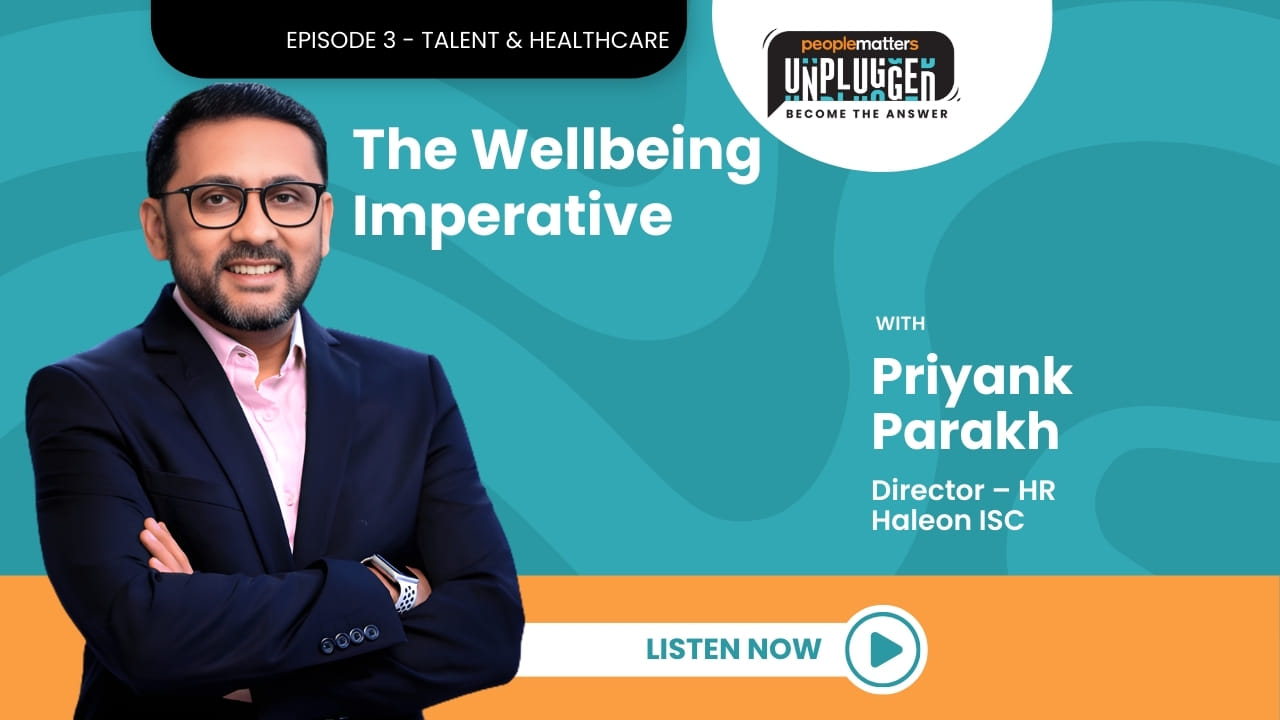
Her guest was Priyank Parakh, Director HR at Haleon India, who leads the people agenda across sales, supply chain and corporate teams, and has played a role in shaping the organisation’s post-demerger identity following its separation from GSK in 2022.
Purpose before programmes
Parakh stated that the foundations of wellbeing begin well before policies and initiatives, starting instead with purpose and alignment.
“But I think the deeper thing, and more important thing is, is there a match in the purpose and value of the employee with the organisation? Why do I want to work and where do I want to work? Is quite a lot being driven by the purpose,” he said.
He linked this to Haleon’s stated purpose of “everyday health with humanity”, suggesting that when employees connect to a deeper organisational mission, it strengthens both engagement and performance.
“And if, as an employee, I can connect to that deeper purpose. I will not only bring myself to office every day, but I'll, you know, bring my 200% to office and work every day, because I'm really passionate about it,” Parakh said.
From there, he described wellbeing as an outcome of culture, safety and trust rather than a standalone initiative.
“Now, how do we really convert that well being, along with some right initiatives of health and safety towards joy of working is probably we'll have to really define,” he said, adding that intersecting wellbeing with trust and performance becomes “icing on the cake”.
Policies with spirit, not paperwork
A recurring theme in the conversation was that policies alone do not drive adoption unless they are supported by organisational intent.
“See when you are binding and binding employees by certain policies only without the Spirit. Probably it doesn't work,” Parakh said.
He used flexible work as an example of the shift in employee expectations after Covid, arguing that organisations need transparency and shared accountability rather than rigid enforcement.
“We do not believe in creating a policy. We do have a bit of guidelines, but what we believe in is creating that spirit,” he said.
“The whole idea is, between you and your manager, you and your stakeholder, what is the best way to deliver on your goals and deliverables to the fullest? That's the key thing.”
Parakh also spoke about continuity through life stages, particularly around parental and caregiving responsibilities. He dismissed older corporate approaches focused on “bringing women back to work”, arguing instead that the priority should be supporting employees so they do not have to exit in the first place.
“You remember good old days, there used to be a program of bringing women back to work, right? We have killed it,” he said. “People don't have to leave us.”
Safety and mental health as the next frontier
Beyond benefits, the episode also focused on workplace safety as an operational imperative, particularly for field-based employees.
“We have very large field force… and you know, they are on the roads,” Parakh said. “How do I take care of their safety?”
He described mechanisms to track driving behaviour, framed not as surveillance but as responsibility.
“Honestly, it's not intrusion, it's care,” he said, noting that leadership messaging plays a critical role in reinforcing safety norms.
Mental health emerged as a more complex challenge, particularly given persistent stigma in India.
“India as a society has a long way to go around that… people don't want to talk about it openly,” Parakh said.
He said that organisations must build psychological safety so that employees feel able to seek support without fear.
In a rapid-fire segment, Parakh highlighted three defining priorities:
-
“Making, well being a leadership and culture capability and not a Benefits Program”
-
“Employee advocacy and sustained engagement” as the metric that matters most
-
“Honest conversations about everything, about stress, about caregiving, mental health” as the next pilot
He also acknowledged the blind spot that continues to hold progress back.
“Stigma and taboo still prevents open conversations around mental health. We are far behind than many of the Western world. We have to catch up,” he said.
The episode ultimately presented wellbeing as a long-term organisational capability: shaped by leadership behaviour, cultural trust, and systems that support employees not only at work, but through the realities of everyday life.
As Parakh put it, “this is just the beginning”, pointing to the need for employers, regulators and progressive leaders to work together as India’s workforce expectations evolve.