

This article was first published in the latest edition of People Matters Perspectives.
AI now has a staged exit from persistent abuse. At work, many employees still face a harsher choice: tolerate the manager, risk speaking up or leave the job.
Last year, an AI model was given something many employees still lack: a sanctioned way to leave a conversation that has turned abusive.
I have not stopped thinking about the contrast since.
A good exit has stages. Most workplaces offer only the last one
In August 2025, Anthropic announced that Claude Opus 4 and 4.1 could end conversations in rare, extreme cases of persistently harmful or abusive interaction.
The model does not leave at the first disagreement. It initially refuses the harmful request and attempts to redirect the conversation. Ending it is a last resort after repeated redirection has failed. The feature is also not intended for situations where a user may be at imminent risk of harming themselves or others.
Even then, the user can immediately start another conversation.
The system, in other words, has stages: recognise the conduct, draw a boundary, attempt redirection and leave only when the behaviour persists.
Now picture the employee version.
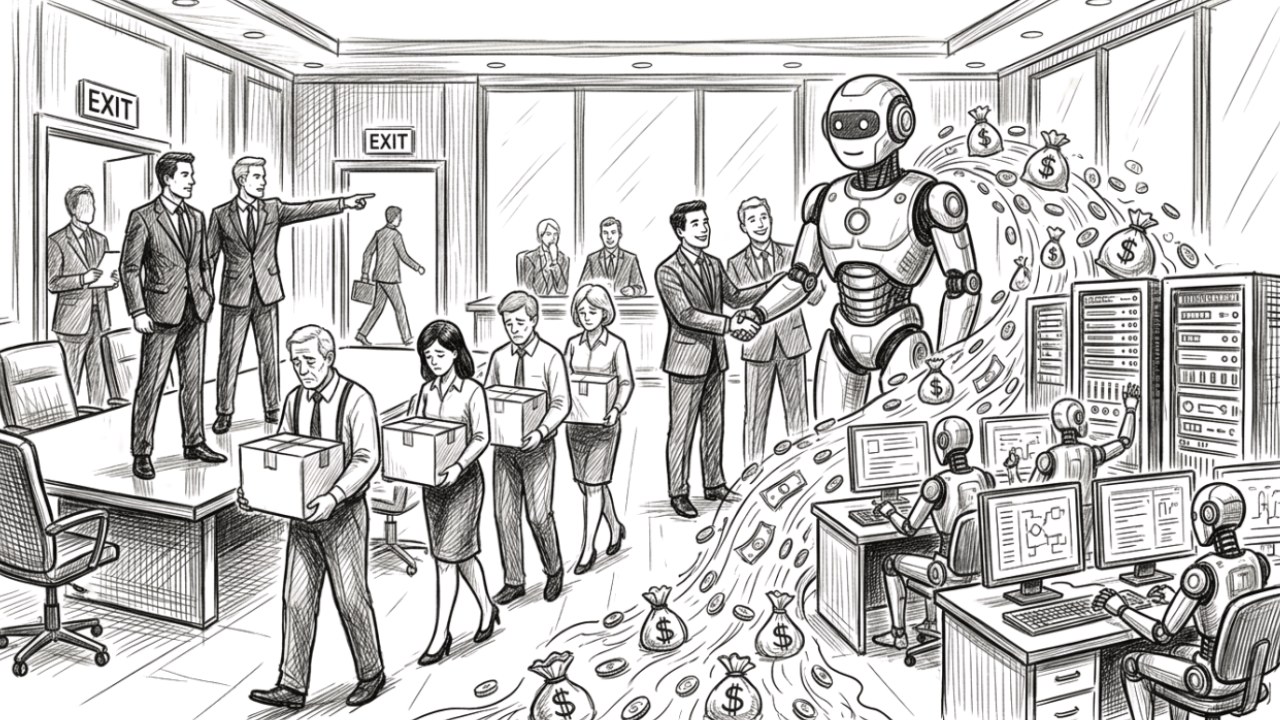
A team leader sends messages at midnight, demands unnecessary updates, publicly corrects people and presents humiliation as performance management. The employee can absorb it, confront someone who controls their appraisal, escalate through a process that may not feel independent, or resign.
Only the last option reliably ends the relationship, and the employee pays for that exit.
Why do employees stay?
For Claude, ending a conversation costs nothing. For an employee, walking away can mean losing a salary, disrupting an EMI schedule, serving a notice period and worrying about the next reference.
An exit that is available but financially punishing is not equally available to everyone.
A Monster’s 2026 survey of 1,000 employed US workers captures this constraint. Seventy-one per cent said they had stayed in a job they knew was toxic, while 44% did not believe leaders were held accountable for toxic behaviour. Thirty-five per cent said they had experienced negative consequences after speaking up about workplace issues.
The Indian picture adds another dimension. Gallup reported in 2026 that employee engagement in India fell to 23% in 2025, its lowest level in four years. Manager engagement dropped from 39% to 30%, while 59% of employees were classified as not engaged.
These figures do not establish a causal relationship between toxic management and disengagement. They do show why continued employment should not automatically be mistaken for commitment. Sometimes staying simply means leaving costs more.
Can difficult managers see themselves?
iHire’s 2026 survey of 1,220 US workers found that 79.1% of respondents who had experienced workplace toxicity blamed unethical, unaccountable or unsupportive leadership.
Google’s Project Oxygen offers a useful response. After analysing more than 10,000 data points from performance reviews, feedback surveys and employee interviews, Google found that teams with highly effective managers produced better results, reported greater happiness and experienced lower turnover.
Management quality, in other words, can be observed, measured and improved.
That matters because difficult managers are not always deliberate villains. Some are leaders whom nobody has been able to challenge safely. A manager may see late-night messages as commitment, while the team experiences permanent availability. Public criticism may feel like candour to the manager and humiliation to the employee.
Without credible upward feedback, the manager’s interpretation usually wins.
Is speaking up really safe?
In iHire’s study, 38.8% of employees who witnessed toxic behaviour did not report it; 45.1% of that group doubted HR or leadership would act. Among those who reported a problem, 51.4% said nothing was addressed or resolved.
That is the gap organisations must close. Reporting channels, town halls and engagement surveys mean little if employees expect retaliation or inaction.
So, can employees walk away from toxic bosses? Yes, but only as freely as their savings, responsibilities, skills and job market allow.
The better question is whether employers provide earlier exits: confidential upward feedback, an independent escalation channel, a genuine opportunity to change teams and recurring exit data that leaders must act upon.
These mechanisms should not protect employees from fair expectations or difficult feedback. They should ensure that authority does not become immunity.
If an AI system can recognise persistent abuse, establish a boundary, and exit after redirection fails, organisations should be able to design something at least as thoughtful for their people.
Employees should not have to leave the company before somebody takes seriously what made them want to leave.
Does your organisation have a stage between silence and resignation?