
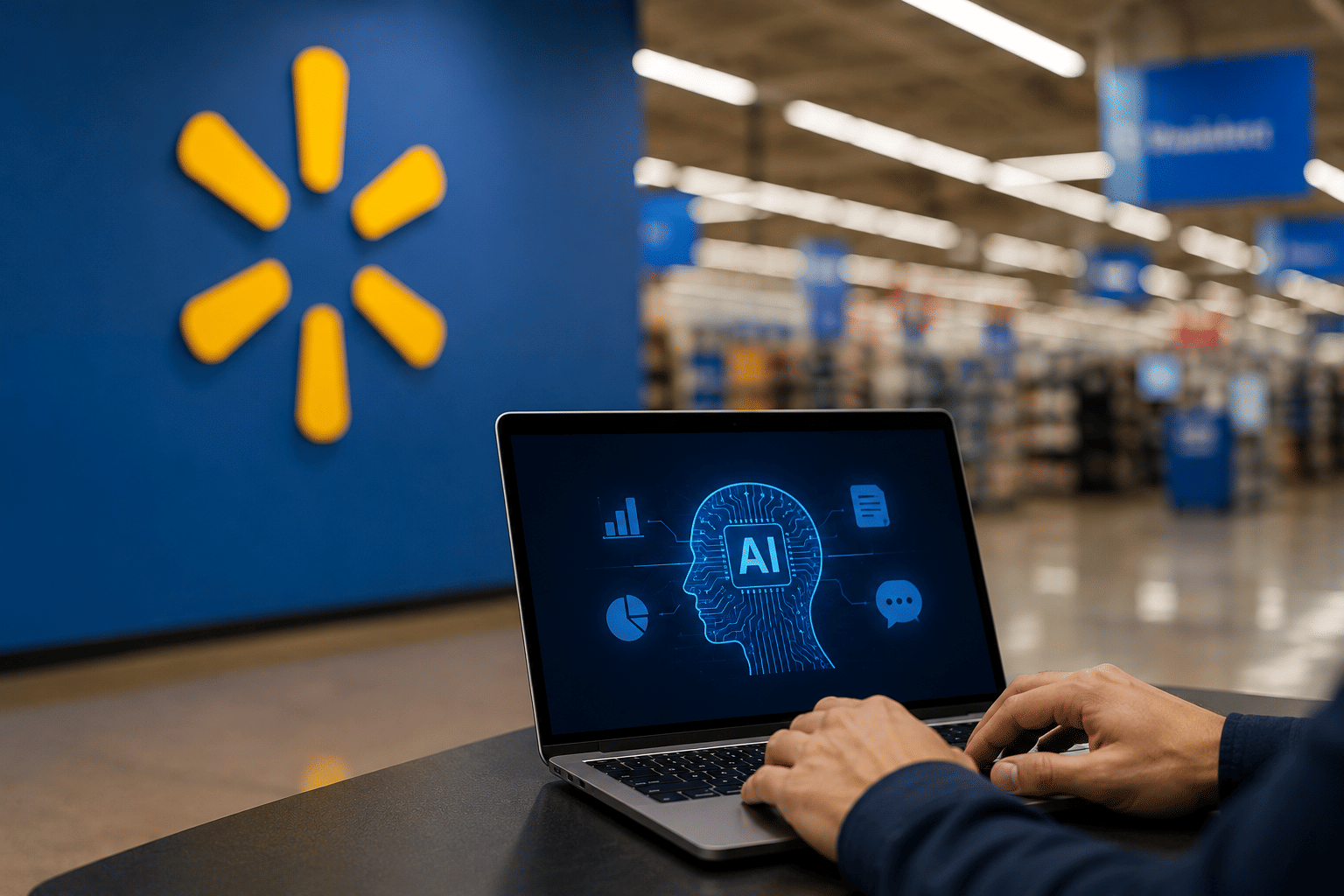
Walmart has started restricting employee use of an internal artificial intelligence tool after heavy demand drove up usage, underscoring a growing challenge for companies balancing AI adoption with rising operational costs.
According to Bloomberg, the retail giant has introduced limits on employee access to Code Puppy, an internally developed AI agent designed to assist with tasks ranging from spreadsheet analysis to presentation creation.
The move reflects a broader trend emerging across industries as organisations invest heavily in AI technologies while facing increasing scrutiny over costs, productivity gains and return on investment.
Retail giant shifts from unlimited to capped usage
Bloomberg reported that Walmart employees previously had unlimited access to Code Puppy through an unrestricted allocation of AI computing tokens.
The company has now moved to a capped system, providing employees with a fixed number of tokens for using the tool.
Code Puppy forms part of Walmart's wider AI strategy and was developed in-house to improve efficiency across various business functions. Employees also have access to external AI platforms including Claude and ChatGPT, according to people familiar with the matter cited by Bloomberg.
A Walmart spokesperson told Bloomberg that the company remains committed to helping employees use AI effectively and responsibly.
The spokesperson said Walmart wants employees to apply AI in ways that create value and is providing guidance to ensure workers use the right AI tool for the right task.
Growing AI adoption comes with rising costs
The decision illustrates a challenge many organisations are encountering as AI becomes embedded in daily workflows.
While AI tools promise productivity improvements, they also generate significant computing and usage costs, particularly when adopted at scale or used for data-intensive tasks.
According to Bloomberg:
• Walmart has introduced token limits for Code Puppy users after strong employee demand
• Employees previously had unrestricted access to the tool
• Staff continue to have access to other AI platforms including Claude and ChatGPT
• The retailer remains committed to integrating AI across business operations
The development comes as companies increasingly evaluate whether AI spending is producing measurable business outcomes.
Companies reassess AI return on investment
Recent research suggests that many organisations are still struggling to realise the level of savings initially expected from AI investments.
According to Bain & Company's Automation and AI Pathfinder Survey 2026, which surveyed 951 respondents:
• 40% of companies tracking AI spending reported cost savings of less than 10%
• 90% of organisations whose AI investments underperformed still plan to increase AI budgets next year
The report noted that many companies continue investing despite lower-than-expected financial returns, reflecting long-term confidence in the technology's potential.
At the same time, investors and shareholders are placing greater emphasis on proving AI-driven value creation.
Cost controls emerge across corporate America
Walmart is not alone in reassessing how AI tools are deployed internally.
According to reports cited by Bloomberg and PitchBook:
• Uber Technologies reportedly exhausted its annual AI budget within the first few months of 2026
• Microsoft has reportedly scaled back certain AI offerings
• Amazon recently discontinued an internal leaderboard tracking employee AI activity after discovering workers were deploying unnecessary automated bots to improve rankings
These developments suggest companies are moving from experimentation toward more disciplined management of AI resources.
Focus shifts from usage metrics to business outcomes
As AI adoption accelerates, organisations are increasingly questioning whether activity levels alone provide a meaningful measure of success.
A separate analysis by PitchBook found that investor conversations around AI are becoming more financially focused.
According to the report, an analysis of 186 AI-related questions raised during business-to-consumer earnings calls found that approximately 90% were investigative in nature, with return on investment and financial performance overtaking product development as primary areas of interest.
Researchers have also begun examining unintended consequences of workplace AI usage. PitchBook cited research from BetterUp Labs and Stanford's Social Media Lab, which described a phenomenon known as "workslop" where AI-generated outputs appear polished but offer limited substantive value.
Walmart remains among retail's AI leaders
Despite introducing usage limits, Walmart continues to be regarded as one of the most aggressive adopters of AI within the retail sector.
The company has deployed AI across a range of functions, including supply chain operations, customer experience and internal productivity initiatives.
Based in Bentonville, Arkansas, Walmart has continued to gain market share through its focus on pricing, delivery speed and product assortment, while simultaneously expanding its use of emerging technologies.