

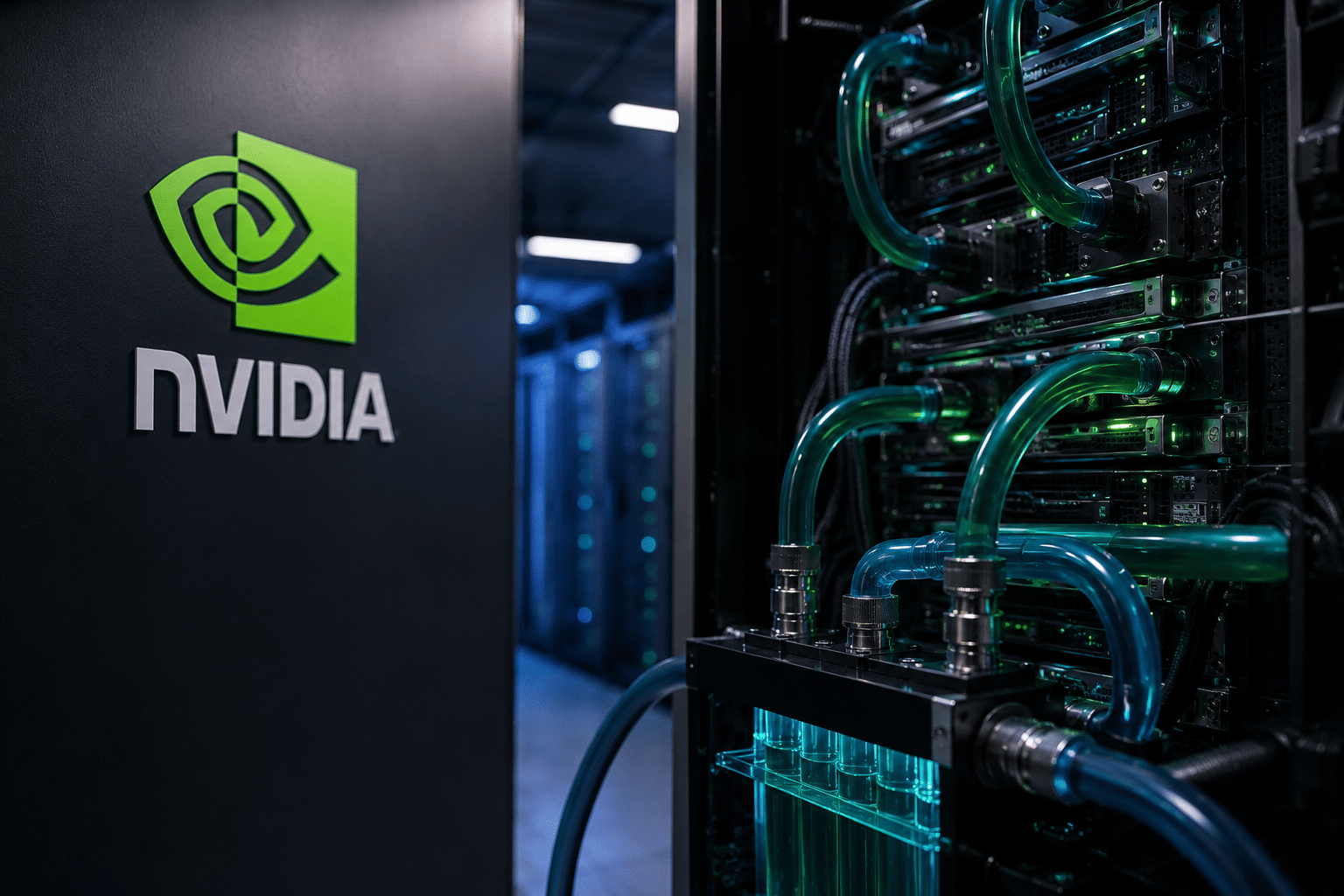
The rapid growth of artificial intelligence has triggered concerns about the environmental cost of powering the technology, particularly the vast quantities of water required to cool data centres. Now, Nvidia says it has developed a new cooling system that could sharply reduce the need for water-intensive infrastructure as AI adoption accelerates.
The announcement comes amid growing scrutiny of the resource demands created by AI systems. The United Nations has warned that by the end of the decade, AI-related data centres could consume as much water as 1.3 billion people, highlighting the scale of the challenge facing the technology industry.
For companies investing billions of dollars in AI infrastructure, reducing water consumption is becoming almost as important as increasing computing power.
Why AI's cooling challenge is attracting attention
Modern AI models require enormous computing capacity, placing unprecedented demands on the specialised chips powering them.
As those chips process vast amounts of data, they generate significant heat. To prevent overheating, many data centres rely on cooling systems that consume large quantities of water.
The growing use of AI has intensified concerns among communities and policymakers about the impact of data centres on local resources, particularly in regions already facing water stress.
Closed-loop system aims to reduce water use
Nvidia's latest approach centres on a liquid-cooling system designed to operate within a closed-loop environment.
Instead of relying heavily on fresh water supplies, the system continuously circulates coolant through servers, carrying heat away from AI chips before reusing the same liquid repeatedly.
The concept resembles cooling systems used in automobiles, where coolant absorbs heat and recirculates rather than being constantly replaced.
According to Nvidia, a key advantage of the system is its ability to operate at temperatures of up to 45 degrees Celsius.
Higher operating temperatures reduce dependence on large chillers and energy-intensive air-conditioning systems that have traditionally been required to keep AI infrastructure running safely.
Potential savings for large-scale AI facilities
Nvidia estimates that AI facilities using the new technology could generate substantial reductions in both water and energy consumption.
The company said the system could deliver:
- Significant reductions in water used for cooling
- Lower dependence on traditional air-conditioning systems
- Reduced energy consumption associated with temperature management
- Potential savings worth millions of dollars annually for large facilities
The development reflects a broader shift across the technology sector as infrastructure providers search for more efficient ways to support growing AI workloads.
Environmental questions remain unresolved
While the technology addresses one aspect of AI's environmental footprint, it does not eliminate all sustainability concerns associated with large-scale AI deployment.
Even with lower cooling-related water consumption, data centres still require enormous amounts of electricity to operate.
Depending on how power is generated, electricity production itself can consume significant quantities of water and create additional environmental pressures.
There are also questions about adoption timelines. Replacing existing cooling infrastructure across thousands of data centres globally would require substantial investment and could take years to complete.
Industry experts have also pointed to a longstanding phenomenon in technology known as the rebound effect, where greater efficiency can lead to higher overall usage rather than reduced consumption.
As AI becomes cheaper and more efficient to operate, demand for computing capacity could continue rising, potentially driving the construction of additional facilities.
A new chapter in sustainable AI infrastructure
Nvidia's latest innovation highlights how environmental considerations are becoming increasingly central to discussions around AI development.
For years, conversations about artificial intelligence focused primarily on performance, capability and business value. Today, water usage, energy consumption and infrastructure sustainability are becoming equally important considerations.
The company's cooling technology does not solve every environmental challenge associated with AI. However, it represents a significant effort to address one of the industry's most visible concerns.
As governments, regulators and communities pay closer attention to the resource demands of data centres, innovations that improve efficiency are likely to play a growing role in determining how the next generation of AI infrastructure is designed and deployed.
New leaders, fresh capital, workforce shifts and unfiltered conversations — the story of work unfolds here.