







Kuwait has suspended the files of 10,000 companies for failing to meet wage payment requirements, as authorities intensify enforcement against salary violations, suspected money laundering and practices that undermine workers’ rights.
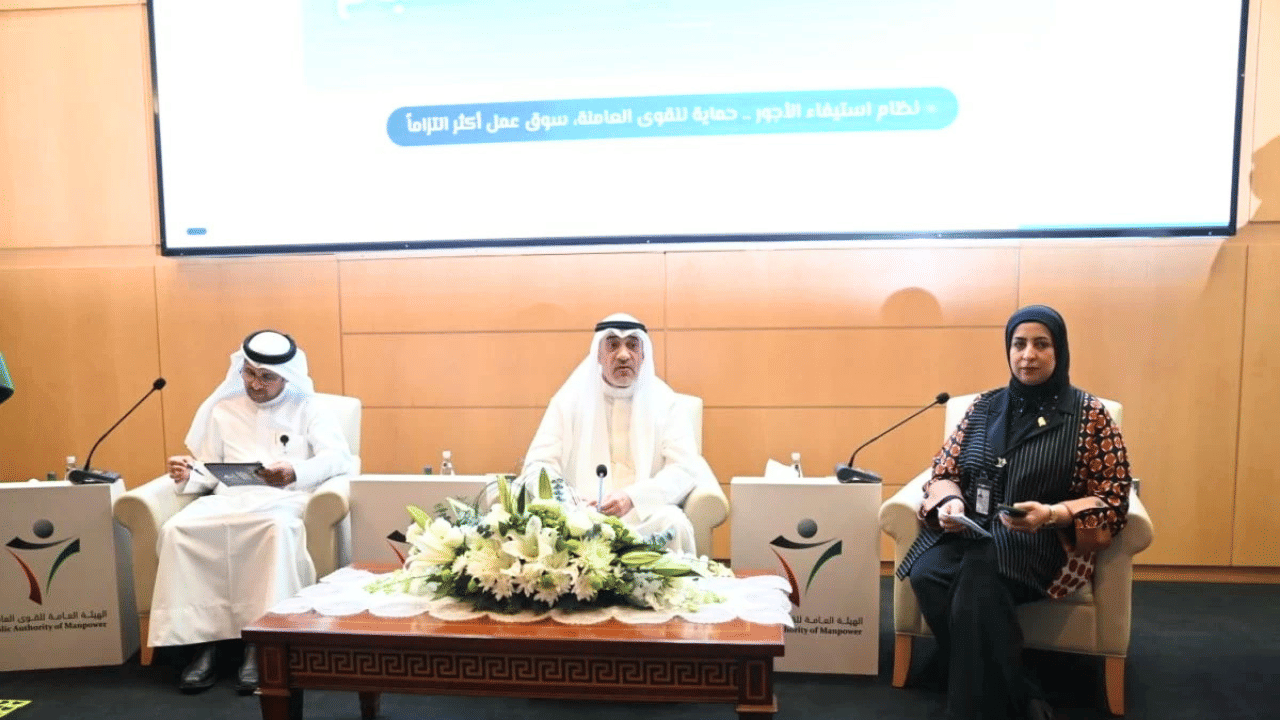
First Deputy Prime Minister and Minister of Interior Sheikh Fahad Al-Yousef announced the figures during his second meeting with company owners on the wage payment system, which aims to strengthen workforce protection and improve compliance across the labour market.
According to data presented by the Public Authority for Manpower (PAM), the suspended files represent 18.3% of the 40,400 registered companies covered by the wage monitoring system that employ five or more workers.
Sheikh Fahad said some companies had allowed employees to go without salaries for four months, while in other cases, payments had reportedly been delayed for as long as 18 months.
“Workers’ rights must never be neglected. Kuwait has never been a country that subjects anyone to injustice,” he said.
He added that employers who no longer wished to retain workers should settle their outstanding salaries and financial dues and allow them to leave rather than leave them without income.
Sheikh Fahad warned that some companies were recruiting workers without paying their salaries, while others were registering residents as employees despite them not actually working for the businesses. He said such practices could be linked to money laundering and damage Kuwait’s international reputation.
The minister also highlighted cases in which company owners’ relatives received salaries or labour subsidies while actual employees remained unpaid. In one instance, 17 employees had reportedly not received their salaries, while the company owner’s wife was receiving payments linked to labour support.
Another case involved an individual registered as earning KD1,000 a month but reportedly receiving only KD100.
Sheikh Fahad said authorities were reviewing an increase in suspected money laundering cases and had contacted a government entity holding outstanding payments owed to certain companies. The aim was to release funds that could be used to settle overdue wages and other employee entitlements, helping companies regularise their status and enabling workers whose employment had ended to leave the country through established procedures.
PAM Director General Engineer Rabab Al-Osaimi said the authority had identified companies that paid salaries into employees’ bank accounts before forcing them to return the money. Other employers were deducting more than 25% of workers’ salaries, she said, adding that such practices violated regulations.
The authority also reiterated that salaries must be transferred through approved banking channels rather than paid in cash. Newly established companies may receive limited exceptions during their first two months of operation, but these do not continue beyond that period.
The meeting also addressed compliance in the delivery sector, including working conditions, recruitment practices and road safety.
Sheikh Fahad said authorities had deported 300 delivery workers as part of enforcement measures and stressed that companies had been informed about the implementation of the new system before it took effect.
He criticised arrangements requiring delivery workers to remain on the road for excessive hours, warning that fatigue could increase the risk of accidents and endanger both workers and other road users.
The minister called on companies to recruit qualified drivers who understand the requirements of the job and comply with the country’s regulations.
He also stressed that employees must work at their designated workplaces. Companies found assigning workers to unauthorised locations could face the complete closure of their files.
Sheikh Fahad said authorities were studying a proposal to limit the proportion of employees of any single nationality within a company to between 30% and 40%. Companies exceeding the proposed threshold could face additional fees. The proposal remains under review, and no final decision was announced.
The minister also said authorities were considering allowing domestic workers holding Article 20 residency permits to transfer to Article 18 residency for private-sector employment. The proposal could also cover workers previously registered under government project contracts that have expired, potentially allowing them to join the private sector.
Meanwhile, Sheikh Fahad instructed PAM officials to set aside one day each week, from 8am to 1pm, to receive members of the public, hear their concerns and follow up on individual cases.
He reiterated that labour and residency laws would be enforced without exceptions, regardless of company ownership or personal connections.
PAM’s data showed that the wage compliance rate reached 75.6% in July 2026, up from 39.7% in July 2025, according to the figures presented at the meeting.
Between January and September 2026, the wage collection system received 92,065 applications, representing a reported increase of 195.6% compared with the corresponding period in 2025. PAM approved 23,852 applications during the period.
The authority said its inspection teams continued to face challenges when visiting some establishments, including unavailable employee records and inactive businesses. Inspectors often had to make repeated visits to verify workforce status and check compliance with labour regulations.
The latest measures reflect Kuwait’s efforts to strengthen wage protection, improve transparency in employment records and hold companies accountable for unpaid salaries and other labour violations.