







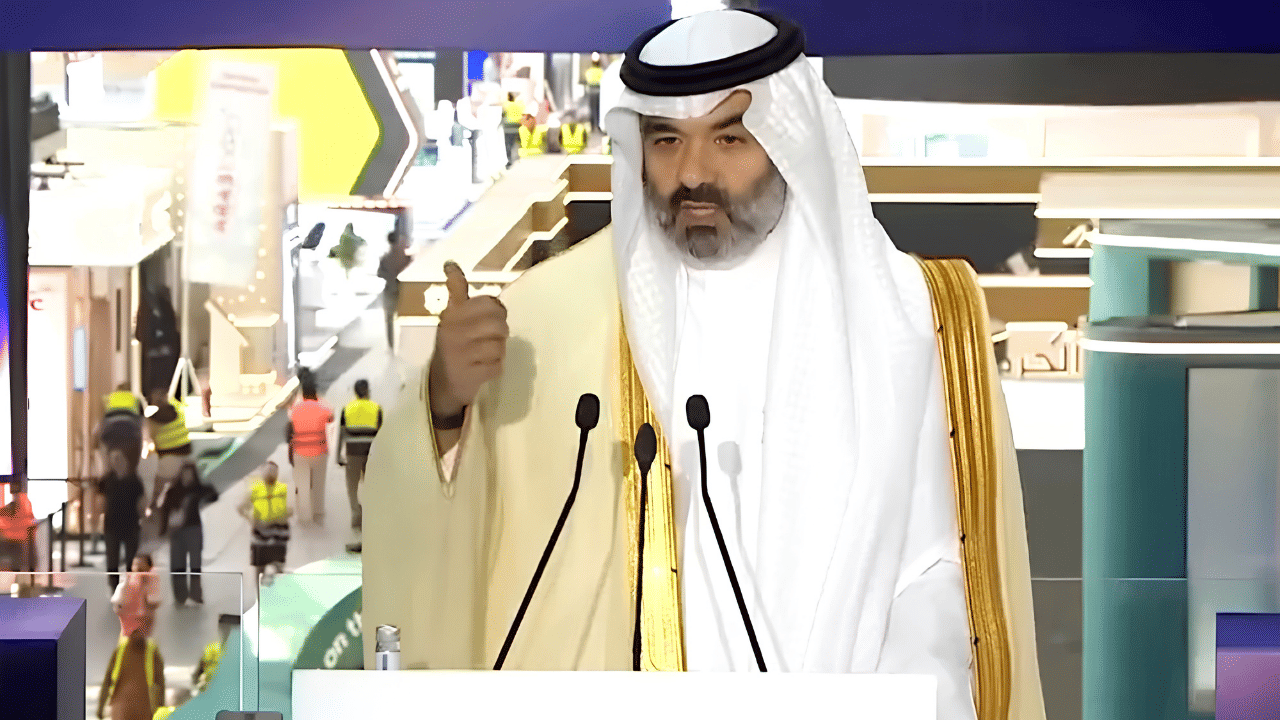
Saudi Arabia is set to introduce a Freedom of Information Law aimed at supporting creativity and innovation while protecting national sovereignty and confidential information, Minister of Communications and Information Technology Abdullah Alswaha has said.
Speaking at a government press conference in Riyadh on 30 August, Alswaha said the legislation would be announced in the near future as the Kingdom continues to expand its digital economy under Saudi Vision 2030.
The minister said Saudi Arabia’s digital economy has grown by more than 75% since the launch of Vision 2030, reaching SR522 billion, while employment in the digital sector has increased to around 410,000 jobs.
Alswaha highlighted the Kingdom’s growing technology ecosystem ahead of the fifth annual LEAP technology conference, which is being held in Riyadh under the theme “Into New Worlds”.
The four-day event is expected to bring together around 2,000 global technology brands, 1,000 speakers and hundreds of startups, with a focus on artificial intelligence, smart infrastructure, logistics technology and digital government services.
He said the National Technology Development Program has supported more than 1,500 entrepreneurs and 5,000 companies, including businesses valued at SR1 billion or more.
More than 3,000 servers have also been exported from Saudi Arabia to neighbouring countries, while the Kingdom has established more than 80 technical schools and trained around 30,000 people in artificial intelligence.
Saudi Arabia has also significantly narrowed its communications gap over the past decade. Alswaha said the overall gap had fallen from 50% to 1%, while the gap in services had declined to 5%. The number of complaints has also dropped by 15%.
Meanwhile, fibre-optic penetration has reached 32%, covering 5.8 million homes. Alswaha acknowledged that subscription levels remain below expectations and encouraged families to take advantage of the connectivity available to support their children’s educational and career opportunities.
The minister also pointed to Saudi Arabia’s expanding data-centre infrastructure as a key component of its AI strategy. He said data centres account for up to 60% of technology investments in the Kingdom, with more than 80 square kilometres allocated for such facilities.
Saudi Arabia is also positioning itself as a major global hub for AI infrastructure and energy supply for data centres.
Alswaha said the Kingdom has the potential to reach up to three billion customers in the AI sector from within its borders and serve one billion customers in its primary market.
The Kingdom is also expanding connectivity beyond major urban centres. In Al-Baha, 5G coverage currently stands at 49% and is expected to reach 64% by 2028, while fibre connectivity has been extended to 50,000 homes.
Alswaha also cited e-commerce platform Salla as a Saudi technology success story. The platform is valued at SR36 billion and has contributed to the creation of 100,000 jobs while enabling 120,000 online stores.
Several major technology initiatives are expected to be announced during LEAP 2026, including projects involving Amazon, NVIDIA and other global technology companies. Microsoft’s Azure cloud platform is also set to launch on the opening day of the conference.
Alswaha said Saudi Arabia has risen to become the world’s leading nation in digital readiness for 2025 and 2026, reflecting the Kingdom’s broader shift from a technology importer to an exporter.
He added that Saudi Arabia is seeking to strengthen its position in the use of data and AI across the public and private sectors while attracting innovators and investors to the country’s growing technology ecosystem.