








Nearly 92,000 UAE nationals are employed in the private sector, marking a 157 per cent increase from 2021, according to a report by the Ministry of Human Resources and Emiratisation (MoHRE).
The report, titled ‘Making Emiratisation a Success: A Guide for 2024,’ was launched by TASC in collaboration with MoHRE. It offers insights from over 4,969 UAE national employees and job seekers, along with 600 employers from diverse sectors. The report highlights that providing Emiratis with hiring support, training, the right work environment, and healthcare is the responsibility of private sector employers.
Additional insights include:
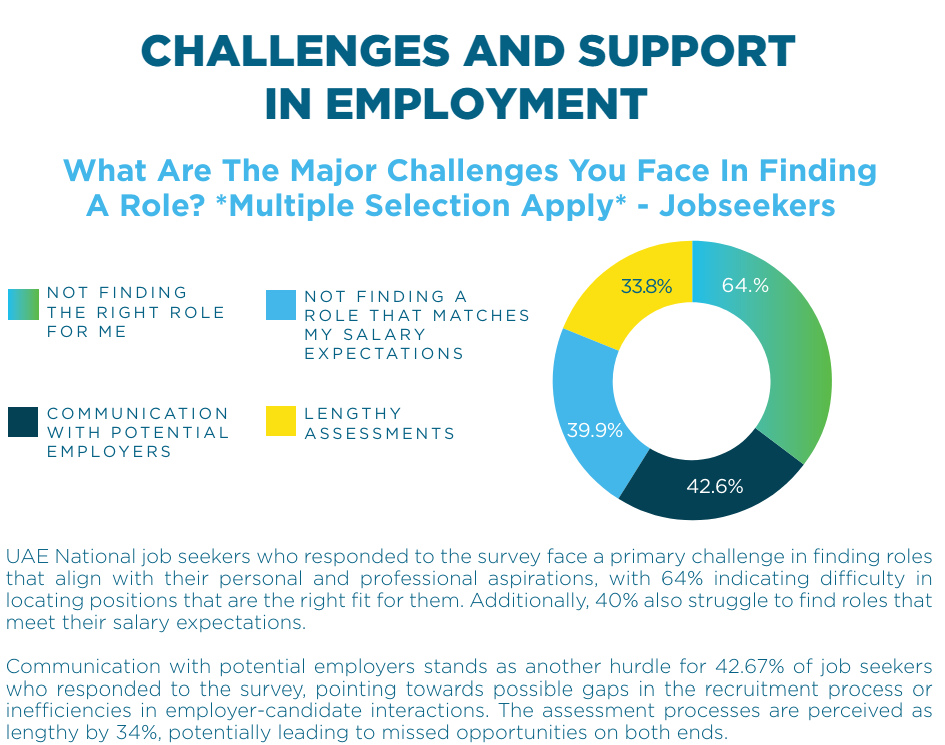
- 64 per cent of Emiratis find it challenging to search for a suitable job role. While 40 per cent are unable to find job roles that match their salary expectations. About 77.65 per cent of Emiratis use the Nafis initiative for job searches in the private sector, and 56.64 per cent found it helpful for their job search and career development.
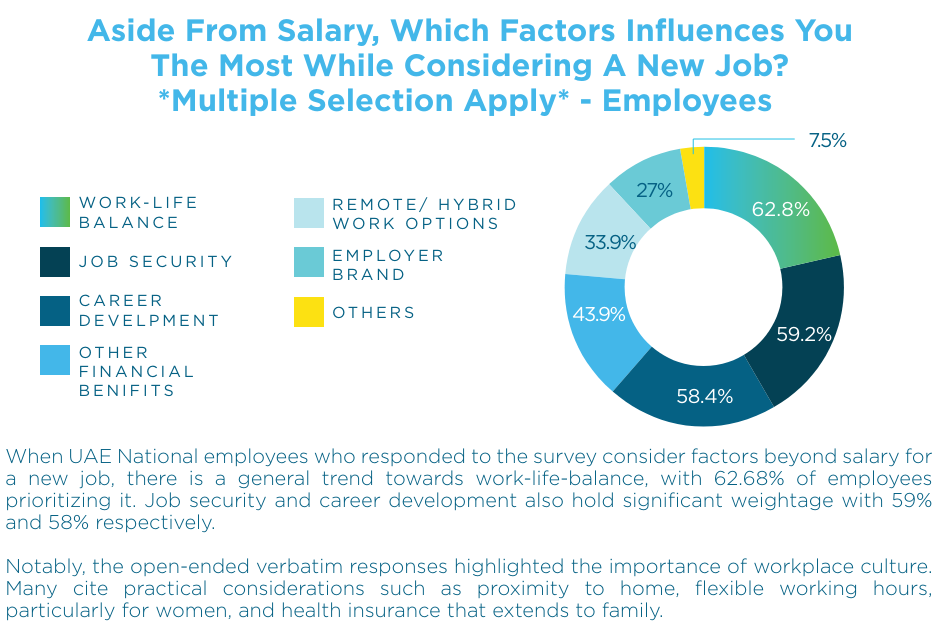
- While 73.67 per cent of them are satisfied with their current employers, 62.8 per cent prioritise work-life balance, 59 per cent prioritise job security, and 58.4 per cent prioritise career development. Additionally, 45.88 per cent consider employer branding a crucial factor for job opportunities, and 37.20 per cent consider remote working options important when considering a job offer.
- Of the 2,773 Emiratis currently seeking job opportunities in the private sector, 65.20 per cent are freshers, and the remaining 34.8 per cent are experienced.
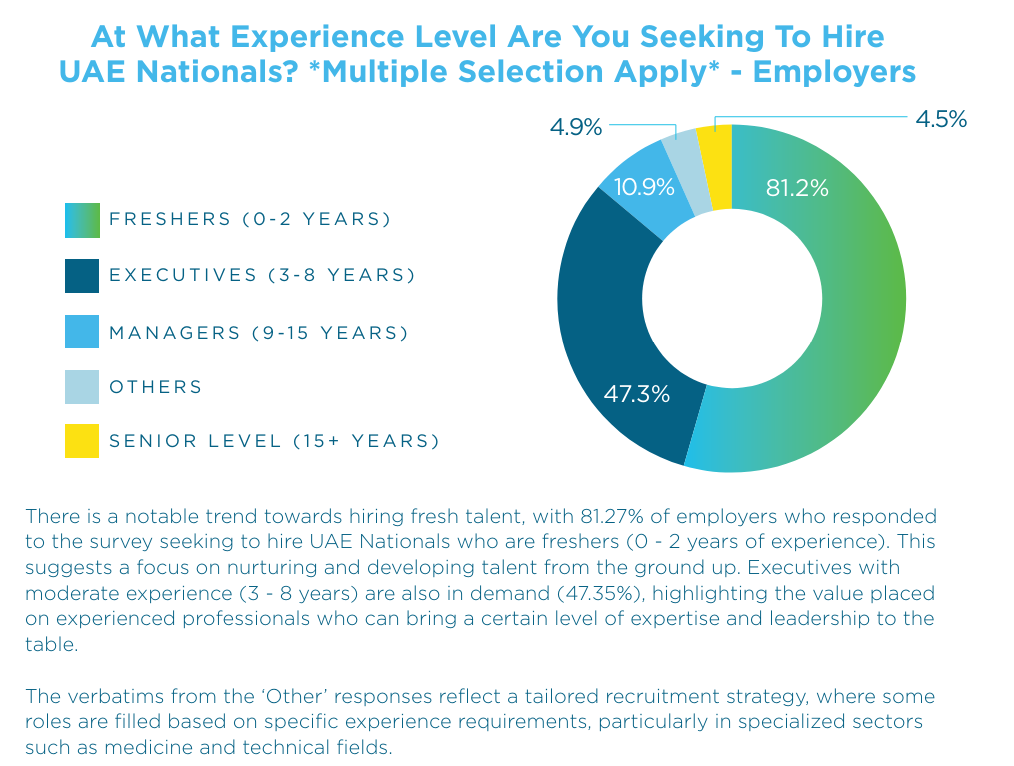
- Of 2,186 employed Emiratis, 62 per cent are in the early career stage, 21.27 per cent are in mid-level management, and 15.84 per cent are in senior executive roles. Notably, 81.27 per cent of the employers want to hire freshers or entry-level Emiratis, while 47.35 per cent want to hire experienced Emiratis, who bring a certain level of experience and leadership skills.
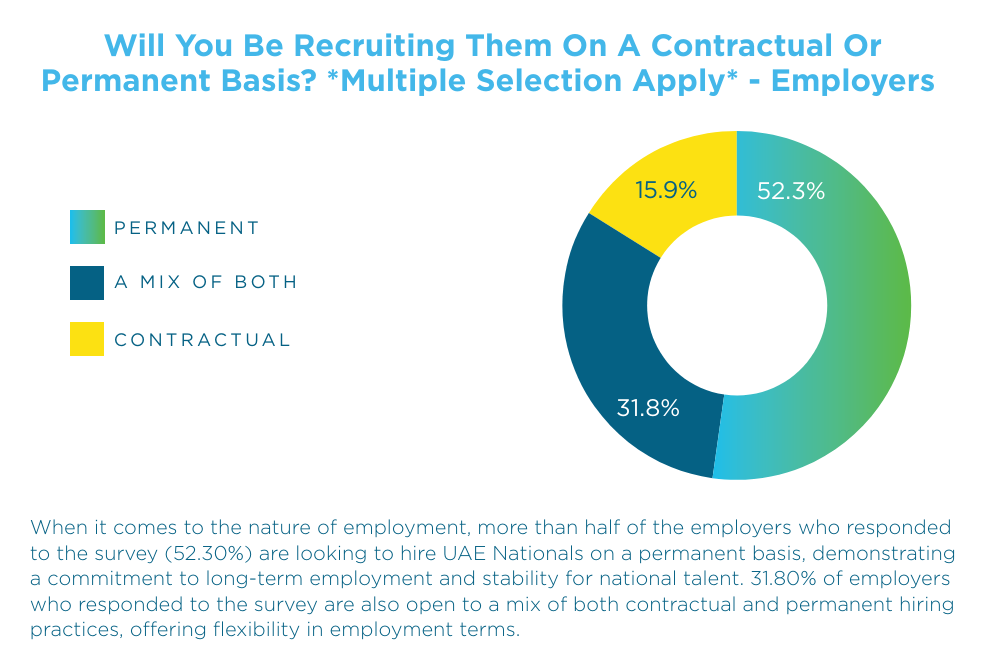
- Notably, about 52.30 per cent of private sector employers prefer hiring Emiratis permanently, while 31.80 per cent are contemplating hiring them on both a permanent and contractual basis.
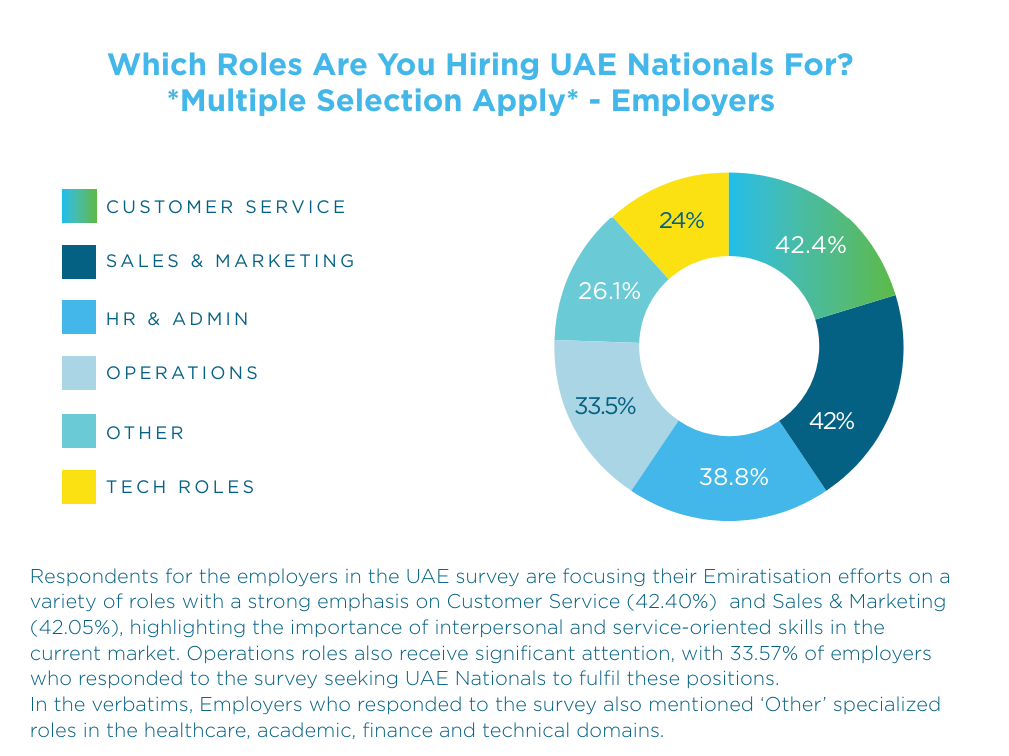
- 42.40 per cent of the employers want to hire Emiratis in customer service roles, 42.05 per cent in marketing roles, and 33.57 per cent in operations roles.
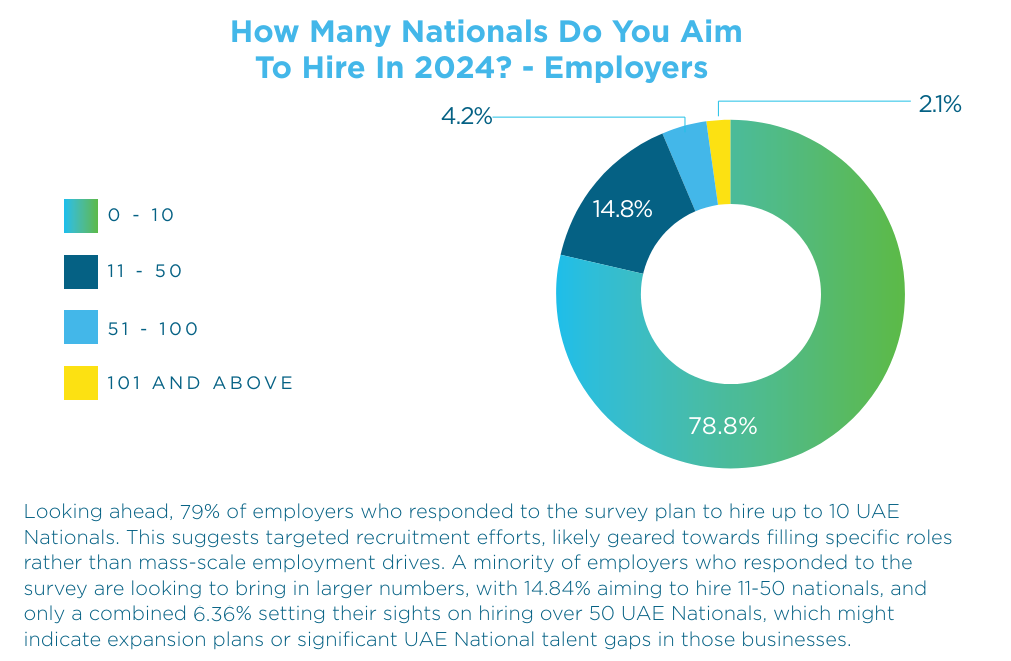
- While, 79 per cent of the private sector employers plan to hire at least 10 Emiratis, specifically in certain roles. 14.84 per cent of them want to hire up to 50 Emiratis, and 6.36 per cent plan to hire over 50 Emiratis in an attempt to bridge the Emirati talent gap in their businesses.
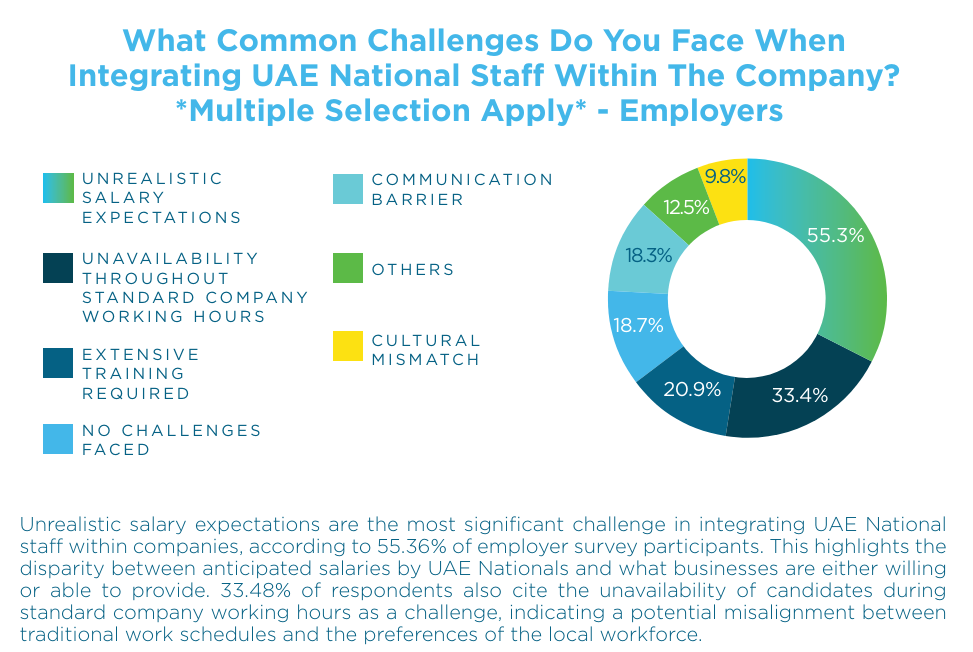
- Regarding the common challenges faced by private sector employers in hiring Emiratis, 55.36 per cent cite unrealistic salary expectations as a major hurdle.
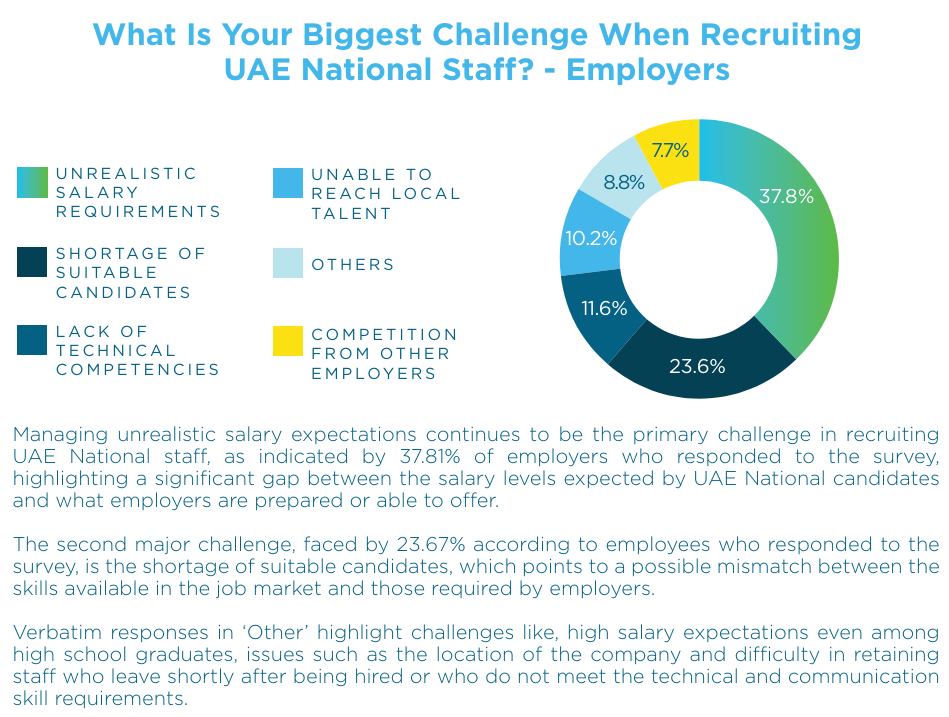
- Additionally, 33.48 per cent report difficulties in finding suitable candidates who can adapt to the company's work schedules. Communication barriers are highlighted by 18.3 per cent of the employers, while 20.9 per cent note that Emiratis require extensive training.
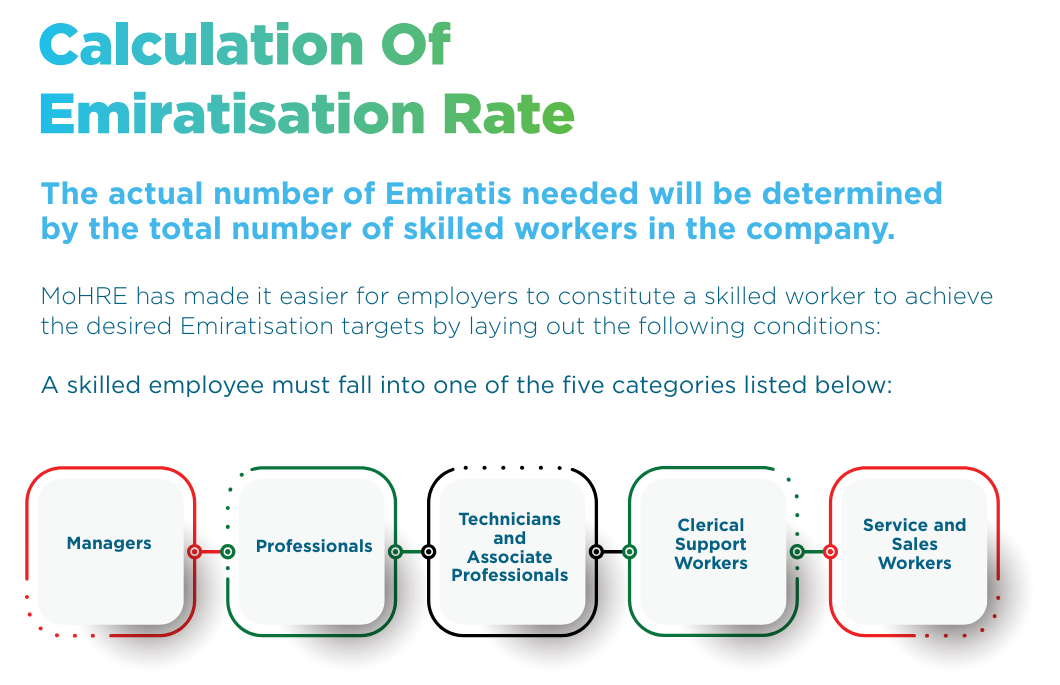
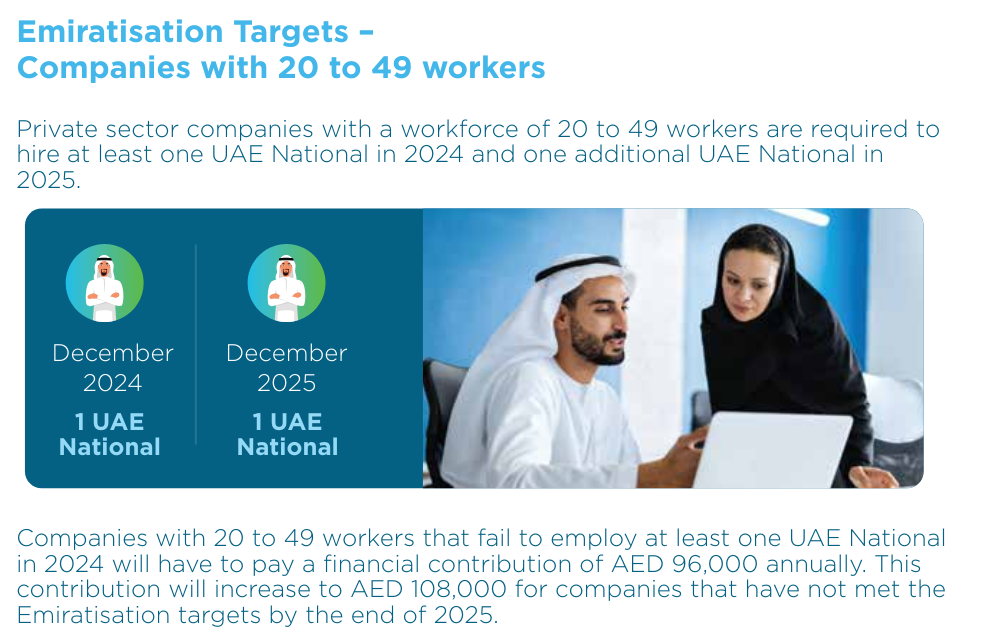
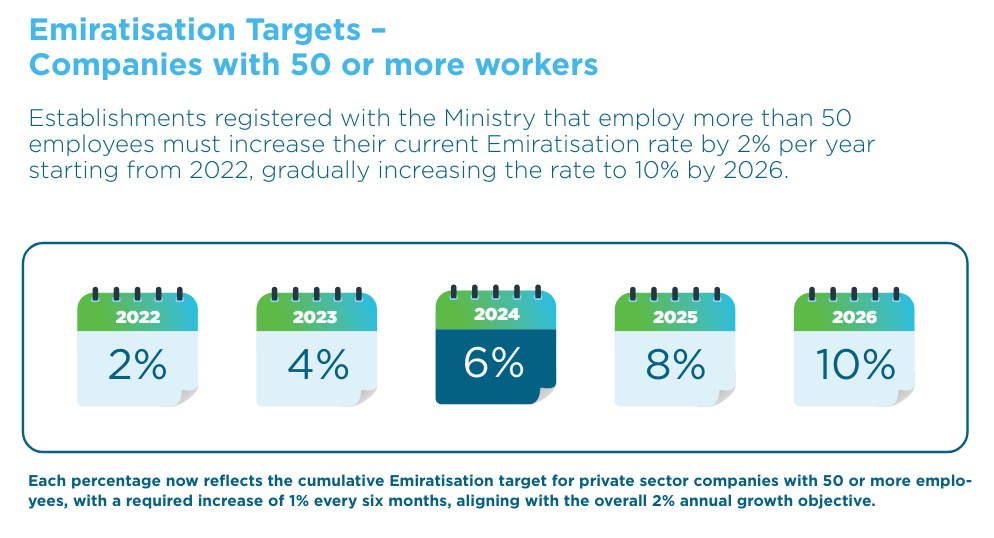
The Emiratisation initiative requires all UAE employers with 50 skilled employees to hire at least one Emirati in 2024, and to increase the percentage of the Emirati workforce by two per cent annually, reaching at least 10 per cent by 2026.
More companies with more than 50 workers, the Emiratisation target is:
Ahmad Yousuf Al Nasser, Assistant Undersecretary of National Human Resources Development at MoHRE, commented, “The survey presents an optimistic view of the Emiratisation strategy. The majority of employers are set to hire up to 10 UAE nationals, indicating precise and mindful recruitment strategies for the year. Additionally, nearly 15 per cent of employers plan to welcome a larger number of UAE nationals, signifying a move towards bridging talent needs with the rich skills our nationals bring. It is the employer’s responsibility to train Emiratis as part of a partnership between the government and the private sector. We have invested in learning, education, regulations, and subsidisation of Emiratis. The private sector must participate actively to achieve the Emiratisation target, which is manageable,” he said during the report launch.
He added, “We acknowledge that some companies face challenges in meeting their Emiratisation targets as training and retaining top talent requires a strategic plan and consistent efforts. However, the government remains firmly committed to supporting the private sector. Emiratisation is not just a government initiative; it is a national obligation and a shared responsibility for all.”
You may also like:
- Leveraging benefits to support, attract and retain women workers
- 6 essentials for Middle East HR leaders to shape the future workforce
- #LabourDay: Rise of tech giants in Middle East- How to nurture region's workers?
- Avoid these 5 mistakes to elevate employee engagement & experience
Emphasising the importance of skill training and a positive work environment for Emiratis to integrate into job roles within the private sector, Al Naser noted, “We continue to say that it is the private sector’s role to nurture the Emirati from the early days once they join the firm. It is the private sector’s role to participate in this initiative, the same way they do for non-Emiratis. Give them some time to enhance and develop their skills. We count on each company to build internal policies, procedures, and environments that are conducive to career pathing, job opportunities, job flexibility, and employee attraction. These are the responsibilities of a company. The better the internal environment policies and procedures, the better place any employee has to remain. There are plenty of talented Emiratis. Finance is the top sector absorbing Emiratis, but now construction and retail are also absorbing them in large numbers. We are focusing on education and healthcare as those two sectors are considered priorities for the government. In the end, we are requesting just two per cent of the skilled labour. This is minimal compared to other competitor markets that mandate specific job roles for nationals. We are asking for just 2 per cent of skilled labour, which ultimately means one or two people, which is fair and promising enough to be part of your organisation.”
Mahesh Shahdadpuri, founder and CEO of TASC Outsourcing, underlined the measures that private sector employers need to implement to make Emiratisation an integral part of their work culture, stating, “Going beyond the current integration of Emiratis into the workforce, we understand that an impressive 72.47 per cent of candidates surveyed are willing to join both the public and private sectors, indicating a workforce ready and eager to contribute. Also, 78 per cent of employers surveyed are set to welcome up to 10 UAE national professionals. These statistics signal increased initiatives to make Emiratisation an integral part of work culture in the UAE.”
The UAE government has also established strict penalties for businesses that fail to meet Emiratisation targets as outlined in Ministerial Resolution No. (296) of 2023. This resolution sets the criteria for imposing administrative fines in accordance with Cabinet Resolution No. (95) of 2022, which pertains to violations and penalties related to the initiatives and programs of the UAE Cadres' Competitiveness Council. These penalties aim to ensure compliance with the Emiratisation programme, especially the ‘NAFIS’ initiatives.