






Leadership
Seema Hallon on Deriv’s global talent strategy, hiring discipline, and the future of women in tech






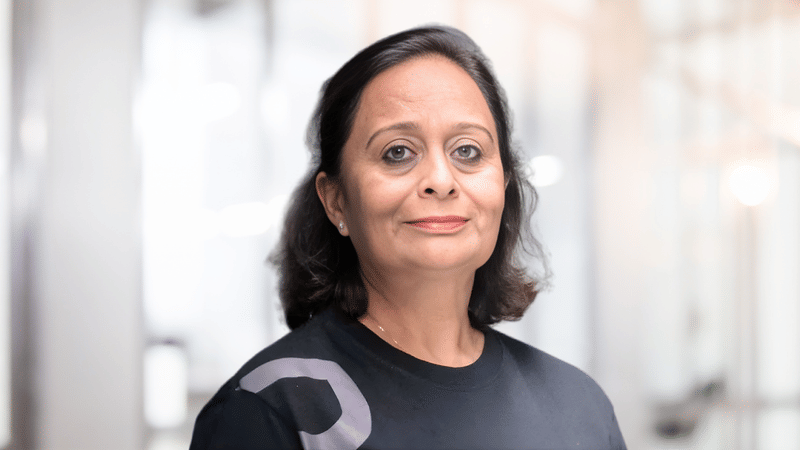
Deriv’s workforce is 47% women, with four of six C-level executives being women. CHRO Seema Hallon explains how balanced leadership and strong female representation in tech drive responsible growth and thoughtful decision-making.
As artificial intelligence transforms how organisations build, innovate, and operate, the race for skilled talent has intensified further. But for global fintech firm Deriv, the goal is not simply to hire faster, it is to hire smarter. The company is focused on building a global community of AI engineers who can translate ideas into real, production-grade solutions while reshaping how work gets done at scale.
In this exclusive conversation, Seema Hallon, CHRO at Deriv, shares how the organisation is cutting through the noise in a crowded AI talent market, balancing speed with hiring discipline, and identifying builders who can turn experimentation into impact.
She also discusses how Deriv is closing the AI capability gap through internal upskilling, fostering strong female representation across leadership and tech roles, and ensuring fairness in pay, promotions, and career growth.
From inclusive leadership to the democratising potential of AI, Hallon offers a candid view on how tech organisations can build future-ready and truly inclusive workplaces. Read the insights below:
Inside Deriv's AI talent playbook
Our ambition is clear: automate everything intelligently, at scale. AI is a primary driver of that vision.
Redesigning how work gets done requires the right people in the right roles. Our hiring strategy reflects that. We are not adding headcount for the sake of scale. We want to build a global community of AI engineers who are genuinely energised by the possibilities AI unlocks.
AI talent hubs are still emerging. Unlike traditional technology disciplines, the geography of AI expertise is fluid and evolving. We do not anchor ourselves to legacy tech centres. We are looking globally for builders who are experimenting, building, and pushing boundaries.
Our selection philosophy is uncompromising. We hire individuals who think beyond the brief, are excited by what AI can enable, and have the grit to turn ideas into production. Technical depth is essential, but so is an AI-first mindset, intellectual curiosity, comfort with ambiguity, and the discipline to learn continuously.
The pressure to hire fast is real. But velocity without judgment is expensive. A wrong hire can affect a team and slow momentum. So we balance acceleration with discipline.
Closing the AI skills gap
We are seeing that the biggest shortage in AI is the quality, not the volume, of candidates.
As AI has become a buzzword, the market has seen a surge of AI-labelled profiles and AI-generated resumes. Surface fluency is easy to manufacture. Genuine building capability is not.
We have therefore redesigned elements of our hiring process to cut through the noise. What we look for are engineers and operators who roll up their sleeves and translate AI into production-grade solutions.
We assess how candidates build, reason, and connect AI to real business outcomes. That clarity allows us to distinguish between paper expertise and practical capability, and hire with conviction.
But hiring alone is insufficient, as every function must become AI-fluent. We have invested heavily in upskilling our existing workforce. We embed structured learning into workflows and encourage peer-led experimentation across functions. Talent acquisition may accelerate change, but capability development is what makes it durable.
Speed vs. quality in AI hiring
In AI hiring, speed and quality often pull in different directions. The market moves quickly, but hiring mistakes in frontier roles can significantly slow transformation. We are conscious of both.
Credentials still matter, but they only tell part of the story. In AI, what someone can build and how they think while building tells a story. That is why we complement traditional interviews with formats that surface capability directly.
Our AI hackathons are one such lever. Candidates build functional solutions to real business challenges within a constrained timeframe. Watching that process gives us insight into judgment, prioritisation, and practical problem-solving under pressure.
We recently ran simultaneous hybrid hackathons in Dubai and Malaysia, attracting over 2,000 developers. The format allowed us to widen access beyond geography while maintaining consistent judging standards focused on applied AI capability and business relevance. We extend the same philosophy to university partnerships and internship programmes.
The intent is simple, see potential expressed through action before making long-term decisions. For strong candidates, this clarity allows us to move within four to eight weeks.
Women at Deriv today
Our overall workforce is 53% men and 47% women. At C-level, four of our six executives are women, and most of our office leads globally are women. We also maintain strong female representation across technology roles at multiple levels. That distribution reflects sustained intent over many years.
We have a clear belief in the value that women bring to leadership and to technical environments. In our experience, women leaders often demonstrate deep conscientiousness in decision-making and compassion in execution, qualities that are critical in scaling organisations responsibly. In fast-moving environments, judgment matters as much as speed.
For us, representation is about building balanced, thoughtful leadership and technical teams capable of navigating complexity without losing humanity.
From intent to impact
We approach fairness through clarity and consistency. Performance is reviewed every quarter. Employees are assessed against clearly defined expectations at each level, creating a common standard across functions and geographies. Feedback is documented and shared regularly, so progression is shaped by an ongoing conversation rather than a once-a-year event.
For compensation, we anchor decisions on two principles, external competitiveness (EC) and internal equity (IE). We benchmark against the market to remain competitive, while ensuring fairness internally so that individuals at similar levels are rewarded consistently. Tenure or gender do not determine pay, contribution and demonstrated capability do.
Our aim is to build a merit-based organisation where people can build long-term, meaningful careers. The intent is clear. The implementation is an ongoing journey of refinement.
Inclusion in action
Inclusion, for us, is less about programmes and more about mindset.
Across all our teams, including AI, access to high-impact projects and complex problem statements is based on capability, not gender or visibility. That ensures women are not channelled into supporting roles but are leading core technical initiatives when they demonstrate the ability and appetite to do so.
The strength of this approach is visible across our technology leadership. Beyond the C-level, several of our core technical functions, including Frontend Development, Quality Assurance and Automation and Risk, are led by women who have grown with the organisation over many years.
We also recognise that equal opportunity is not created by standards alone. The work environment must account for real-life realities. We therefore build flexibility, practical support structures, and transparent career conversations into how we operate.
AI reshaping women's workforce participation
We are at a point of inflection. AI is a structural change in how work is designed and delivered.
One of the most significant aspects of this shift is democratisation. AI tools are lowering technical barriers and expanding who can build, analyse, automate, and create. In many ways, this is new terrain for everyone. The field is still forming. No one has decades of inherited advantage in AI-native work.
That creates a rare moment. AI literacy is becoming foundational and learnable. It does not require a specific background or linear career path. That opens the door for women across functions and career stages to step into emerging roles, shape new workflows, and influence how organisations evolve.
Of course, this opportunity requires curiosity, resilience, and the willingness to engage with change. The technology may level certain barriers, but participation still depends on agency.
AI has created a more open playing field than many previous technological shifts. What happens next will depend on how confidently and deliberately women choose to step into it.
Building a truly inclusive workplace in tech industry
Across the world, women’s confidence and ambition are rising. More women are stepping into technical careers and leadership roles than ever before. That momentum is real.
At the same time, confidence does not always present as volume. In technical environments, especially, the loudest voice in the room is not always the most capable. Organisations must learn to recognise contribution.
Building inclusive tech workplaces requires leaders to create space for experimentation, speaking, challenging, and growth. It requires patience in recognising different leadership styles and different ways of thinking.
Author
Loading...