






AI & Emerging Tech
‘Don’t leave AI rulemaking to companies like mine’: Sam Altman urges world leaders at G7 Summit






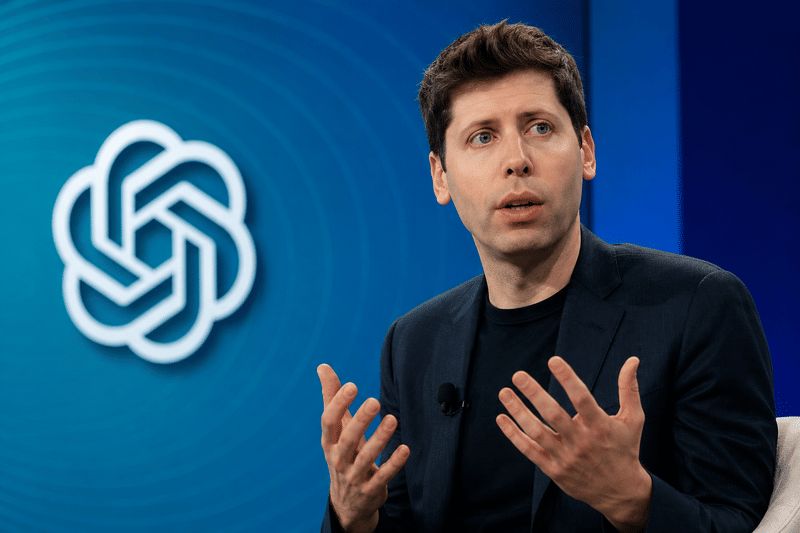
OpenAI chief executive Sam Altman urged governments to take responsibility for regulating artificial intelligence as world leaders and technology executives gathered at the G7 Summit to discuss the technology's growing impact on society, economies and national security.
Artificial intelligence took centre stage at the final day of the G7 Summit in France, where world leaders and some of the industry's most influential executives debated how governments should respond to the rapid rise of the technology.
Among the strongest messages came from OpenAI chief executive Sam Altman, who urged governments not to hand responsibility for AI governance to the companies developing the technology.
Speaking during discussions in Evian-les-Bains, Altman told leaders that while AI companies are building increasingly powerful systems, decisions about regulation should remain in the hands of governments and citizens.
"Do not cede your responsibilities to AI labs like mine," Altman said during the summit. "We develop the technology, and the citizens of the free world make the rules."
AI governance moves up the global agenda
The discussions brought together leaders of the Group of Seven nations with executives from leading artificial intelligence companies, including Google DeepMind chief executive Demis Hassabis and Anthropic chief executive Dario Amodei.
According to summit discussions, leaders focused on how countries can capture the economic and societal benefits of AI while addressing concerns related to security, governance and public trust.
The meeting reflected how artificial intelligence has evolved from a technology industry issue into a broader policy challenge involving labour markets, democracy, national security and economic competitiveness.
Altman also told leaders that questions about whether AI can deliver value have largely been answered and suggested that more capable systems are likely to emerge in the years ahead.
Macron pushes for stronger oversight
French President Emmanuel Macron, who hosted this year's summit, said governments and businesses could no longer ignore the consequences AI may have on societies and democratic institutions.
Macron said the need for regulation had become increasingly urgent as AI systems become more sophisticated and more widely adopted.
According to comments made during the summit, Macron also criticised restrictions imposed by the United States on access to certain advanced AI models for foreign nationals.
While acknowledging security concerns around powerful AI technologies, he warned that excessive restrictions could undermine international cooperation and slow collective progress.
The comments highlighted a growing divide between countries seeking tighter controls over advanced AI systems and those advocating for broader international collaboration.
Leaders highlight economic and workforce implications
The discussions extended beyond technology policy and touched on the broader consequences of AI adoption.
Canadian Prime Minister Mark Carney warned against excessive dependence on a small number of AI providers and stressed the importance of international cooperation.
He said countries risk making strategic mistakes if they fail to learn from recent disruptions affecting access to advanced AI technologies.
Meanwhile, European Commission President Ursula von der Leyen emphasised the interconnected nature of AI development between Europe and the United States.
She said both regions share common interests because their technology ecosystems and financial systems remain closely linked.
The debate reflected growing concern among policymakers about concentration of power within a handful of AI companies and the implications for innovation, competition and economic resilience.
AI leaders join world governments
The AI discussions took place after G7 leaders spent much of the three-day summit addressing geopolitical tensions, including the war in Ukraine, developments in the Middle East and broader economic challenges.
On the final day, attention shifted to artificial intelligence and its growing influence across industries and societies.
Executives participating in the discussions included:
• Sam Altman, OpenAI
• Demis Hassabis, Google DeepMind
• Dario Amodei, Anthropic
• Arthur Mensch, Mistral AI
• Aidan Gomez, Cohere
• Ren Ito, Sakana AI
• Vivek Raghavan, Sarvam AI
• Marc Benioff, Salesforce
Representatives from Black Forest Labs, Synthesia and Domyn also attended the meeting.
The G7 comprises the United States, Canada, Britain, France, Germany, Italy and Japan. Guest nations at this year's summit included India, Brazil, Egypt, Kenya, South Korea, Qatar, Ukraine and the United Arab Emirates.
Beyond technology, concerns turn to society
The summit also examined the social consequences of artificial intelligence, particularly its impact on children and young people.
According to Reuters, spouses of several G7 leaders attended a separate event focused on protecting children in the age of artificial intelligence, examining issues including online safety, mental health and the risks associated with emerging technologies.
The discussion underscored how AI policy is increasingly extending beyond innovation and economic growth into areas such as education, public wellbeing and social protection.
As governments accelerate efforts to develop AI strategies and regulatory frameworks, Altman's intervention highlighted a growing consensus that decisions about how the technology is governed will not be left solely to the companies creating it.
Topics
Author
Loading...