






Business
The AI tool Anthropic called ‘too powerful’ has been suspended. Here’s why





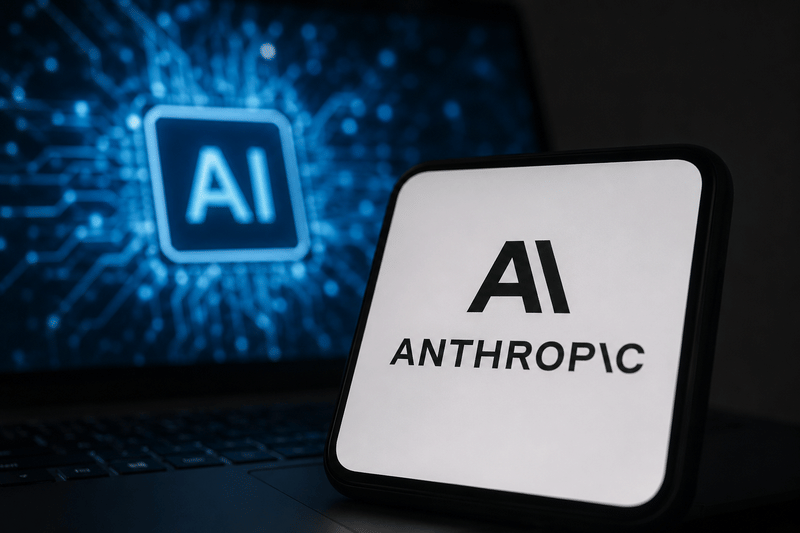
Anthropic has abruptly disabled access to its newest AI models after a US government order linked to potential security risks, intensifying debate over the regulation of increasingly capable AI systems.
Just days after its public launch, Anthropic has suspended access to one of its most advanced artificial intelligence systems following intervention from US authorities.
The company announced that it had been ordered to restrict access to Claude Fable 5, an AI model it previously described as "too powerful", forcing it to disable both Fable 5 and Mythos 5 for customers while it complies with the directive.
The suspension has added a new chapter to the growing debate over how governments should regulate increasingly powerful AI tools, particularly those capable of identifying software vulnerabilities and performing sophisticated cyber security tasks.
What has happened?
In a statement published on its website, Anthropic said a government order required it to suspend access to the models for foreign nationals.
According to the company, the practical impact of the directive meant it had to disable access to both models entirely.
Key developments include:
Anthropic has suspended access to Claude Fable 5 and Mythos 5
The move came days after the public release of Fable 5
The company said it was acting to comply with a US government order
US authorities have not publicly identified specific security concerns
Anthropic said the issue appears linked to a potential method for bypassing model safeguards
The company has not indicated how long the suspension will remain in place.
Why are authorities concerned?
According to Anthropic, its understanding is that US national security officials became aware of a possible technique for "jailbreaking" the model.
Jailbreaking refers to methods used to bypass built-in restrictions and safety controls in software systems.
Anthropic said it reviewed a demonstration of the technique and concluded that it exposed a limited number of previously known vulnerabilities.
The company stated that those vulnerabilities were relatively minor and claimed other publicly available AI models were capable of identifying them without requiring any bypass method.
However, the concerns appear to have been significant enough for authorities to seek restrictions on access to the model.
Why did Anthropic call it ‘too powerful’?
Before its public launch, Anthropic repeatedly highlighted the capabilities of Claude Fable 5.
The company granted early access to only a small number of organisations during a testing phase that began in April.
At the time, Anthropic said the model's capabilities raised unique concerns because of its ability to identify weaknesses in computer systems and potentially assist with cyber operations.
The company described Fable 5 as its most capable publicly available model to date and said its abilities exceeded those of previous releases.
That messaging attracted attention across the technology industry, with some observers viewing the warnings as evidence of genuine safety concerns, while others questioned whether the language overstated the risks.
Experts warn of a new phase in AI security
The latest development has renewed discussion around the relationship between advanced AI and cyber security.
Speaking to the BBC, Gina Neff, Professor of Responsible AI at Queen Mary University London, said restricting access could affect both AI development and independent testing efforts.
She also warned that it could limit international collaboration around AI governance and security.
Neff pointed to testing by the UK government's AI Security Institute, which found the model was able to exploit systems and defences in 73% of test scenarios.
She described the technology as representing a significant leap in cyber security capabilities.
The comments reflect growing concerns among policymakers that AI systems are becoming capable of performing increasingly sophisticated technical tasks at a speed that may outpace existing safeguards.
Political tensions add another layer
The suspension comes at a time when Anthropic is already facing scrutiny from the Trump administration.
US President Donald Trump has publicly criticised the company, while Defence Secretary Pete Hegseth previously designated Anthropic as a "supply chain risk".
According to the BBC, this marked the first time a US company had received such a designation, which is traditionally associated with organisations considered unsuitable for government use.
Anthropic is challenging that designation in court.
A judge has ruled that the Pentagon's directive cannot currently be enforced, allowing government agencies and defence contractors to continue using Anthropic's tools while legal proceedings continue.
The company is also involved in a separate dispute with the administration over efforts to restrict government use of its AI systems.
What happens next?
The suspension of Claude Fable 5 highlights the increasingly complex balance between AI innovation, commercial deployment and national security oversight.
For Anthropic, the immediate challenge is complying with government requirements while addressing concerns about the model's security controls.
For regulators, the episode raises broader questions about how advanced AI systems should be evaluated before public release and what safeguards are necessary when AI tools demonstrate capabilities that extend into cyber security and infrastructure protection.
As governments and AI companies continue to navigate these issues, the sudden suspension of a model once promoted as exceptionally powerful may become an early example of how regulatory intervention shapes the next generation of artificial intelligence.
Topics
Author
Loading...