






Diversity Equity Inclusion
Kuwaiti women near equal workforce share, but average pay gap remains 26.7%






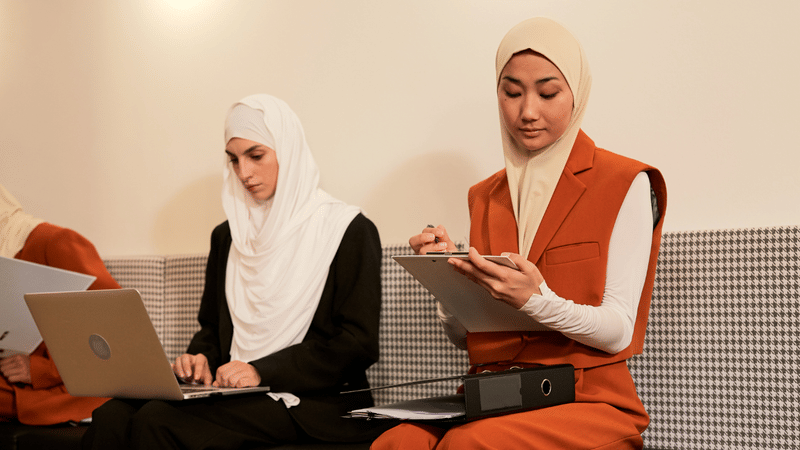
Kuwaiti men in government employment earned an average of 1,929 dinars a month, compared with 1,414 dinars for women, representing a 26.7 per cent gap.
Kuwaiti women are approaching parity with men in the country’s citizen workforce, but a significant gap remains in average earnings, with women earning 26.7 per cent less than men in the first quarter of 2026.
Data from Kuwait’s Central Statistical Bureau show that Kuwaiti men across the public and private sectors earned an average monthly salary of 1,877 dinars, compared with 1,376 dinars for women. The 501-dinar difference translates into an average wage gap of 26.7 per cent.
The figures, released ahead of International Equal Pay Day on 18 September, highlight the contrast between women’s growing labour market participation and the continuing difference in average earnings.
Kuwaiti women make up nearly half of citizen workforce
Data from the Public Authority for Civil Information show that around 3.3 million people were employed in Kuwait as of June 2026, with women accounting for about 30.7 per cent of the overall workforce.
The picture is different among Kuwaiti citizens. Of roughly 495,700 working citizens, women accounted for 48.9 per cent, or about 242,000 workers, compared with approximately 253,000 men.
The figures indicate that Kuwaiti women have moved close to numerical parity with men in the citizen workforce, although this has not translated into comparable average earnings.
Private sector records wider pay gap
The wage difference is evident across both government and private employment, but the gap is larger in the private sector.
Kuwaiti men in government employment earned an average of 1,929 dinars a month, compared with 1,414 dinars for women, representing a 26.7 per cent gap.
In the private sector, men earned an average of 1,681 dinars, while women earned 1,140 dinars. The 541-dinar difference puts the average private-sector wage gap at 32.2 per cent.
Across both sectors, the average monthly salary gap stood at 501 dinars.
Women’s average salaries growing faster
The data also point to faster salary growth for Kuwaiti women over the past year, although the overall earnings gap remains substantial.
Between the first quarters of 2025 and 2026, women’s average monthly salary across the two sectors rose from 1,348 to 1,376 dinars, an increase of about 2 per cent. Men’s average salary increased from 1,865 to 1,877 dinars, or about 0.64 per cent.
The difference was more pronounced in the private sector. Women’s average salary increased from 1,070 to 1,140 dinars, a rise of around 6.5 per cent, while men’s average salary grew by about 1.1 per cent.
Average wage gap does not establish unequal pay for identical work
The 26.7 per cent figure should not be interpreted as evidence that Kuwaiti women are paid 26.7 per cent less than men for performing the same job.
The data compare the average earnings of all Kuwaiti men with those of all Kuwaiti women. They do not account for differences in occupation, job level, experience, working hours, industry, seniority or access to managerial positions.
Establishing whether men and women receive equal pay for work of equal value would require more detailed job-level data comparing employees with similar roles, qualifications, experience and responsibilities.
This distinction is also reflected in international measures of gender equality, which assess equal pay for similar work separately from broader indicators such as earned income, labour-force participation and representation in senior positions.
Economic participation remains a wider gender gap
Kuwait’s progress in education contrasts with its position on broader economic participation and opportunity.
The World Economic Forum’s 2025 Global Gender Gap Report ranked Kuwait 128th among 148 countries, an improvement from 131st in 2024. The report estimated that Kuwait had closed 99.3 per cent of its gender gap in educational attainment.
However, the country had closed 55.1 per cent of its gender gap in economic participation and opportunity. The indicator covers several dimensions, including labour-force participation, income, equal pay for similar work and representation in professional, technical and senior roles.
The figures point to a gap between women’s educational outcomes and their broader economic opportunities.
Workforce participation shifts focus to career progression
Kuwait’s latest figures therefore add another dimension to the country’s efforts to increase women’s economic participation under New Kuwait 2035 and the Sustainable Development Goals.
With women accounting for almost half of the Kuwaiti citizen workforce, the focus is increasingly shifting beyond participation rates to the nature of that participation, including the sectors and occupations women enter, their access to senior positions and how their earnings develop over their careers.
The latest data show a clear average earnings gap - Kuwaiti women earned 1,376 dinars a month compared with 1,877 dinars for men in the first quarter of 2026. But the figures alone cannot determine whether women and men are receiving different pay for identical work.
The distinction matters as Kuwait continues to address gender equality: numerical parity in workforce participation does not necessarily translate into parity in earnings, career progression or access to economic opportunities.
Topics
Author
Loading...