






Economy Policy
Davos 2026: Who’s coming, who matters and what to watch at WEF





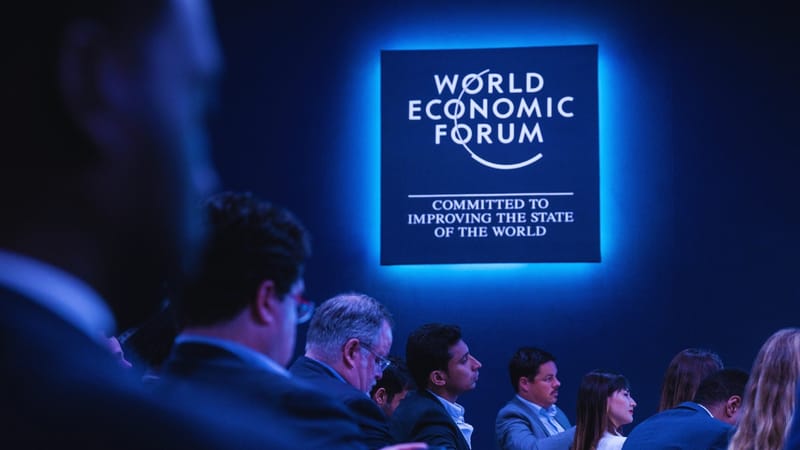
Nearly 3,000 leaders head to Davos as geopolitics, AI and economic risk converge at the World Economic Forum 2026.
When the World Economic Forum’s Annual Meeting opens in Davos on January 19, presence itself will be the signal.
The 2026 meeting, running through January 23, brings together nearly 3,000 leaders from more than 130 countries at a time when global growth is slowing, alliances are fraying and artificial intelligence is reshaping economic power. According to Reuters, this year’s gathering marks record government participation, with around 400 senior political leaders, including nearly 65 heads of state or government.
Davos has rarely been this crowded—or this cautious.
The political centre of gravity
The most consequential figure in Davos this year is US President Donald Trump, returning to the forum at a moment of heightened trade tensions and geopolitical recalibration. Reuters reported that Trump is leading the largest-ever US delegation to Davos, underscoring Washington’s intent to shape conversations around protectionism, energy security and industrial policy.
Other political leaders to watch include:
-
Mark Carney, Prime Minister of Canada
-
Friedrich Merz, Chancellor of Germany
-
Emmanuel Macron, President of France
-
Ursula von der Leyen, President of the European Commission
-
He Lifeng, China’s Vice-Premier
-
Volodymyr Zelenskyy, President of Ukraine
The Wall Street Journal reported that many leaders arrived in Davos under domestic pressure—from inflation and fiscal strain to voter backlash—sharpening debates around state capacity, competitiveness and political legitimacy.
CEOs arrive, but caution dominates
Davos 2026 will host around 850 CEOs and chairpersons, but the tone is notably restrained. Boardrooms are prioritising resilience, margins and regulatory clarity over expansionary bets.
Technology remains the focal point. The World Economic Forum has said nearly 100 unicorn founders and technology pioneers are participating, with artificial intelligence dominating both public panels and private meetings. Sessions this year lean less towards vision and more towards governance, deployment and workforce impact.
As one executive told the Wall Street Journal ahead of the summit, “This is a year for risk management, not grand announcements.”
India’s moment: decentralised power on display
India has arrived in Davos with one of its largest and most decentralised delegations yet, signalling a shift in how it uses the WEF platform.
At least four Union ministers — Ashwini Vaishnaw, Shivraj Singh Chouhan, Pralhad Joshi and K. Rammohan Naidu — are attending, alongside six chief ministers and more than 100 Indian CEOs.
Chief ministers to watch include:
-
Devendra Fadnavis (Maharashtra)
-
N. Chandrababu Naidu (Andhra Pradesh)
-
A. Revanth Reddy (Telangana)
-
Himanta Biswa Sarma (Assam)
-
Mohan Yadav (Madhya Pradesh)
-
Hemant Soren (Jharkhand)
Their presence underscores India’s state-led investment pitch, with competing regions positioning themselves as execution-ready destinations rather than policy narratives.
Corporate India is equally visible. Business leaders expected in Davos include Mukesh Ambani, N. Chandrasekaran, Sanjiv Bajaj, Sunil Bharti Mittal, Nandan Nilekani, Salil Parekh, Rishad Premji, Anish Shah, Vijay Shekhar Sharma and Sumant Sinha, among others.
Institutions under scrutiny
Multilateral leadership is strongly represented, even as trust in global institutions faces renewed pressure.
Leaders attending include UN Secretary-General António Guterres, World Bank President Ajay Banga, IMF Managing Director Kristalina Georgieva, ECB President Christine Lagarde, WTO Director-General Ngozi Okonjo-Iweala, and WHO chief Tedros Adhanom Ghebreyesus.
The WEF Global Cooperation Barometer 2026, released ahead of the meeting, warned that while cooperation has not collapsed, it is becoming narrower and more transactional, reflecting geopolitical fragmentation.
What to watch this week
Davos 2026 is unlikely to deliver sweeping declarations. Its significance lies elsewhere:
-
Whether political dialogue translates into coordination, not rhetoric
-
Whether AI discussions move from ambition to governance
-
Whether investment capital follows execution-ready markets, not promises
As WEF President and CEO Børge Brende has said, dialogue is no longer optional in an uncertain world—it is a necessity. Whether Davos can still convert dialogue into trust and action will define its relevance in 2026.
Topics
Author
Loading...