






Economy Policy
Kuwait begins enforcing unified dress code across public and private healthcare facilities







The dress code also prohibits clothing featuring inappropriate slogans or advertisements, as well as sportswear, shorts, ripped garments, sports caps, or clothing above the knee.
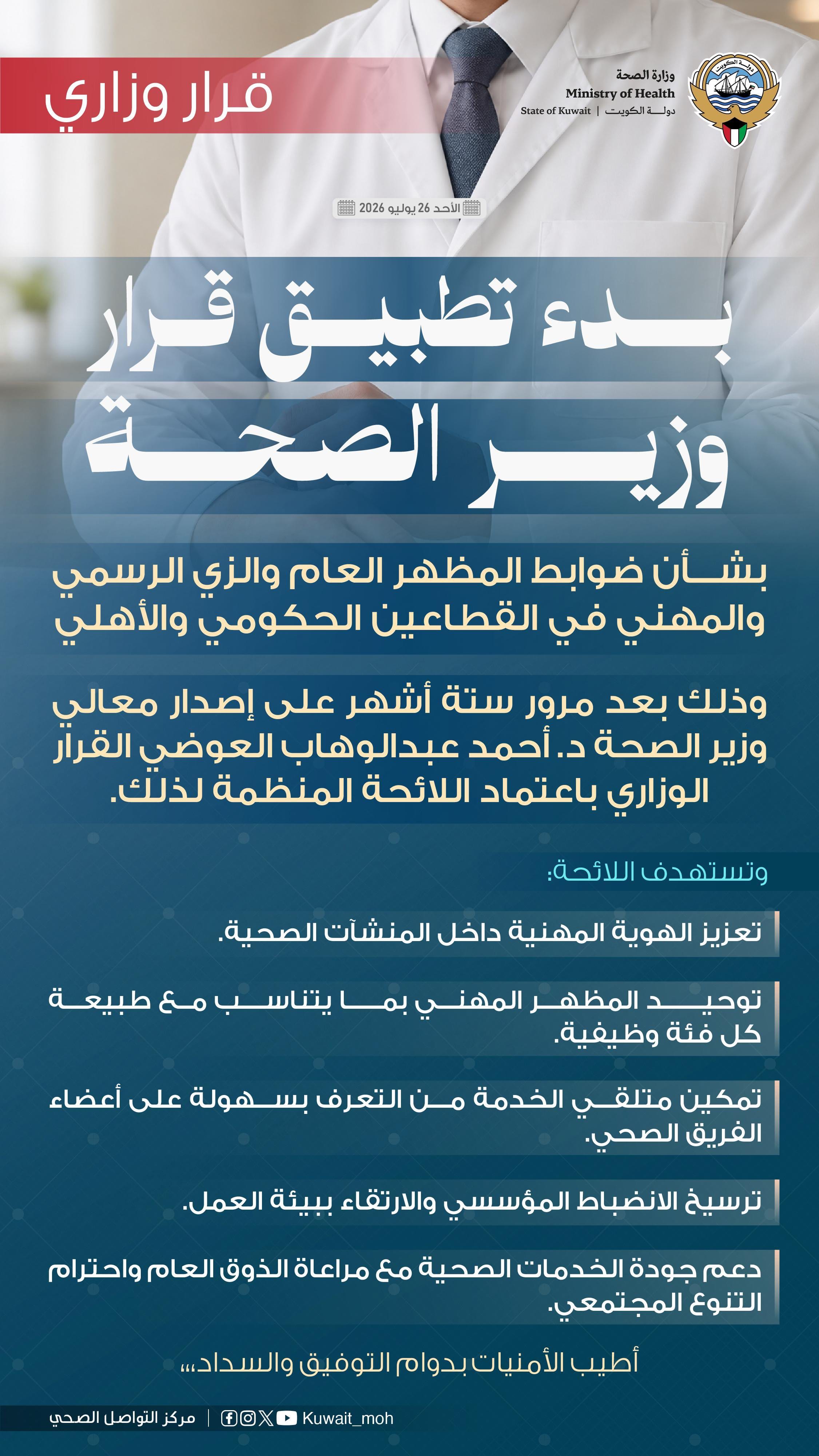
Kuwait's Ministry of Health has begun enforcing a unified dress code for employees across public and private healthcare facilities, as part of a broader effort to strengthen professional identity, improve institutional discipline, and enhance the quality of healthcare services.
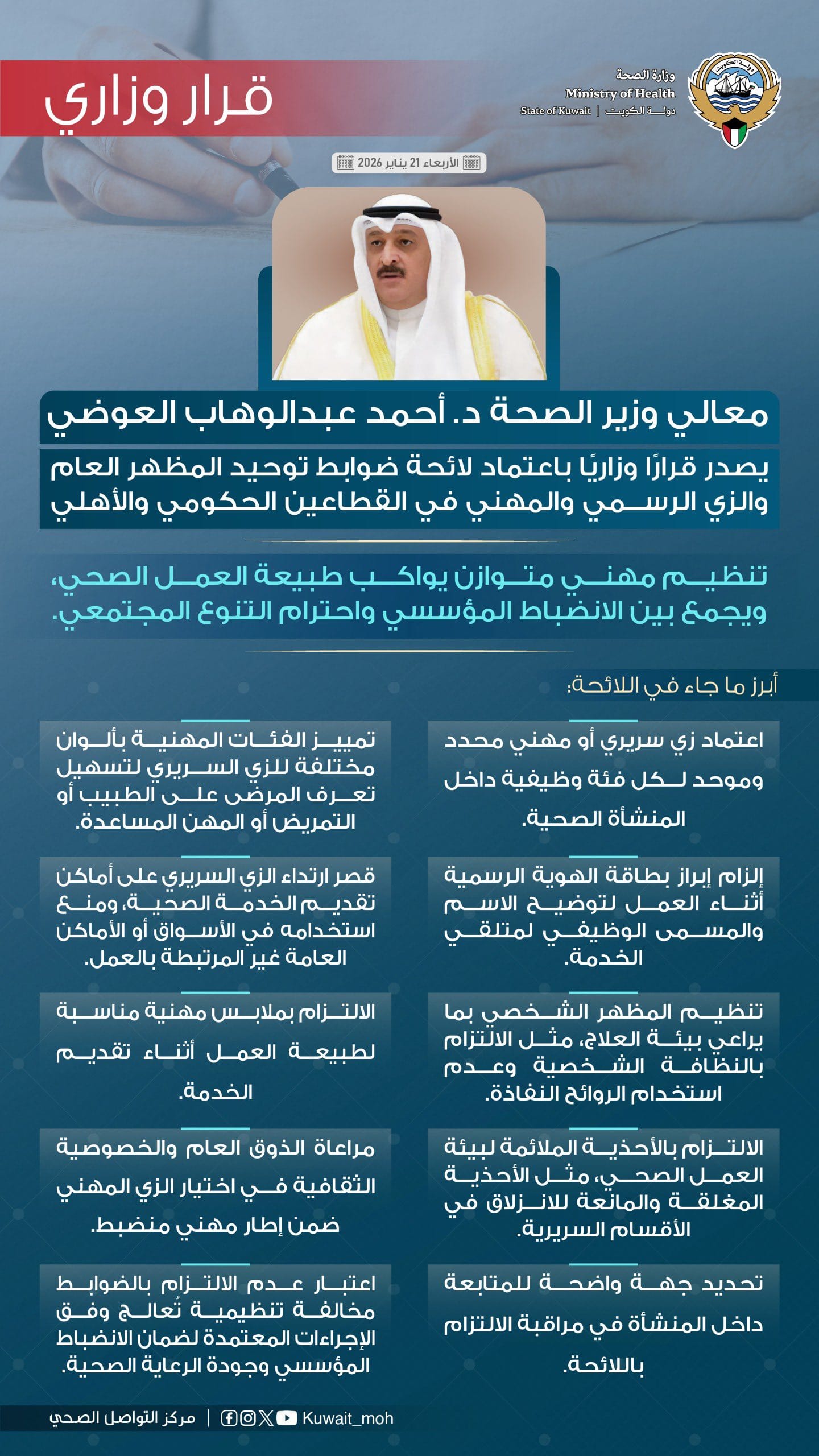
The regulations, which took effect following a ministerial decision issued by Health Minister Dr. Ahmed Al-Awadhi on January 21, establish standardised requirements for the appearance and official uniforms of healthcare personnel across the country.
According to the ministry, the initiative aims to create a more professional work environment by unifying staff appearance according to their roles, while making it easier for patients to identify members of the healthcare team.
“His Excellency the Minister of Health, Dr. Ahmed Abdul Wahab Al-Awadi, issues a ministerial decision approving the regulations for unifying the general appearance and the official and professional uniform in both the governmental and private sectors, as part of enhancing institutional governance, supporting a professional and safe work environment, and entrenching the quality of healthcare.”
The ministry said the policy supports ongoing efforts to improve healthcare quality while respecting public values and Kuwait's diverse society. It added that a consistent professional appearance is expected to strengthen the sector's image and reinforce public confidence in healthcare services.
Under the new regulations, all employees must wear official identification badges throughout working hours, maintain high standards of personal hygiene, and ensure that tattoos remain fully covered during work shifts and on-call duties. Clothing must be clean, modest, and appropriate for a professional healthcare setting.
The dress code also prohibits clothing featuring inappropriate slogans or advertisements, as well as sportswear, shorts, ripped garments, sports caps, or clothing above the knee. Employees are required to wear formal footwear or plain, single-coloured athletic shoes without bright colours or prominent logos.
To standardise professional attire across healthcare roles, the ministry has introduced dedicated uniforms for doctors, nurses, pharmacists, laboratory technicians, emergency medical personnel, support medical staff, and engineering employees.
The new policy includes three approved designs for clinical scrubs, catering to men, women, and Islamic women's styles.
Separate uniforms have also been introduced for nursing staff, emergency medical teams, and Ministry of Health engineering personnel, with designs tailored to the operational and occupational safety requirements of each profession.
The ministry warned that failure to comply with the approved dress and appearance standards will be considered a workplace violation and may result in disciplinary or legal action under applicable regulations. It said the enforcement measures are intended to strengthen institutional accountability while ensuring consistent implementation across healthcare facilities.
The Ministry of Health said the regulations form part of its wider strategy to raise institutional standards, promote workplace professionalism, and deliver a more efficient, patient-centred healthcare system.
Topics
Author
Loading...