






Economy Policy
Oman accelerates industrial transformation with focus on AI, skills and local manufacturing






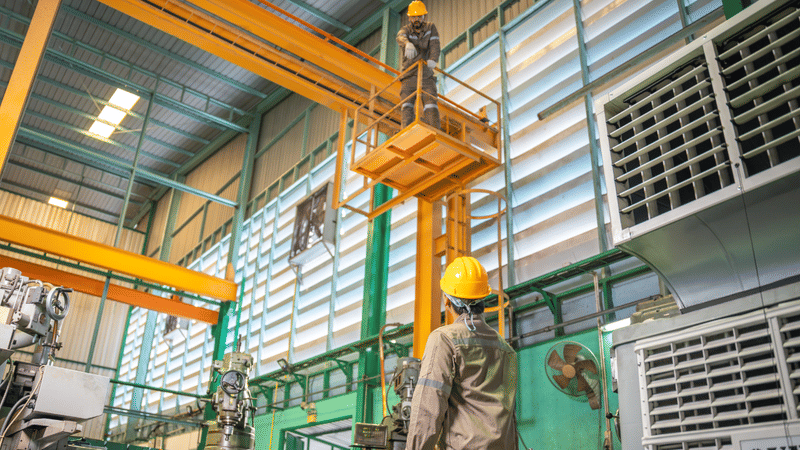
Oman has identified 30 priority industrial activities across seven key clusters, including food, petrochemicals, healthcare, metals, electromechanical industries, environmental industries and renewable energy.
Oman’s industrial sector is entering a new phase of growth focused on smart manufacturing, local supply chains, technology adoption and workforce development as the Sultanate moves to implement the targets of its Industrial Strategy 2040.
The shift marks a move beyond expanding factories and production capacity towards building a more integrated industrial ecosystem that increases local value addition, strengthens national capabilities and supports economic diversification.
According to data from Oman’s National Centre for Statistics and Information, manufacturing contributed around RO3.7 billion to the country’s GDP at constant prices by the end of 2025. In the first quarter of 2026, the contribution reached RO869 million.
Under the Industrial Strategy 2040, Oman aims to increase manufacturing’s contribution to RO5.44 billion by 2030 and RO10.702 billion by 2040.
Non-oil merchandise exports also increased 1.5% year-on-year to RO2.739 billion by the end of May 2026. The strategy targets non-oil merchandise exports of more than RO10 billion by 2030, covering sectors including metals, chemicals, energy-related industries and food products. Re-exports rose 64.4% to more than RO1 billion during the same period.
Anwar bin Hilal Al Jabri, Oman’s Minister of Commerce, Industry and Investment Promotion, said the indicators demonstrate the progress made in strengthening the country’s industrial capacity and creating a more integrated industrial ecosystem.
He said the ministry would focus on deeper partnerships with the private sector and investors to localise priority industries, increase local content and support small and medium-sized enterprises connected to manufacturing. The approach is also intended to create higher-quality employment opportunities for Omani citizens and improve the competitiveness and value added of locally produced goods.
“Our ambition is not limited to expanding the size of the industrial sector, but rather extends to building a sustainable, smart and competitive industrial sector capable of innovation, export and integration with other economic sectors,” Al Jabri said.
Oman targets industrial workforce growth
Workforce development is emerging as a key component of the strategy. Industrial employment reached approximately 240,226 workers by the end of 2025, with the government targeting around 273,000 workers by 2030.
The additional jobs are expected to be concentrated in areas including non-metallic mineral products, food manufacturing, and machinery and equipment production.
The strategy also targets private-sector investment of around 54% and foreign investment of 34%, while seeking to deepen the connections between industrial projects and supporting activities such as logistics, packaging, maintenance, laboratories, software, automation, engineering and safety services.
Oman has identified 30 priority industrial activities from 119 potential activities. These are organised into clusters covering food, petrochemicals, healthcare, metals and metallurgy, electromechanical industries, environmental industries and renewable energy.
The aim is to connect manufacturers with suppliers and service providers within integrated industrial ecosystems.
Meanwhile, around 7,307 Omani products were registered on the Made in Oman platform between 2024 and June 2026, reflecting efforts to expand the visibility and market reach of locally produced goods.
Technology adoption is also becoming central to Oman’s industrial development agenda, with factories increasingly using automation, data analytics, artificial intelligence, predictive maintenance and supply chain optimisation.
The Smart Production Factories Programme, launched in 2024, initially assessed 20 Omani factories using the Smart Industry Readiness Index (SIRI). The programme has since expanded its target to 60 factories, with 45 assessed by the end of June 2026.
The assessment covers automation, connectivity, intelligence, workforce readiness, governance, supply chain management and product lifecycle management.
Oman is also developing local expertise in factory digital-readiness assessments by training Omani assessors and supporting local companies specialising in the field.
The Kafa’a Lean Manufacturing Programme is another part of the sector’s productivity drive. Its first phase covers nine factories and includes training 13 Omani practitioners, who will implement process-improvement projects over three to six months.
The programme estimates annual financial savings of around RO360,000 per participating factory through higher production capacity, reduced waste and lower operating costs.
As industrial technology expands, demand is expected to increase for skills spanning operations, maintenance, quality, safety and supply chains, alongside automation, data analytics, advanced maintenance, industrial cybersecurity and energy management.
Oman’s professional accreditation system is also being used to verify workers’ qualifications, experience and competencies, while professional classification provides a clearer picture of occupations and skill levels.
The government expects this data to support workforce planning, education and training, employment and Omanisation programmes, while helping develop Omani talent for technical, specialised, supervisory and leadership positions.
Going forward, Oman plans to measure industrial performance not only through the size of the sector but also through its contribution to the wider economy, including local value added, purchases from domestic suppliers, the number of Omani suppliers, import substitution, industrial exports, employment and skills development.
Author
Loading...