






Employee Skilling
Saudi Arabia mandates on-the-job training for private firms with 50+ employees







For large companies employing 5,000 workers or more, the regulation sets a fixed annual requirement of 100 trainees, regardless of further workforce growth.
Saudi Arabia’s Ministry of Human Resources and Social Development has issued a ministerial decision requiring private sector establishments with 50 or more employees to provide structured on-the-job training opportunities for Saudi graduates and job seekers.
The move is aimed at regulating vocational training in the labour market and strengthening the readiness of national talent.
Under the new rules, eligible establishments must train at least 2% of their total workforce annually through programmes lasting between two and six months.
Companies are required to formalise a training contract with each trainee via the Qiwa platform, detailing the programme duration, stages, targeted skills or profession, and the rights and obligations of both parties.
“In line with the Ministry’s commitment to supporting and qualifying Saudi graduates and job seekers, and enabling them with the skills needed to integrate into the labour market and secure stable and productive employment opportunities, the Ministry has issued this procedural guide,” the ministry said, noting alignment with the goals of Saudi Vision 2030.
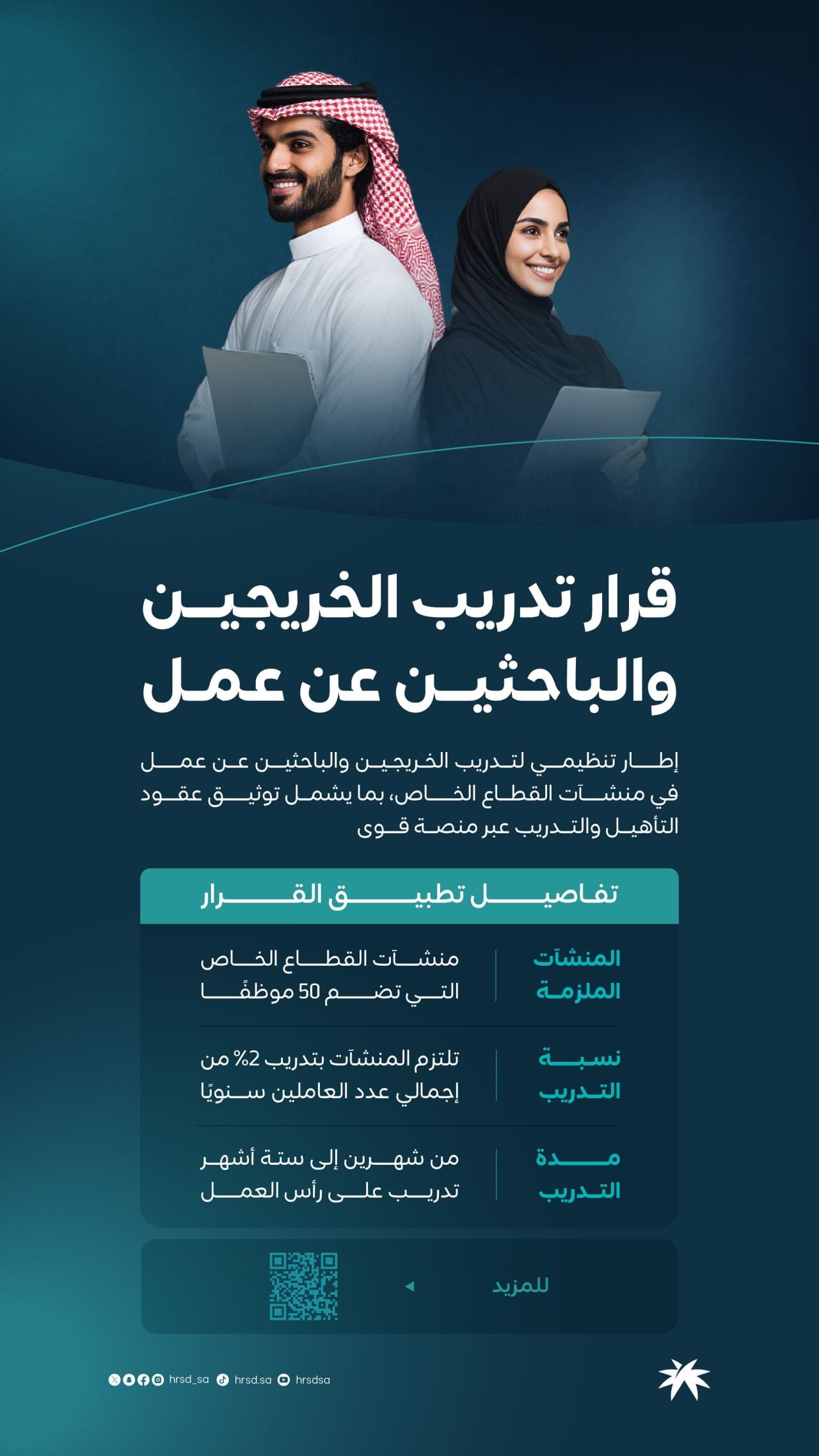
For large establishments employing 5,000 workers or more, the regulation sets a fixed annual requirement of 100 trainees, regardless of further workforce growth.
The framework also obliges employers to design practical training plans, provide necessary equipment, submit periodic performance reports, and issue completion certificates outlining the duration and skills gained.
The ministry has published a detailed procedural guide on its website and said it will take the necessary measures to ensure compliance.
The initiative forms part of broader efforts to strengthen the work-linked training ecosystem, better align training outcomes with labour market needs, and enhance the competitiveness of Saudi human capital while deepening public-private collaboration.
Author
Loading...