






Recruitment
Saudi Arabia raises saudization targets for engineering and procurement roles







Officials added that the measures are expected to improve workplaces, expand job opportunities for Saudi nationals, and strengthen their participation in strategic sectors, including the non-profit sector.
Saudi Arabia’s Ministry of Human Resources and Social Development (MHRSD) has issued two new decisions to significantly increase Saudization rates in key professional roles, reinforcing the Kingdom’s push to expand national participation in the labor market and create higher-quality job opportunities for citizens.

Under the first decision, the Saudization rate in engineering professions has been raised to 30 percent, alongside an increase in the minimum monthly salary to SAR 8,000 in the private and non-profit sectors.
The measure, developed in partnership with the Ministry of Municipalities and Housing, is effective from December 31, 2025 onwards, and applies to establishments employing five or more engineers.
The decision covers 46 engineering roles, including architectural, industrial, electronics, power generation, marine, vehicle, and sanitary engineering, among others. It also requires engineers to hold professional accreditation from the Saudi Council of Engineers. To allow companies time to prepare, implementation will begin six months after the decision’s issuance.
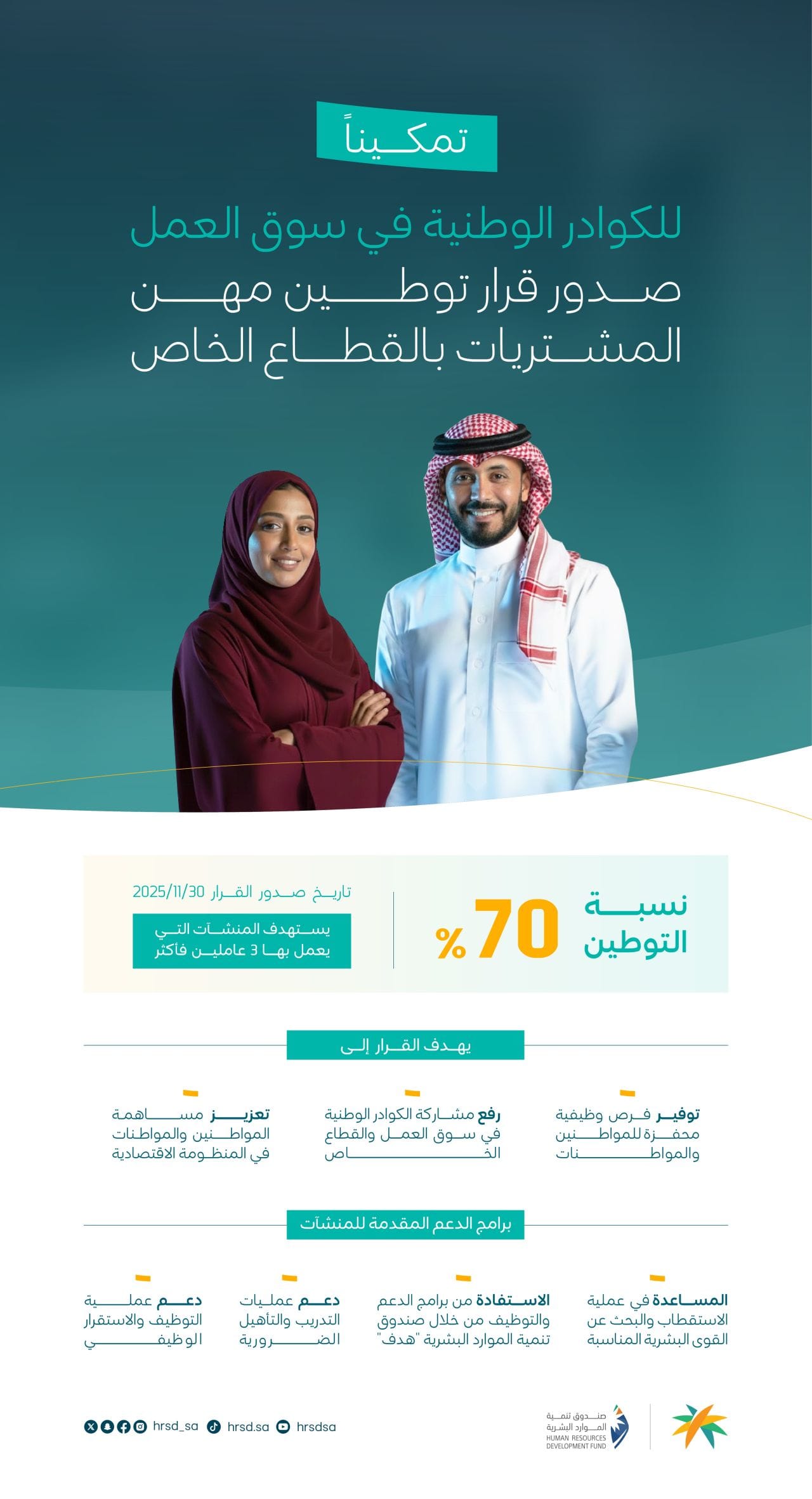
In a parallel move, the ministry announced a sharp increase in Saudization requirements for procurement professions, raising the target to 70 percent in the private sector. This decision was issued on November 30, 2025, and applies to companies employing three or more workers in covered procurement roles.
The procurement decision spans 12 job titles, including purchasing manager, contracts manager, procurement specialist, tenders specialist, logistics services manager, warehouse manager, e-commerce specialist, and market research specialist. As with the engineering mandate, a six-month grace period will be provided to help companies meet compliance requirements.
The ministry said the two decisions are based on extensive labor market studies and align with the availability of Saudi job seekers in relevant disciplines, as well as the future needs of the engineering and procurement sectors. Officials added that the measures are expected to improve workplace quality, expand specialized employment opportunities for Saudi men and women, and strengthen national participation in strategic sectors, including the non-profit sector.
To support implementation, the ministry has published detailed procedural guidelines on its official website, outlining the targeted professions, Saudization calculation mechanisms, and compliance steps.
Businesses covered by the decisions have been urged to make use of the grace period to prepare, warning that failure to comply could result in regulatory penalties.
Private sector employers are also expected to benefit from a package of incentives offered through MHRSD ecosystem, including support for recruitment, training, qualification, employment, and job stability, as well as priority access to Saudization support programs and initiatives run by the Human Resources Development Fund (HRDF
Author
Loading...