






AI & Emerging Tech
Workday’s Zakaria Haltout on how AI is reshaping jobs, skills and the future of work in the UAE






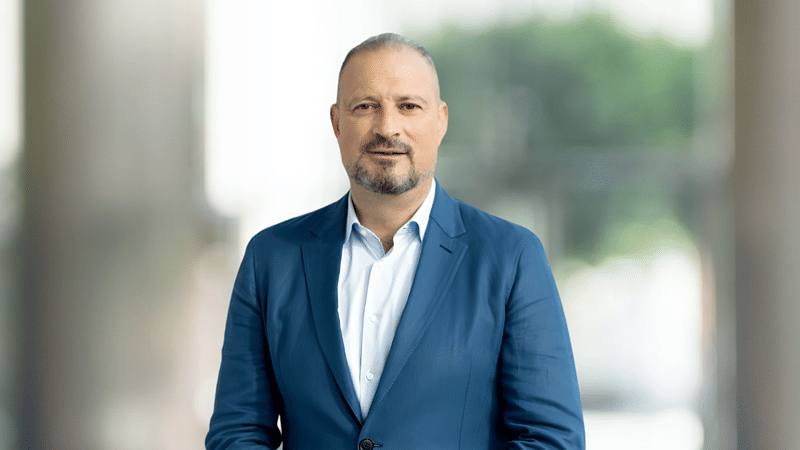
Zakaria Haltout discusses how employers can translate AI adoption into tangible business value through workforce reskilling, AI fluency and job redesign.
As AI reshapes the nature of work, Workday’s latest Global Workforce report highlights a growing shift towards augmenting existing workforces rather than reducing headcount, with 40% of business leaders expecting AI to help them get more value from employees. However, rapidly changing skills requirements, slowing internal mobility and gaps in employer-led development are creating new workforce challenges.
In this exclusive interview, Zakaria Haltout, Group Vice President, Middle East, Turkey and Africa at Workday, delves into how organisations can turn AI adoption into measurable business value, build AI fluency, prioritise reskilling and redesign jobs, while addressing employee concerns around automation. He also discusses Workday’s UAE expansion and its role in supporting the region’s AI ambitions.
Read the edited excerpts from the interview:
From AI adoption to business impact: Measuring productivity gains and reducing rework
Organisations must first define why they need AI and what they expect it to deliver, whether that is greater efficiency, productivity, improved employee performance or better collaboration between teams. AI adoption should be measured against these business objectives rather than usage alone.
Many employees currently use AI as an assistant or companion, but its real business value comes when it is embedded into business processes with the right context, grounding and security guardrails. At Workday, AI has been integrated into business processes since 2013. With the acquisition of Sana, Workday is moving towards making Sana the front door to its platform, with AI embedded across workflows.
Human oversight and final approval will always remain necessary, but when AI has the right business context and safeguards, the time spent correcting its outputs can be significantly reduced. Ultimately, organisations should measure AI's impact on efficiency, productivity, employee performance and collaboration, rather than simply how widely it is being adopted.
AI and the future of jobs: Why workforce development must go hand in hand with productivity gains
AI should be used to get the best out of employees and help them scale their capabilities, rather than simply replace them. While many business leaders see AI as a way to extract greater value from their existing workforce, employees often fear that automation could put their jobs at risk. This creates resistance to adoption, particularly when organisations fail to communicate how AI will affect roles and responsibilities.
In the UAE, around a third of organisations use AI to handle more work without increasing headcount, while almost as many view it primarily as a cost-saving opportunity. The risk is that time saved through AI is simply filled with additional work, potentially leading to employee burnout. Organisations must therefore ensure productivity gains translate into workforce development and better ways of working, rather than just higher workloads.
The success of any AI implementation rests on two key factors.
First, organisations must clearly define their use cases, expected returns and measurable KPIs, whether these relate to cost savings, process efficiency, employee performance or workforce scalability. Investing in AI solutions without a clear business objective is like working in the dark.
Second, organisations need a strong change management strategy. Employees are naturally apprehensive about change, particularly when they fear job displacement.
Leaders must communicate the purpose of AI adoption, clarify its implications for roles and responsibilities, and set expectations from the outset.
The UAE's progress in AI adoption is also driven by strong leadership sponsorship and a willingness to embrace innovation.
When leaders actively champion adoption alongside change management, organisations can reduce resistance and build employee confidence. Ultimately, the future of work should be about using AI to augment people's capabilities, help them scale and create greater value, rather than making workforce reduction the primary objective.
Closing the AI skills gap: Building workforce readiness through training, upskilling and job redesign
Organisations must approach the AI skills gap through two priorities: strategy and execution. First, they need to establish why they are adopting AI, what they want to achieve and which skills are required to deliver those outcomes.
On the execution side, the first priority should be AI fluency across the workforce. Employees at all levels need to understand how to use AI tools, assess whether their outputs are accurate and evaluate them against business objectives and KPIs. Organisations must also familiarise themselves with the AI solutions available in the market and provide employees with access, practical training and guidance on using these tools effectively.
However, training alone is not enough. Organisations need structured reskilling and upskilling programmes, supported by robust human capital management (HCM), talent management and performance management platforms with AI integrated into them. These systems can help identify changing skill requirements, track employee development and measure the outcomes of AI adoption.
More importantly, organisations must rethink jobs and responsibilities as AI takes over repetitive tasks. If AI automates certain activities, employees should be equipped to take on more meaningful, strategic work. This requires updating job descriptions, roles, responsibilities and performance goals within HR systems to reflect how work is evolving.
Ultimately, organisations cannot implement the technology without addressing the HR component. They need a structured value management mechanism to assess whether AI is delivering the intended outcomes, whether employees are genuinely developing new capabilities and whether productivity gains are translating into more meaningful work rather than simply reducing headcount.
Scaling AI talent across the Gulf: Why data sovereignty, security and governance must shape workforce strategies
As Gulf organisations scale AI, decisions around talent deployment must account for data sovereignty, governance and compliance. Each country has its own requirements governing where data is stored, who can access it and whether it must remain within national or customer-controlled environments. These may include mandatory local data centres and restrictions on data access.
However, beyond data residency, organisations must pay close attention to AI governance and security, particularly as AI agents become embedded in business applications. Traditionally, identity and access management defined what employees could access and which actions they were authorised to perform. The same controls must now extend to AI agents, ensuring they have clearly defined identities, permissions and boundaries on what they can do.
Equally important is context grounding. While generic AI tools can perform tasks such as payroll processing or recruitment, using them in complex business environments without the right organisational context and safeguards introduces significant risks. Even a small margin of error in payroll, for instance, could have serious consequences for an organisation.
Similarly, AI agents can support end-to-end recruitment, from conducting interviews and issuing offers to coordinating candidate onboarding. However, these processes must operate within established approval workflows, background verification requirements, security protocols and compliance frameworks.
In the end, whether organisations rely on locally developed talent, international specialists or remotely engaged experts, AI must operate within the organisation's governance structure, with the right context, access controls and compliance safeguards. Without these, AI agents cannot be deployed reliably in critical business processes.
Workday’s UAE expansion: Building a regional ecosystem and supporting the country’s AI ambitions
Workday's expansion into the UAE reflects a long-term commitment to a market that is increasingly ready for its AI capabilities and enterprise solutions. The UAE will also serve as a regional hub for the Middle East, Africa and Türkiye, making it a strategic base for broader regional growth.
Over the next two to three years, our first priority is to build a sustainable business that delivers value to organisations in the market. We recognise that many companies already have established HR and enterprise solutions, and our approach is not to ask customers to replace systems that are working. Instead, we want to complement their existing technology and demonstrate how Workday can add value to their operations and AI transformation journeys.
The second priority is to build a strong partner channel and ecosystem. This is essential to serving customers across the region, including multinational organisations already using Workday solutions but looking for stronger local support.
We also want to contribute to the UAE's federal and local government AI agendas. We are already engaging with government entities to explore how Workday can support their ambitions and help advance their AI initiatives.
Our regional presence is also taking shape, with offices established in Dubai, Saudi Arabia and South Africa as the first phase of expansion. We will continue to build our presence across the wider Middle East, Africa and Türkiye.
Our long-term focus is on building a strong regional ecosystem, supporting organisations' AI ambitions and translating technology capabilities into tangible business value.
Topics
Author
Loading...