






Leadership
The leadership divide: why OpenAI’s CEO is pushing back on Meta’s culture play






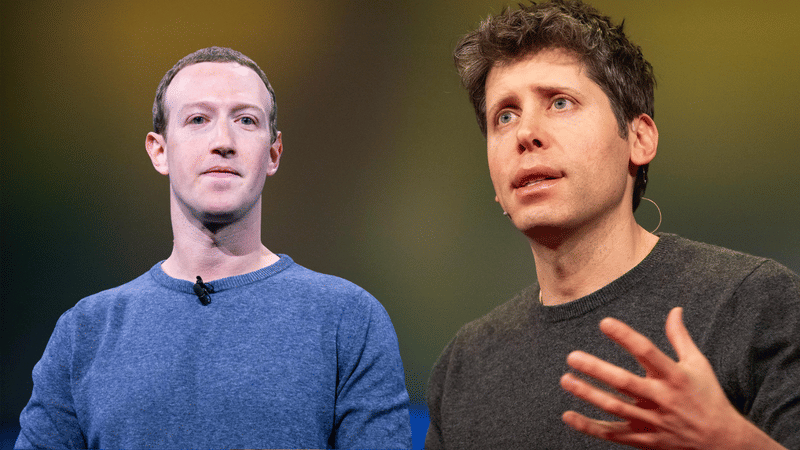
The cultural contrast is reinforced by leadership style. Zuckerberg’s recent emphasis on intensity and competitiveness sits alongside Altman’s more restrained, principle-led messaging around safety, responsibility, and long-term societal impact.
As Meta and OpenAI battle for dominance in artificial intelligence, the rivalry between their CEOs has spilled beyond products and into something far more fundamental: the corporate culture.
OpenAI CEO Sam Altman has recently taken pointed, if indirect, aim at Meta’s leadership philosophy, criticising what he sees as a tendency to chase industry fashions and rely on outsized financial incentives to attract talent. While Altman has avoided naming Meta or Mark Zuckerberg outright, the contrasts he draws leave little room for ambiguity.
In an internal Slack message to OpenAI employees, Altman stressed that the company has deliberately resisted cultural swings common in Silicon Valley. “We didn’t start talking about masculine corporate energy when that was popular,” Altman wrote, according to messages seen by Business Insider.
“We didn’t become super woke when that was popular either. We don’t want to get blown around by changing fashions.”
The remarks came as Meta CEO Mark Zuckerberg has openly argued that his company needs more “masculine energy,” describing Meta’s culture as having been “neutered” in recent years.
“The masculine energy, I think, is good,” Zuckerberg said during a January 2025 appearance on The Joe Rogan Experience.
“It’s one thing to say we want to be welcoming and make a good environment for everyone. It’s another to basically say that masculinity is bad.”
Zuckerberg added that some women feel companies are “too masculine” and “biased” against them, framing the issue as one of balance rather than exclusion.
A deeper divide than rhetoric
While the public debate has focused on tone and symbolism, Altman’s criticism runs deeper than language. At its core is a rejection of what he sees as a compensation-led approach to building AI teams, a strategy Meta has embraced aggressively.
Over the past year, Zuckerberg has reportedly authorised extraordinarily large offers to lure top AI researchers, including packages that Altman claims reached $100 million in signing bonuses. Meta has since hired high-profile figures such as Scale AI CEO Alexandr Wang, former GitHub CEO Nat Friedman, and several prominent OpenAI researchers.
Altman, however, has repeatedly questioned whether money-first recruitment creates the right conditions for sustained innovation.
“I don’t think that’s going to set up a great culture,” Altman has said publicly when discussing massive pay-driven poaching, arguing that long-term breakthroughs depend on belief in mission, not just financial upside.
He has also expressed satisfaction that several OpenAI employees declined Meta’s offers, framing their decision as validation of OpenAI’s culture.
Mission-driven culture vs mercenary hiring
The disagreement reflects a familiar Silicon Valley dichotomy: mission-driven organisations versus compensation-driven ones. OpenAI has consistently positioned itself as a values-led company, founded to ensure artificial general intelligence benefits humanity. That framing, Altman suggests, attracts “missionaries”, people motivated by impact, responsibility, and long-term outcomes.
Meta’s approach, by contrast, reflects urgency. After being criticised for lagging in generative AI, the company has moved quickly to rebuild teams and consolidate expertise, betting that elite talent can be assembled rapidly if the price is right.
Altman has been sceptical that innovation works that way. “You can’t just throw money at people and expect magic to happen,” he has implied in multiple interviews, emphasising that culture, trust, and shared purpose are not transferable assets.
Questions of innovation and identity
Altman has also hinted at doubts over Meta’s innovation model itself, suggesting that breakthrough AI development requires more than scale and spend.
“I don’t think Meta is particularly great at innovation,” he said in a recent discussion, contrasting OpenAI’s fast iteration cycles with what he described as slower, more fragmented execution elsewhere in Big Tech.
That critique lands against the backdrop of Meta’s recent strategic pivots, from the metaverse to AI, which have drawn scrutiny over clarity and consistency.
The cultural contrast is reinforced by leadership style. Zuckerberg’s recent emphasis on intensity and competitiveness sits alongside Altman’s more restrained, principle-led messaging around safety, responsibility, and long-term societal impact.
Even tone has become a signal. Altman has dismissed what he frames as performative toughness, positioning OpenAI as resistant to both ideological extremes and corporate posturing.
Why this culture clash matters
As the AI talent war escalates, the Altman–Zuckerberg divide raises broader questions for the technology sector. Can mission-driven cultures withstand the gravitational pull of ever-larger pay packets? Does speed and scale outweigh alignment and trust? And which leadership model produces innovation that lasts, not just wins headlines?
For now, both leaders are betting on fundamentally different answers. Meta is spending heavily to close gaps fast. OpenAI is betting that belief, not bonuses, will keep its edge. What’s increasingly clear is that the future of AI won’t be shaped by code alone, but by the cultures leaders choose to build, defend, and publicly stand behind.
Author
Loading...