






AI & Emerging Tech
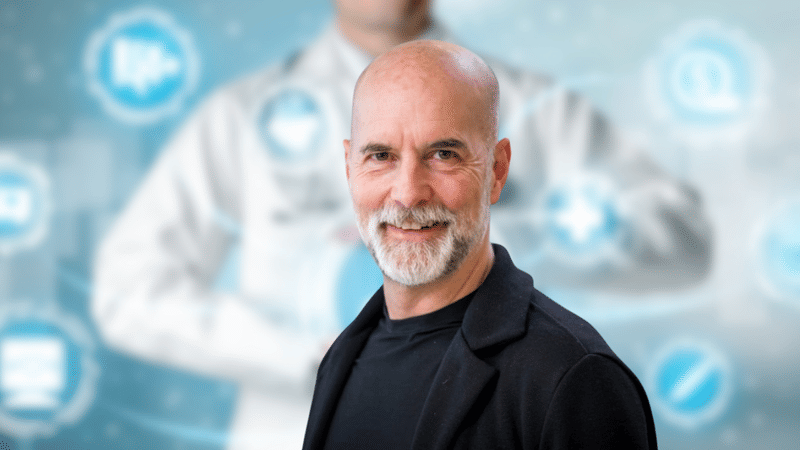
Philips’ Peter Skillman: AI in healthcare must focus on human impact






Skillman said there could be opportunities to work with trusted cloud providers that can offer secure infrastructure while keeping health data within the Kingdom and complying with local requirements.
Artificial intelligence is rapidly reshaping healthcare, but its value will ultimately depend on whether it solves real problems for patients and healthcare professionals, according to Peter Skillman, Global Head of Design at Royal Philips.
Speaking at LEAP in Riyadh, Skillman said healthcare organisations should avoid adopting AI simply because the technology is available and instead begin with the needs of patients, clinicians and healthcare systems.
“AI is just a technology,” Skillman said. “The real opportunity is always to start by working backwards from the customer and understanding their needs.”
That approach underpins Philips’ use of AI across medical imaging, clinical decision support, connected care and personal health. Rather than treating AI as the end goal, the company is focusing on applications that can reduce administrative work, simplify clinical workflows, support remote care and help patients spend less time in hospital.
Skillman pointed to SmartHeart, an AI-enabled solution for cardiac MRI, as an example of how AI can simplify clinical processes.
By using available clinical information to streamline the imaging workflow, the technology can reduce a process that previously required around 130 clicks to as few as three. The aim is to reduce complexity for clinicians and give them more time to focus on patient care.
Philips is also using AI and connected technologies to support remote cardiac monitoring through ePatch. Following certain cardiac procedures, patients can potentially leave hospital earlier while wearing the patch, which can monitor them continuously for up to 14 days.
The data can then be analysed remotely, allowing care teams to identify potential abnormalities and bring patients back for further assessment when required.
For Skillman, such applications point to a broader shift from episodic, hospital-based treatment towards connected care that continues after patients return home.
Generative AI speeds up healthcare planning
Generative AI is also being used to help healthcare organisations move more quickly from identifying operational challenges to developing potential solutions.
During meetings with technology leaders at Saudi healthcare organisations, including SMC and Dallah Hospital, Skillman used a purpose-built AI agent to capture operational pain points and generate reports, narrative structures, visual storyboards and implementation roadmaps.
The material was produced in Arabic and adapted to the Saudi cultural context, including locally relevant imagery.
The process demonstrated how generative AI can reduce the time involved in analysing challenges and developing initial proposals, allowing healthcare leaders to explore possible solutions more quickly.
But Skillman cautioned against allowing the technology itself to become the focus of healthcare transformation.
Recalling a discussion about developing an “AI hospital”, he said: “Please don’t build an AI hospital. Instead, build a human hospital where you deliver better care for more people.”
The distinction, he argued, is critical as AI becomes increasingly embedded in clinical and operational workflows. Technology should strengthen the healthcare experience rather than determine its purpose.
Keeping clinicians accountable
As AI takes on a larger role in clinical decision-making, Skillman said responsible adoption would require safeguards around well-being, fairness, transparency, trust and sustainability.
Transparency is particularly important when AI generates recommendations for healthcare professionals. Clinicians should be able to recognise when an output has been generated or supported by AI, he said, suggesting consistent visual indicators such as icons or labels within clinical interfaces.
Human oversight should also remain central, particularly where AI recommendations could lead to high-risk clinical decisions.
If an AI system recommends a potentially high-risk action, the interface should require a qualified healthcare professional to review and actively confirm the decision. AI can support clinical judgement, but professional accountability should remain with the clinician.
Using AI to extend care beyond major cities
AI and connected healthcare technologies could also help address disparities in access to specialist services, particularly across geographically large countries such as Saudi Arabia.
Tele-ICU solutions, for example, allow specialists to monitor patients remotely and advise healthcare teams in locations where particular expertise may not be available on site.
Philips’ BlueSeal MRI technology is another example. Its virtually helium-free magnet is designed to require less infrastructure, potentially making MRI systems easier to install and suitable for more flexible configurations.
The company is also working with the Gates Foundation on AI-enabled ultrasound technology designed to guide less-experienced operators through scans. Images can subsequently be reviewed remotely, allowing specialists to provide clinical guidance.
Together, such technologies could help extend specialist expertise and diagnostic capabilities beyond major healthcare centres.
“Across the scale of what Philips does, we can really help support remote access to care,” Skillman said. “I’d love to see us do even more in Saudi Arabia.”
Balancing health data protection with innovation
The effective use of health data will also be critical to scaling AI in healthcare. Skillman said Saudi Arabia has strong requirements around patient information and data sovereignty, with many hospitals consequently maintaining their own on-premises data centres.
While this provides greater control over sensitive health information, it can also involve significant cost and operational complexity.
Skillman said there could be opportunities to work with trusted cloud providers that can offer secure infrastructure while keeping health data within the Kingdom and complying with local requirements.
The challenge, he said, is to maintain high standards for privacy, security and data sovereignty while reducing unnecessary barriers to innovation.
Healthcare transformation will require collaboration between government, healthcare providers and technology companies, Skillman said.
Government bodies provide national direction and regulation, healthcare organisations and clinicians bring medical expertise and knowledge of patient needs, while technology companies contribute platforms, tools and innovation.
For Philips, the objective is to work as a partner to healthcare providers, patients and the Kingdom rather than direct the transformation itself.
Ultimately, Skillman’s approach places the focus on the outcome rather than the technology: whether AI can make healthcare safer, more accessible and more responsive to human needs.
Topics
Author
Loading...