






Business
ChatGPT growth tops 10% as Sam Altman reassures OpenAI employees ahead of $100B funding round






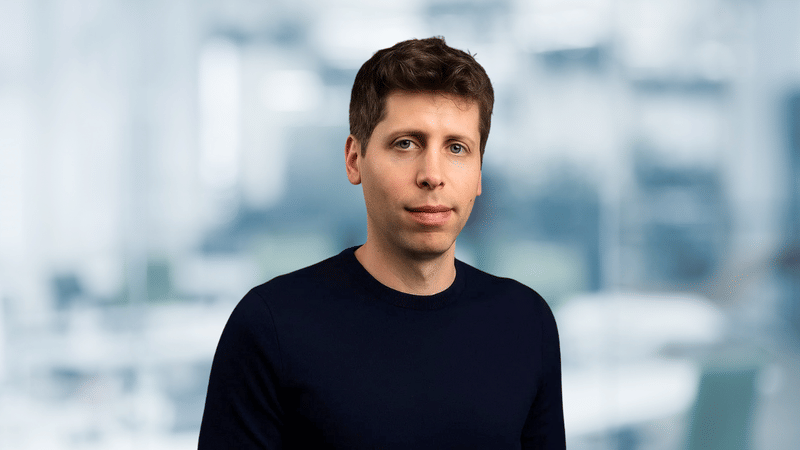
Yet this contrasts with underlying tensions, as OpenAI faces a wave of senior research departures, including former VP of research Jerry Tworek, who left in January after clashing with leadership over resources.
In a reassuring message to employees, OpenAI CEO Sam Altman revealed that ChatGPT’s monthly growth rate has climbed back above 10%, countering fears that the AI chatbot’s momentum was starting to fade.
The internal disclosure comes at a strategically critical moment as OpenAI closes in on a funding round that could value the company at nearly $100 billion, according to a CNBC report.
The growth reacceleration strengthens OpenAI’s pitch to investors at a time when competition in artificial intelligence has intensified sharply. If finalised, the round would cement OpenAI as the most valuable private AI company in the world, placing it far ahead of rivals such as Anthropic, which last year raised capital at an $18 billion valuation.
Altman’s message appears aimed at reassuring staff amid mounting external pressure and internal strain. ChatGPT, which now serves more than 800 million users weekly, has faced increasing competition from Google’s Gemini models, Meta’s open-source Llama ecosystem, and Anthropic’s Claude, which has gained traction among developers and enterprises.
Maintaining double-digit monthly growth at ChatGPT’s scale is no small feat. The chatbot became the fastest-growing consumer application in history after its launch in late 2022, reaching 100 million users in just two months. Sustaining that pace as the product matures has been closely watched by investors and rivals alike.
OpenAI’s growth strategy now extends well beyond consumer usage. The company has expanded aggressively into enterprise products, APIs, and developer tools, supported by its deep partnership with Microsoft, which has invested more than $13 billion and integrated OpenAI’s technology across Azure and Office. Analysts estimate OpenAI’s annual revenue may now exceed $2 billion, driven largely by subscriptions and enterprise adoption.
Altman also highlighted rapid momentum in Codex, OpenAI’s coding product, which he said grew roughly 50% in a single week following the launch of a new model, GPT-5.3-Codex, and a standalone app for Apple computers. Codex competes directly with Anthropic’s Claude Code, and internal data circulated at OpenAI reportedly shows it gaining market share.
“This was a great week,” Altman wrote in the internal Slack message.
Yet the upbeat tone contrasts with underlying tensions inside the company. According to a recent Financial Times report, OpenAI has seen a wave of senior research departures as leadership prioritises ChatGPT’s performance over longer-term experimental research. Former vice-president of research Jerry Tworek left in January after clashing with leadership over resources for continuous learning and advanced reasoning projects.
Those shifts followed Altman’s internal “code red” memo in December, which called for dramatic improvements to ChatGPT’s speed, personalisation and reliability. Several projects, including advertising experiments, AI shopping agents and a personal assistant, were reportedly sidelined to focus resources on the flagship chatbot after Google’s Gemini 3 outperformed OpenAI on key benchmarks.
The competitive pressure spilled into public view last week after Anthropic ran Super Bowl advertisements that mocked OpenAI’s plans to introduce ads in ChatGPT. Altman dismissed the ads as “deceptive,” while OpenAI confirmed it will begin testing clearly labeled ads at the bottom of chatbot responses, stressing they will not influence outputs. Ads are expected to make up less than half of OpenAI’s long-term revenue.
Behind the scenes, Altman and CFO Sarah Friar have been presenting investors with charts highlighting OpenAI’s consumer scale, enterprise traction and access to compute as fundraising talks intensify.
The current round could close in stages and may include capital from Microsoft, Nvidia, Amazon and SoftBank, following a $41 billion raise earlier this year.
Author
Loading...