






EMPLOYEE RELATIONS
Worker satisfaction and confidence decline across the Middle East: Report







Across Middle East & APAC, Gen Z women reported daily stress levels of 57%, significantly higher than the 33% reported by Baby Boomer women.
Worker satisfaction and confidence across the Middle East and Asia-Pacific are showing signs of strain as organisations accelerate artificial intelligence adoption faster than employees feel prepared to keep pace, according to a new survey by ManpowerGroup.
The company’s Global Talent Barometer – APME Report, which surveyed 3,627 workers, found the overall Global Talent Barometer score slipped to 67% in 2026, down slightly from the previous year. The dip follows the introduction of new measures assessing AI proficiency, highlighting a widening readiness gap.
At the same time, worker well-being appears under pressure. Seven in ten employees reported experiencing burnout recently, signalling rising strain across the workforce.
AI adoption outpaces readiness
The report shows AI is now embedded in daily work for many employees across the Middle East and Asia-Pacific. More than half of workers (52%) say they regularly use AI tools.
However, confidence is lagging.
Over half of respondents (56%) reported receiving no recent training, while 51% said they lack mentorship opportunities, a combination that is amplifying concerns about AI-driven job disruption.
The skills gap is feeding anxiety:
One-third of employees believe they could lose their jobs soon
47% worry automation may replace their roles within two years
Researchers say the data points to a significant shortfall in organisational support as companies push forward with digital transformation.
Mixed picture on workplace satisfaction
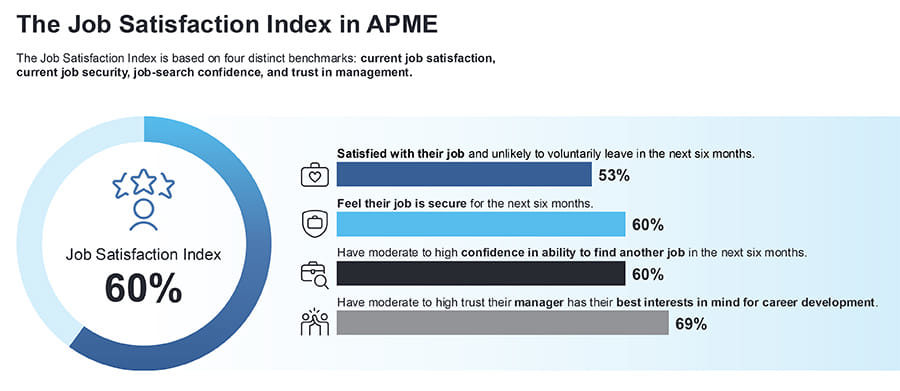
Despite the broader concerns, job sentiment is not uniformly negative. The general job satisfaction index edged up to 60%, though fewer employees feel secure enough to rule out leaving voluntarily within the next six months. Retention signals are also nuanced:
62% plan to stay with their current employer
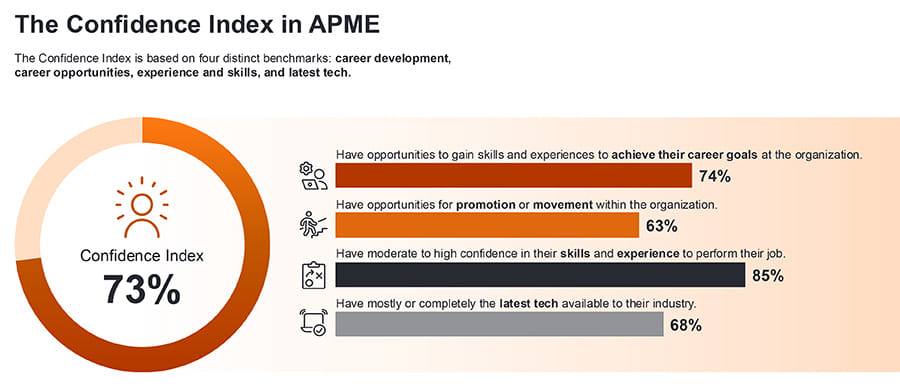
85% remain confident in their existing skills
Yet 64% are actively searching for new opportunities
The technology sector appears particularly vulnerable, with only 52% of workers in the field intending to remain in their current roles.
Confidence is steady, but..
The regional confidence index held at 73%, but the headline figure masks growing unease around technical capability.
While 85% of employees believe they possess the skills required for their current roles, fewer say they have access to the latest industry technology.
Confidence is slipping most sharply in consumer goods and services, where comfort with modern tools fell 14 points to 56%.
The findings suggest that as AI becomes more pervasive, perceived gaps in technical training are beginning to weigh on workforce confidence.
Burnout and stress remain elevated
Employee well-being continues to be a major concern. The survey found:
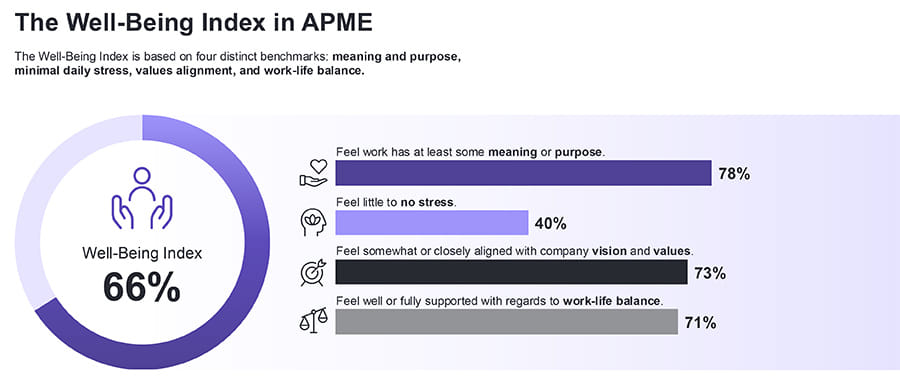
Half of workers experience high daily stress
71% have faced burnout recently
Heavy workloads and persistent pressure remain the primary drivers. While the overall well-being index ticked up slightly to 66%, younger workers appear more vulnerable.
Gen Z women reported daily stress levels of 57%, significantly higher than the 33% reported by Baby Boomer women.
François Lançon, regional president for Asia Pacific and Middle East at ManpowerGroup, said the findings underscore the need for balance.
“The Global Talent Barometer highlights that transformation cannot come at the expense of well-being,” Lançon said. “With burnout still high and more than half of workers reporting no recent training or mentorship, organisations need to balance performance goals with initiatives that strengthen resilience and support continuous learning.”
The report concludes that without stronger investment in skills development, mentorship and employee support, the growing gap between AI adoption and workforce readiness could continue to erode confidence across the region.
Author
Loading...