






Business
UAE’s Petrofac begins layoffs after 2GW wind project losses; 250+ roles to be affected






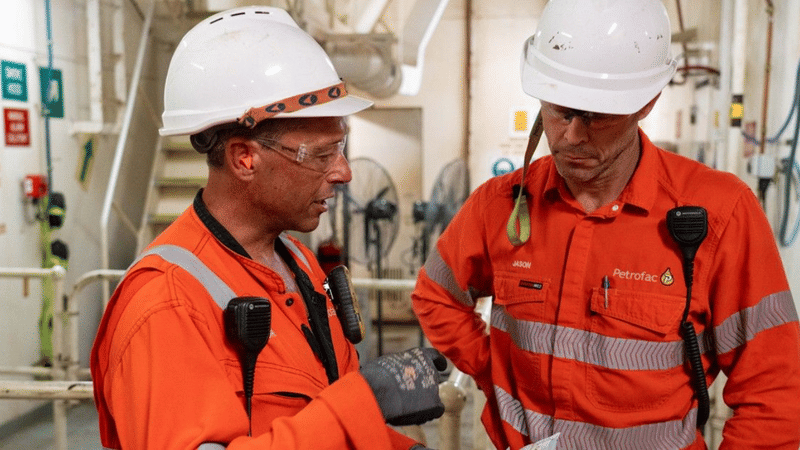
Petrofac informed the affected employees that their November salaries will be paid up to the 19th, with payments due by the 21st, but employees say no confirmation on payouts received yet.
UAE-based energy contractor Petrofac has begun issuing termination notices and releasing employees from their notice periods, as the company reels from the collapse of a major 2GW offshore wind contract that plunged the holding company into administration.
According to a report by Arabian Business, the internal emails show the company has told affected employees they will not be required to serve the remainder of their notice periods, with their “final working day effective immediately.” Multiple staff across departments are understood to have received similar communication this week.
The company updated a couple of weeks ago that the measures follow Dutch grid operator TenneT’s decision to terminate Petrofac’s scope on a two-gigawatt offshore transmission programme, a contract that represented more than 80% of revenue in Petrofac’s engineering and construction division. Its loss removed the linchpin of Petrofac’s restructuring plan and triggered lenders to withdraw support, court filings show.
Petrofac entered administration in late October and was subsequently delisted from the London Stock Exchange. While the holding company remains under court protection, its operating subsidiaries continue trading as administrators evaluate future options.
Sharing updates on the project delivery in the UAE, the company said “operations continues as normal,” and that the firm is focused on “preserving value, operational capability and ongoing delivery across the Group’s operating and trading entities while options are being advanced to underpin their long-term future.”
The company said the early-release notices specifically affect roles tied to the terminated Dutch–German offshore wind programme. “We recognise this is a challenging time for our people and we remain in close coordination with them and the Ministry of Human Resources and Emiratisation,” Petrofac added.
Separate HR communications outline immediate offboarding procedures, including returning IT equipment, clearing desks, surrendering access cards and updating personal contact information. Employees were informed that November salaries will be paid up to the 19th, with payments due by the 21st. Medical insurance is expected to remain active for up to three months, and the company aims to keep visas valid for the same period.
Industry sources say regional project owners have already begun contingency planning, reviewing guarantees and evaluating whether portions of existing scopes should be transferred to joint-venture partners or other EPC contractors. While strong state-led spending in the Gulf reduces the risk of cancellations, the focus has shifted to ensuring schedule continuity on ongoing projects.
Petrofac, which has disputed TenneT’s grounds for termination, acknowledges that the loss of the 2GW contract accelerated its insolvency. The firm now faces the dual challenge of stabilising ongoing operations while managing the human impact of job cuts affecting more than 250 roles.
For Petrofac employees in the UAE, the sudden layoffs were not just a corporate restructuring, they were devastated by the news. Many said they were informed on November 18 that their roles were ending immediately, with November 19 set as their final working day. By the next morning, laptops, access cards and ID badges had already been collected.
According to multiple staff who spoke to Gulf News, roughly 180 people directly connected to the now-terminated 2GW offshore wind grid project were dismissed in a single sweep. With only information about salaries paid only up to November 19, and no clarity on notice periods or end-of-service benefits (EOSB), which is a legally mandated financial safety net for expatriate workers in the UAE.
“We were all told that some 190 or 200 of us were getting terminated that day itself,” said one long-serving employee. Another described the atmosphere as “really very bad, emotional,” with colleagues consoling each other, handing in equipment, and wishing one another luck in the corridors of the Sharjah office.
A project director who attended the abrupt town hall on November 18 said employees raised urgent questions about notice periods and EOSB. “We had a town hall where we were informed of immediate termination,” he said. “We asked about our notice period, end of service, the legal entitlements. We were not given any clear answer.”
He added that some of those laid off had worked at Petrofac for nearly two decades. “We have single moms on the project, supporting families. It is really pathetic.”
Employees say they were told they would receive a calculation of their dues by email within 14 days, but no payment timeline or commitment has been provided.
What worries employees most is the possibility that end-of-service benefits may never be paid if cash is moved out of the UAE once assets are sold.
“It all came to a head when TenneT terminated our contract,” said a senior manager. “Almost instantly, Petrofac flopped and went bust, pretty much.”
Several employees say they had raised concerns internally for years about whether the company had appropriately ring-fenced funds for EOSB.
Another manager alleges that the UK administrator is prioritizing the group’s position overseas. “They will take any deposit in the banks here, transfer it to the UK, then sell the UAE unit and declare bankruptcy to delete our end-of-service benefits.”
Some employees have already filed complaints with the Ministry of Human Resources and Emiratisation (MOHRE), hoping to protect their EOSB before any funds leave the country.
“I told MOHRE this is not exactly a complaint, but a request to ensure that my EOSB will be paid in February,” said one manager. “By that time, the horse would have bolted if the money was moved to the UK.”
Employees say MOHRE has already contacted Petrofac’s HR team. One worker said, “MOHRE told them: as long as you exist and are not bankrupt, you have to pay people and compensate.”
Still, staff are preparing for a long fight. “We will be fighting,” one source said. “This is not something that will be solved the next day.”
Staff estimate that 400–500 people across the UAE, India and Malaysia have been affected, with the Sharjah town hall seen as the final wave. Up to 70% of Petrofac’s UAE workforce could eventually be released, according to internal estimates shared by employees.
But for many workers, the anger stems not from the layoffs themselves, but from how abruptly they were executed in a market where end-of-service benefits are vital to long-term planning. “The concern is not losing the job. Losing the job is part of the business,” said a project manager with over 15 years at Petrofac. “But release people decently, with their notice period and end of service. This is UAE law.”
A senior employee nearing retirement said he now feels deeply exposed. “Many of us have families, liabilities. You cannot on Wednesday say that the taps will be turned off on Thursday. That is frightfully unfair.”
- 47% Omani employers hiring and training freshers: Report
- 51% of AI learners in Saudi are women: SDAIA report
- Ajman Executive Council approves new HR laws; Introduces flexible working hours for certain employees
- Saudi Arabia to support working women in the private sector with up to 50% childcare coverage
- A Global Leader’s Playbook: Kazunori Fukuda on building a ‘Third Culture’ to power digital transformation
As administrators work through restructuring options, Petrofac’s future in the renewables sector, and its ability to rebuild confidence among investors and project owners remains uncertain.
Author
Loading...