






Employee Engagement
Office remains first choice for UAE and Saudi workers, yet over 35% prefer working alone: Report







The motivations to work from office include access to technology, the ability to focus on work, professional development and coaching opportunities, leadership visibility, and social interaction with colleagues.
Employees across the United Arab Emirates continue to rely heavily on the office as a place to focus, collaborate and access technology, according to new findings from the Gensler Research Institute.
The study titled, 'as part of the Gensler Global Workplace Survey 2026' surveyed more than 16,400 full-time office workers across 16 countries to understand how people work today and what employees expect from the workplace in an era of rapid digital transformation. The findings suggest that while hybrid work has become common globally, the office continues to play a central role in employee productivity and collaboration in the UAE.
According to the survey, employees in the UAE spend 53% of their workweek in the office, with the remainder of their time split between working from home, coworking spaces, client locations and business travel. The report also noted that UAE workers prefer working from home (15.5%) more than coworking spaces (10%) or client workplaces (8.6%) when not working from their company office.
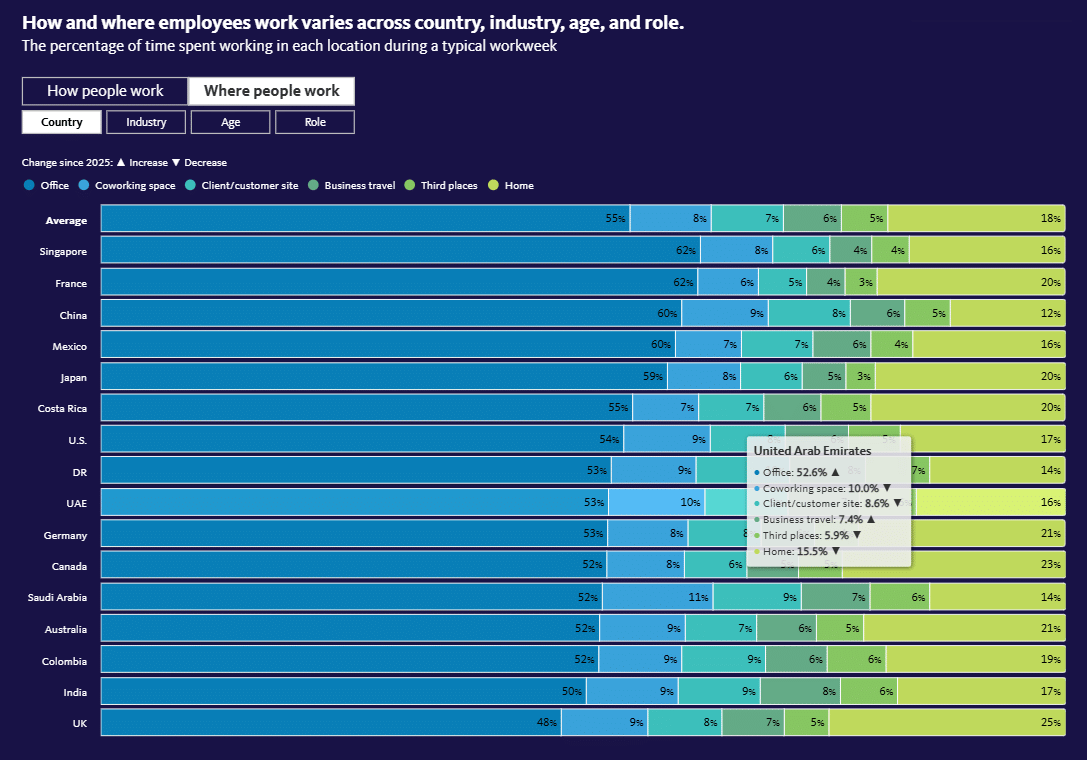
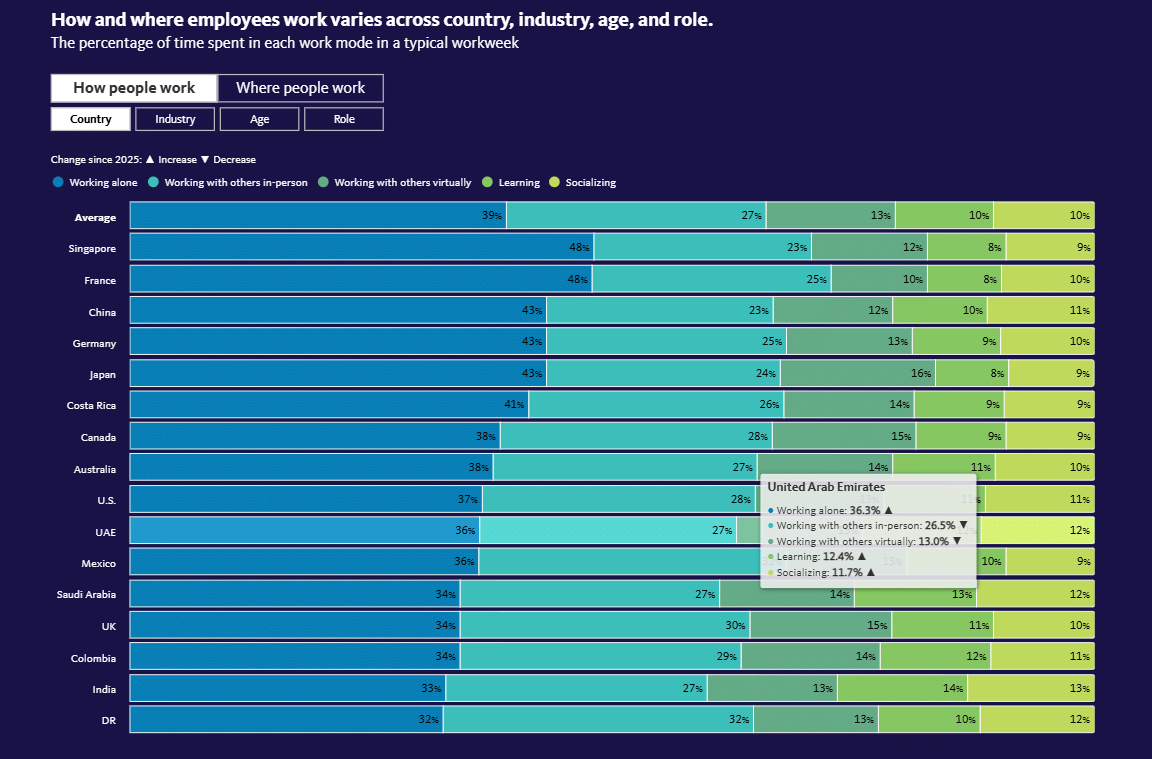
However, employees indicated they would ideally prefer to spend around 65% of their time in the office to maximise both individual productivity and collaboration with colleagues. Nearly half of respondents, about 36.5%, said they prefer to work alone in the office, while 26.5% prefer working with others in person and about 13% prefer working with colleagues virtually.
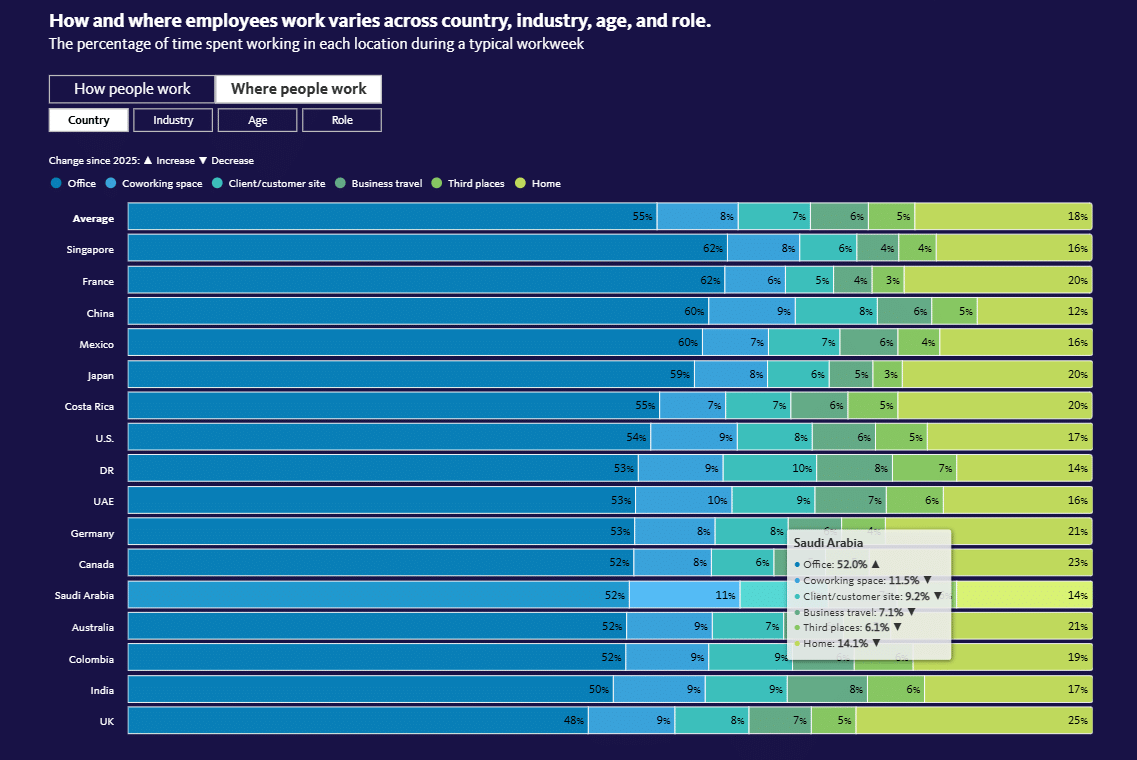
The numbers are broadly similar to worker preferences in Saudi Arabia, where 52% want to work from the office, 14.1% from home and 11.5% in coworking spaces. Less than 10% said they would be comfortable working at client sites.
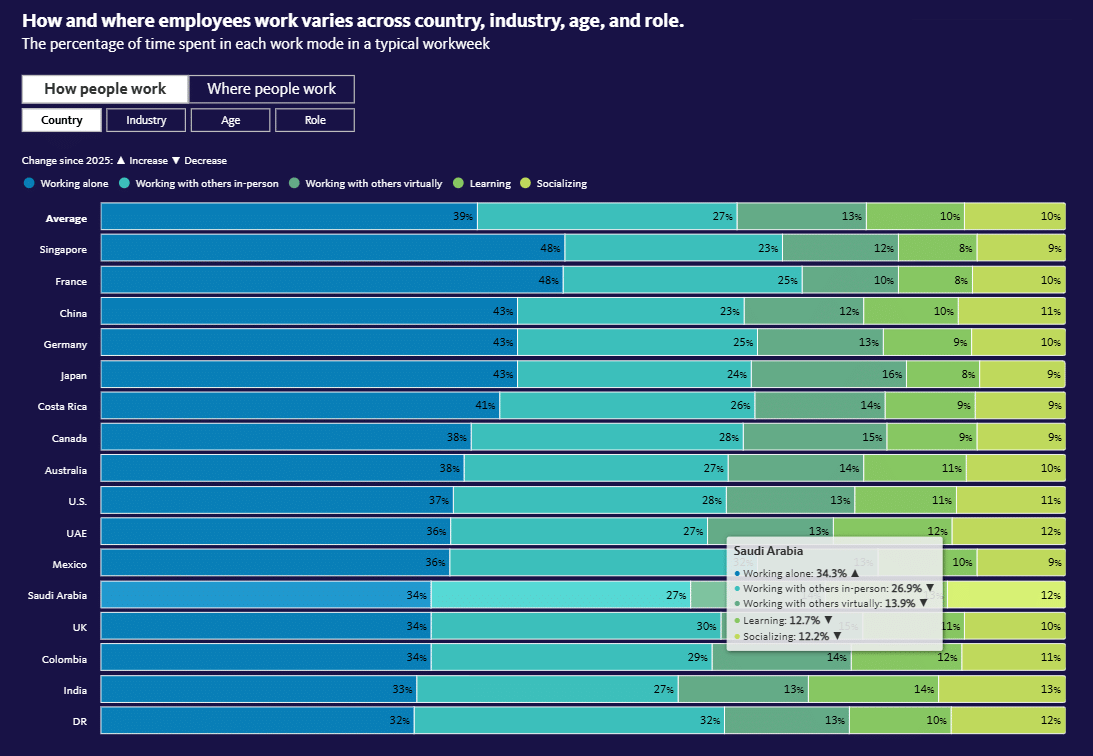
When it comes to working styles in the office, less than 35% want to work alone, about 27% want to work with team members in person, and around 14% would prefer working with colleagues virtually. About 13% prefer working with colleagues either way for socialising and learning.
Todd Pilgreen, Principal and Co-Managing Director at Gensler Middle East, said the findings reflect how the role of the office has evolved in recent years. He noted that workplaces are no longer just places for desks, but increasingly serve as hubs for collaboration, learning and access to specialised resources. He also highlighted that the surrounding neighbourhood plays an important role in shaping how employees experience the workplace, which influenced the location of the company’s offices in Dubai and Abu Dhabi.
The report also identified the primary reasons employees in the UAE choose to work from the office. The top motivations include access to technology, the ability to focus on work, professional development and coaching opportunities, leadership visibility, and social interaction with colleagues.
Workplace environments and amenities were also found to play a major role in employee experience and productivity. Employees highlighted cafés or food halls, work cafés, dedicated team or project rooms, social hubs such as lounges, and fitness or wellbeing facilities as some of the most valuable office spaces. In addition, amenities located near the office, including medical or health facilities, grocery stores, coffee shops, restaurants and pharmacies, were ranked among the most valuable features surrounding workplaces.
Joyce Jarjoura, Workplace Studio Director at Gensler APME, said the workplace is increasingly part of a broader ecosystem that supports both professional performance and everyday life. She added that designing workplaces with the right mix of spaces, amenities and technology helps organisations support how people work today.
The research highlights a growing opportunity for organisations across the UAE to rethink workplace environments to better support employee performance, collaboration and professional development. As companies continue to adopt new technologies and digital tools, the office remains a critical environment where employees connect with colleagues, access resources and develop new skills.
Author
Loading...