






EMPLOYEE RELATIONS
Saudi Arabia’s new unified employment framework strengthens worker rights and workplace transparency, Check details here







By introducing a single, unified framework for employment contracts, Saudi Arabia has set a new benchmark for digital governance and workplace fairness.
Saudi Arabia, in a landmark step towards modernizing labour practices and reinforcing employee protections, has unveiled its Unified Employment Contract.
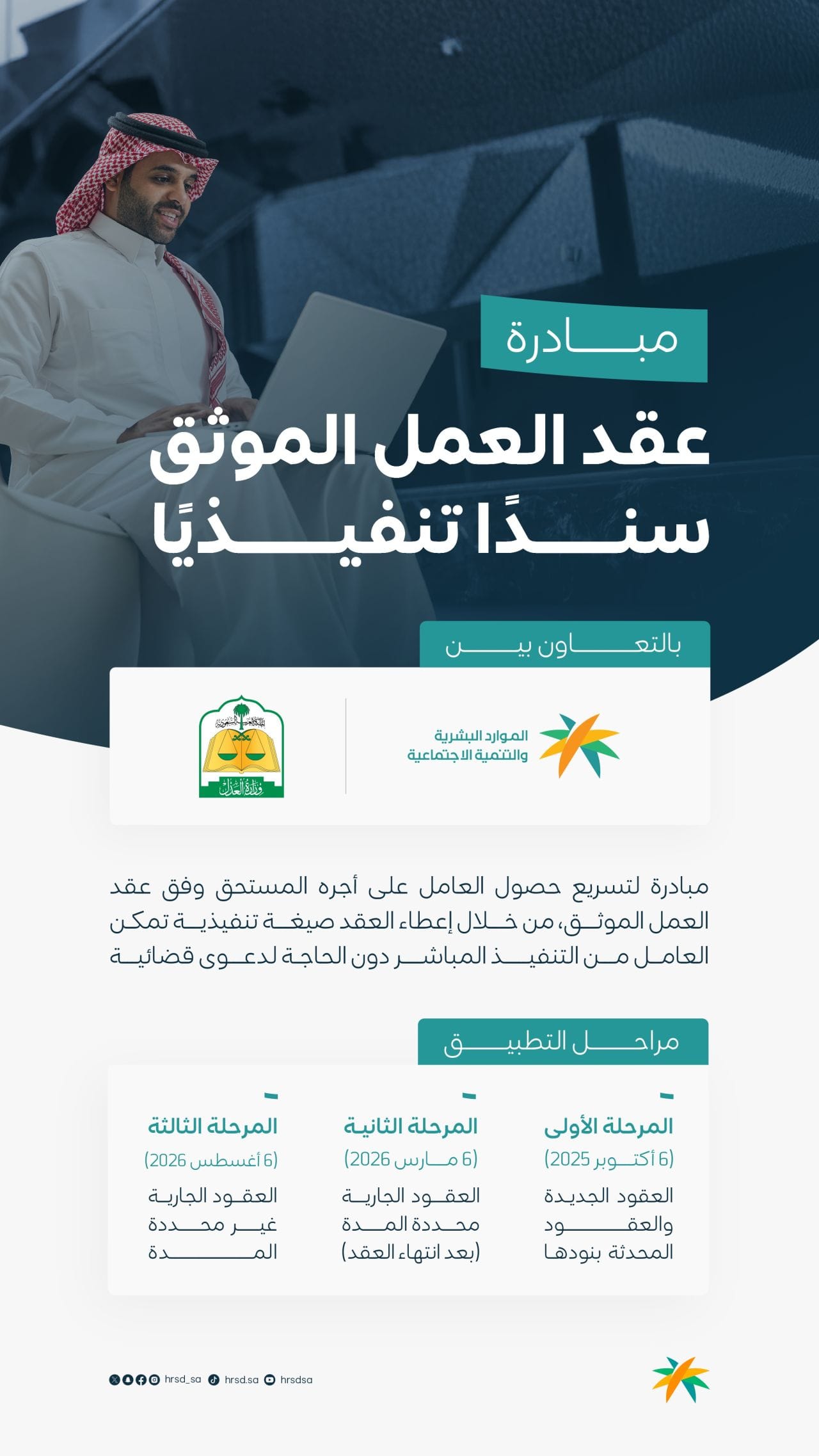
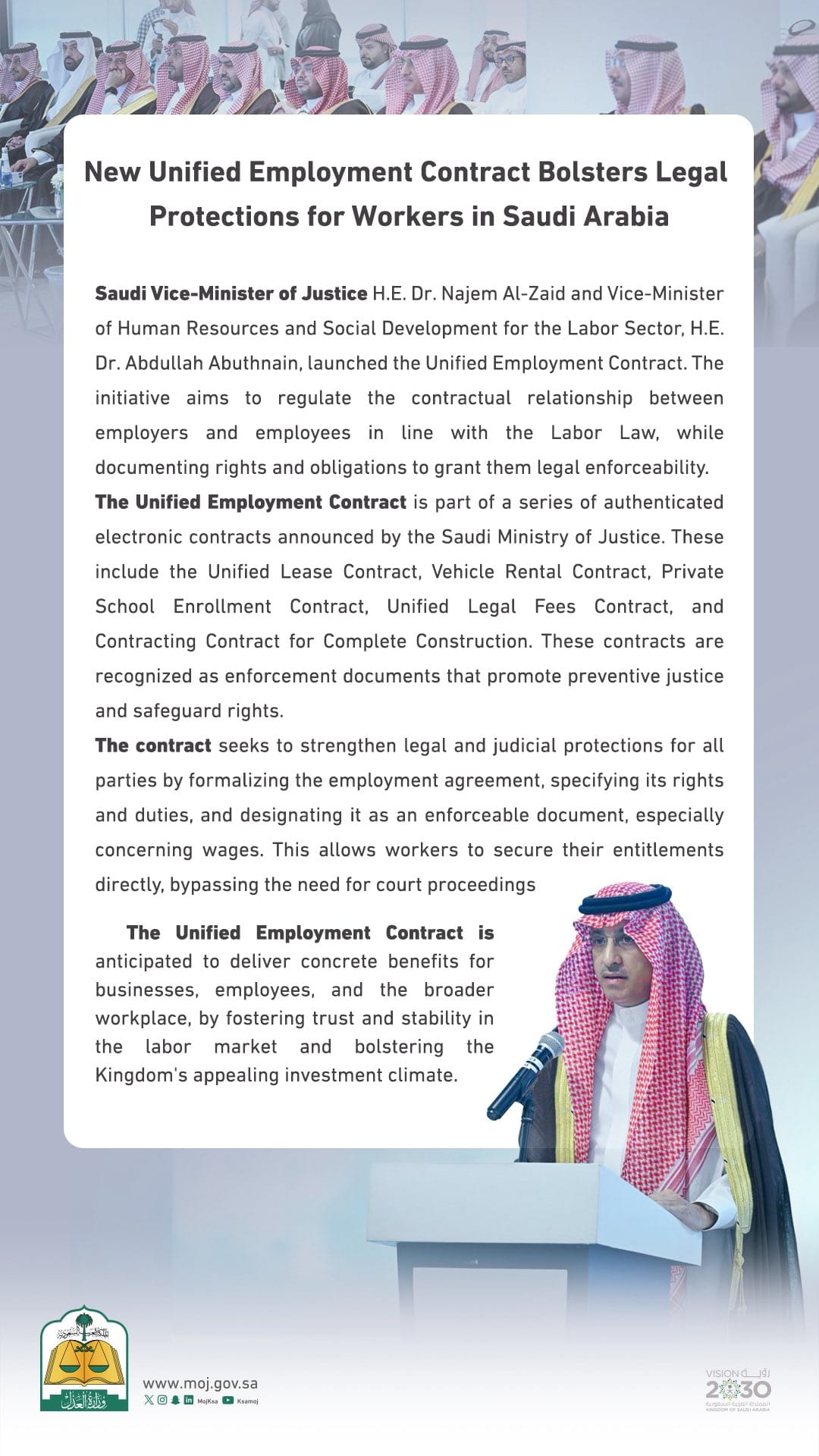
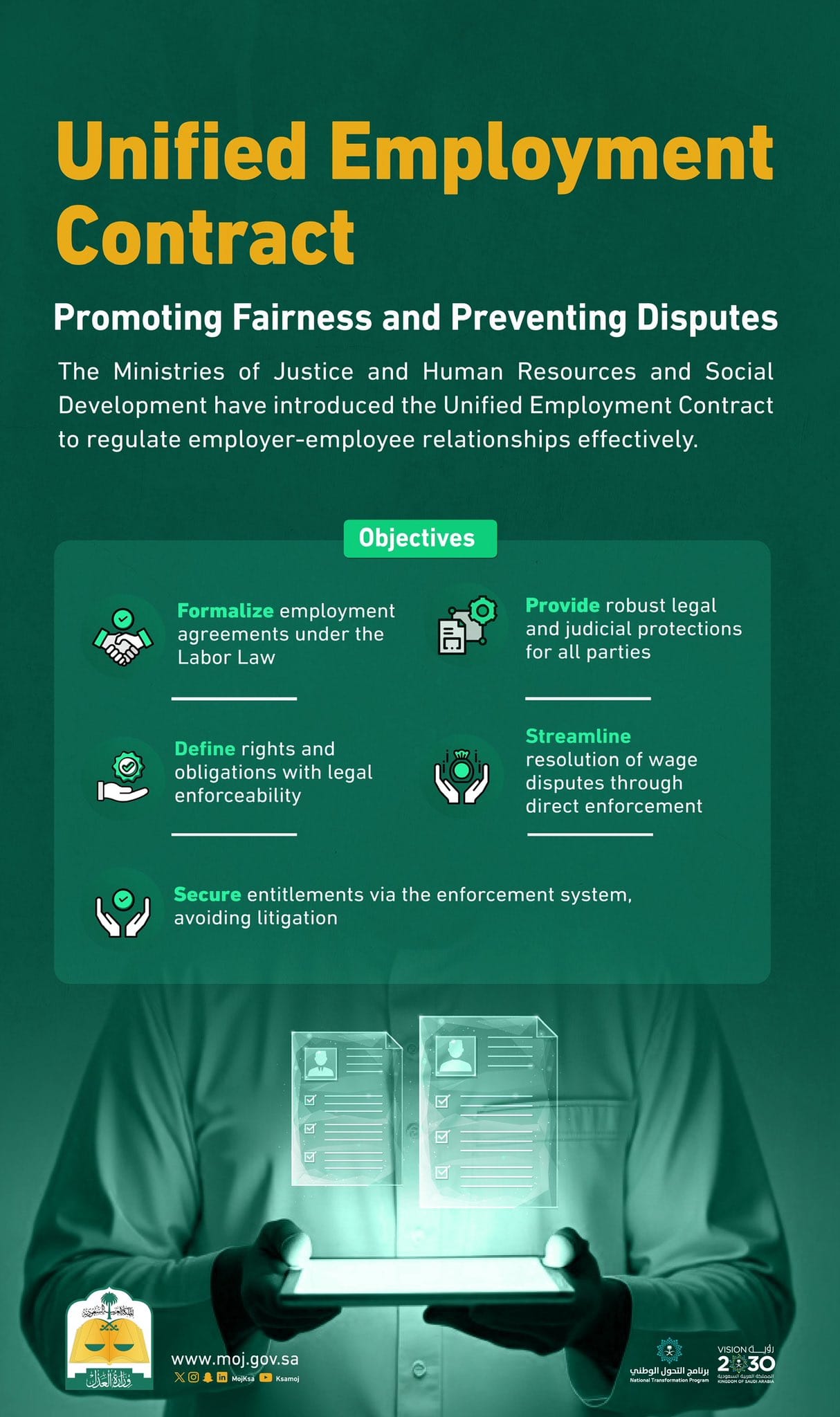
The unified employment contract is a digital, legally binding framework designed to simplify, standardize, and secure employment relationships across the Kingdom.
The initiative has been rolled out in a collaboration between the Ministry of Human Resources and Social Development (MHRSD) and the Ministry of Justice, under the Kingdom’s Vision 2030. It aims to advance the Kingdom’s goals of fairness, transparency, and efficiency in the labour market.
What does the Unified Employment Contract mean?
The core purpose of the Unified Employment Contract is to establish a standardized agreement between employers and employees, integrated seamlessly into Saudi Arabia’s leading digital platforms, Qiwa and Najiz.
“Through this integration, employment relationships can now be registered, verified, and enforced digitally, ensuring legal security, quicker dispute resolution, and full transparency for both parties,” the Ministry explained.
One of the key changes is the mandatory wage clause, which requires employers to clearly state the agreed salary in every contract.
If salaries are delayed or not paid, employees can now directly file a claim through enforcement courts, without the need for long or complicated legal procedures.
The Ministry said this mechanism will drastically reduce salary-related disputes and build trust and harmony between employers and employees.
“This initiative is not just an administrative reform, it’s a systemic modernization of the employment relationship. By automating and unifying labor contracts, Saudi Arabia is enhancing the efficiency of its labor market, strengthening contractual accountability, and improving the Kingdom’s attractiveness for both local and foreign talent,” the statement added.
The initiative also ensures that both contractual parties i.e. employees and employers are equally protected, while enabling faster resolution of wage-related disputes.
Saudi Vice-Minister of Justice His Excellency Dr. Najm Al-Zaid described the initiative as one that promotes “justice, transparency, and efficiency” across the Saudi labor market. “The initiative aims to regulate the contractual relationship between employers and employees in line with the Labor Law, while documenting rights and obligations to grant them legal enforceability,” the Minister said.
Deputy Minister of Human Resources and Social Development Dr. Abdullah Abuthnain emphasized that the contract “empowers workers, safeguards their rights, and strengthens their participation in the national economy.”
Phased implementation timeline
The roll out of the Unified Employment Contract will take place in three stages via Qiwa platform as under:
- Phase One (October 6, 2025): Applicable to new contracts or those being updated.
- Phase Two (March 6, 2026): Covers renewed or extended fixed-term contracts.
- Phase Three (August 6, 2026): Applies to all active indefinite contracts.
Requirements to benefit from the initiative to qualify under this new model:
The employment contract must align with the executive contract model.
The contract must be authenticated via the Sanad platform, through integration between the two ministries.
Authentication can be done through Qiwa, where establishments submit a request to authenticate or update existing contracts. Once both parties approve, the contract automatically gains executive status through integration with the Ministry of Justice.
Key clauses to be included in the employement contracts:
The unified contract covers all essential elements of employment:
- Employee and employer information
- Job type and location
- Salary and benefits
- Probation period
- Contract duration and start date
- Termination provisions and additional agreed conditions
Wage enforcement criteria
The most transformative element of the initiative lies in how wage disputes are handled.
- If an employer fails to pay the full wage, then the worker can initiate enforcement after 30 days from the due date.
- If only partial payment is made, then enforcement can be initiated after 90 days.
To file an enforcement request, they can log in via Najiz platform under the Ministry of Justice to submit an “Enforcement Request”.
Fill in the required information, verification is automatic through the Mudad platform, which cross-checks payments under the Wage Protection Program.
Employers also retain the right to object through Najiz within 5 days of receiving notification of an enforcement request.
How it works for employees
For employees, the process is now clear, digital, and enforceable:
- File a complaint through Najiz platform if salary isn’t paid within 30 days.
- Obtain an official execution document number.
- Enforce salary payment automatically through integration with Mudad, without any need for manual verification or additional paperwork.
This digital enforcement mechanism not only expedites justice but also eliminates bureaucratic hurdles that once delayed resolution of workplace disputes.
This unified employment/ labour contract framework isn’t just a new rule, but a major change in how jobs and contracts work in Saudi Arabia. It marks the start of a new era built on transparency, fairness, and digital efficiency, benefiting both employees and employers, and supporting the Kingdom’s vision for a modern and competitive economy.
You may also like:
- Women make up 32% of Renewable Energy jobs, Only 19% in leadership roles: Report
- Is your employee wellness data ‘garbage’? Here’s how to know it
- GO Telecom announces 4.5-Day workweek to boost employee well-being & work-life balance
- UAE halts issuing new tourist and work visas for nine countries?
- Mentorship, Talent, and Innovation: Kholoud Zakaria's insights on DP World Egypt’s people-driven transformation
The Ministry of HRSD has been implementing stricter rules and regulations to protect the rights of both employees and employers, driving continuous improvements in the region’s labor market.
Topics
Author
Loading...