






Strategic HR
Kuwait to continue hybrid work, reduced work hours after Eid






The measures will take effect from the day following the Eid al-Fitr holiday and will remain in place until further notice, reflecting Kuwait’s cautious workforce approach amid evolving regional dynamics.
The Civil Service Commission has announced the continuation of flexible work arrangements across government entities following the end of Ramadan, citing ongoing regional security concerns.
In Circular No. (7) of 2026, the Commission confirmed that no more than 30% of employees will be physically present in offices at any given time, with mandatory staff rotation and remote work permitted where possible.
“In light of the ongoing security conditions in the region, the Civil Service Commission informs all government entities,” the circular stated, highlighting the rationale behind extending the measures.
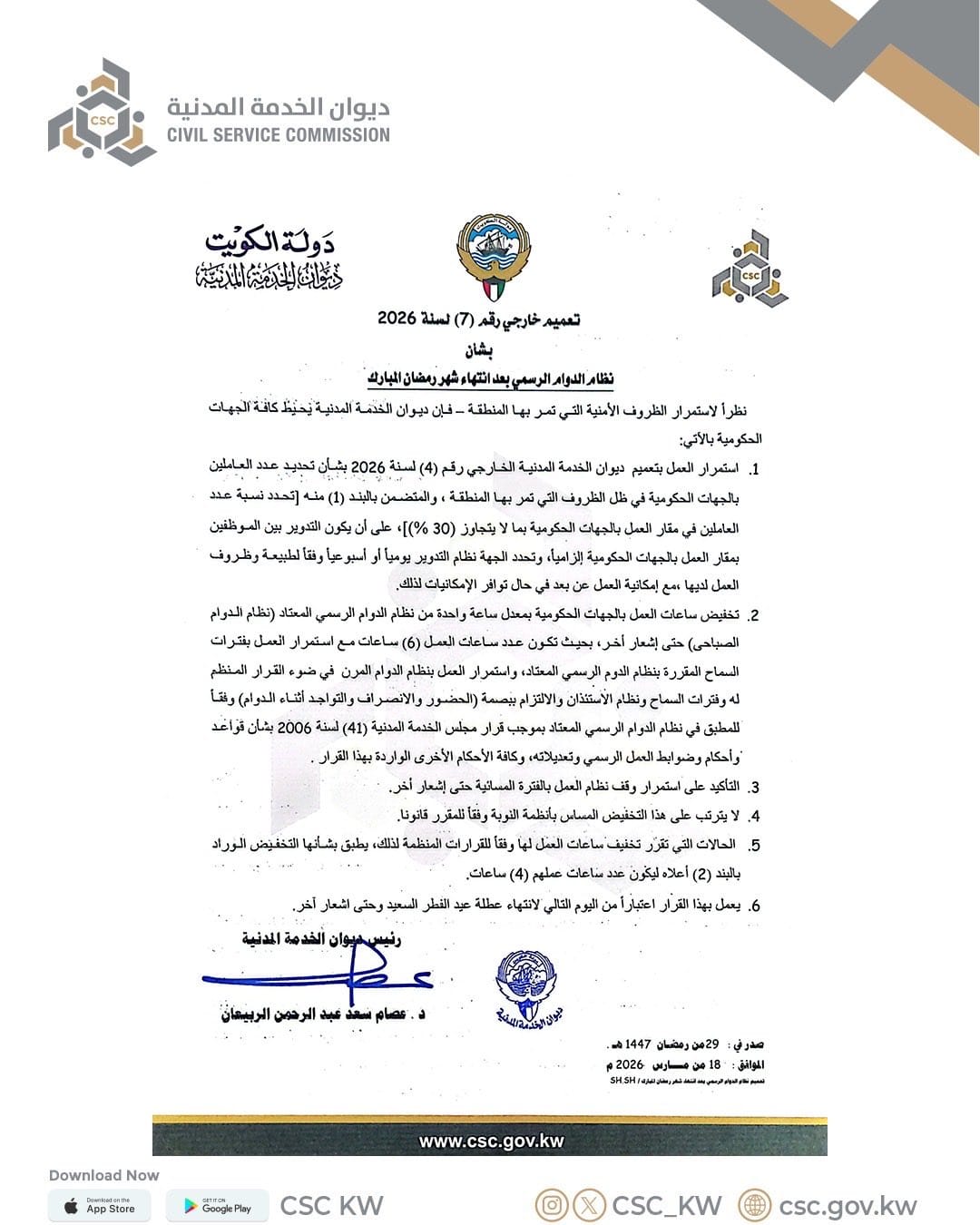
Working hours for public sector employees have been reduced by one hour from the standard schedule, bringing the workday down to six hours until further notice. Authorities added that existing flexible working arrangements will remain in effect.
The Commission also confirmed the continued suspension of evening shifts, noting, “The suspension of evening work will continue until further notice.”
Officials clarified that the reduced hours will not affect employees operating under legally defined shift systems. Meanwhile, employees already eligible for reduced working hours will see their schedules adjusted to four hours per day under the new directive.
The measures will take effect from the day following the Eid al-Fitr holiday and will remain in place until further notice, reflecting Kuwait’s cautious workforce approach amid evolving regional dynamics.
Author
Loading...