






Economy Policy
45,000 new jobs for women in Arab by 2026; ‘care economy’ and men sharing unpaid domestic work become a must: Dr. Moez Doraid



 ||
||Updated on


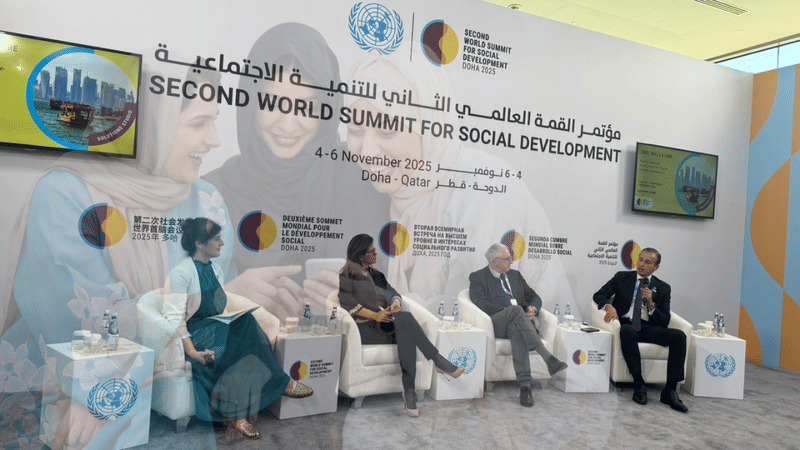
"72% of fathers now express a desire to spend more time with their children, and 86% of policymakers support extended paternity leave," shared Dr. Moez Doraid.
At least 45,000 new jobs for women are expected to be created across the Arab region before the end of 2026, Dr. Moez Doraid, UN Women Regional Director for the Arab States said on Tuesday.
During a panel discussion at the Second World Summit for Social Development, held at the Qatar National Convention Centre (QNCC), Dr. Doraid said the employment drive is part of the Surging Women’s Employment Initiative (SWEI), which is a regional programme led by UN Women and its partners.
“One of UN Women’s top priorities in the Arab region is to solve one of the most persistent problems globally, low levels of women’s labour force participation,” Dr. Doraid said.
“In the Middle East and North Africa, this challenge is especially stark: for three decades, women’s labour force participation has stagnated at around 20%, nearly half the global average.”
He noted that SWEI aims to raise women’s labour force participation by five percentage points within five years and address a persistent paradox in the region, “the contrast between women’s advanced educational achievements and their lagging employment levels.”
Despite women now outnumbering men in universities and representing 57% of STEM (Science, Technology, Engineering, and Mathematics) graduates, only one in five women in the Arab region participates in the workforce.
Dr. Doraid cited Qatar as a standout example, where women’s labour participation rate reaches 63%, nearly triple the regional average.
Highlighting areas of growth, Doraid said that women are increasingly represented in STEM education, entrepreneurship, and the green economy, sectors that promise significant employment opportunities.
“The green economy not only addresses environmental challenges but also opens new avenues for women’s employment across the value chain, from access to finance to domestic and export markets,” he said.
“Another key growth area is the care economy, where women make up the majority of workers, particularly in services such as day care.”
To unlock this potential, SWEI integrates macroeconomic reforms, legal frameworks, and social norm transformation. Initiatives like ‘Dare to Care’ encourage men to take greater responsibility for unpaid domestic work, where women currently spend 4.7 hours daily, compared to one hour by men.
Dr. Doraid urged governments to enforce equitable laws and foster enabling environments that support both professional and caregiving roles for women.
“Women in the region remain vastly underrepresented in the labour market, despite being among the most educated in the world. SWEI tackles this paradox head-on, working to create 500,000 new jobs within five years and increase women’s employment by 5% by 2030,” he wrote on LinkedIn
Further added that the initiative leverages positive shifts in societal attitudes, 72% of fathers now express a desire to spend more time with their children, and 86% of policymakers support extended paternity leave, signs of a region moving toward shared care and inclusive growth.
You may also like:
- What People Officers need to thrive in 2026
- Oman reduces work permits fee by 30% for employers meeting Omanization targets; Check new rules and exemptions here
- KSA HR Ministry begins 40% Saudization in 44 accounting professions
- UAE’s MoHRE warns jobseekers against fraud and working on visit visas
- Qatar amends Civil HR Law; Job-based allowances raised, Paid maternity & Postnatal leave extended to 3 months, Increments up to 150%
“SWEI drives growth where women already lead in the Care, Green, and STEM Economies, and partners with over 700 private sector companies under the Women’s Empowerment Principles (WEPs) to open new pathways for women’s leadership, entrepreneurship, and financial inclusion,” he underlined.
Author
Loading...