








The role of the Chief Human Resources Officer (CHRO) is being redefined once again, and this time, it’s not just about people. It’s about people and machines.
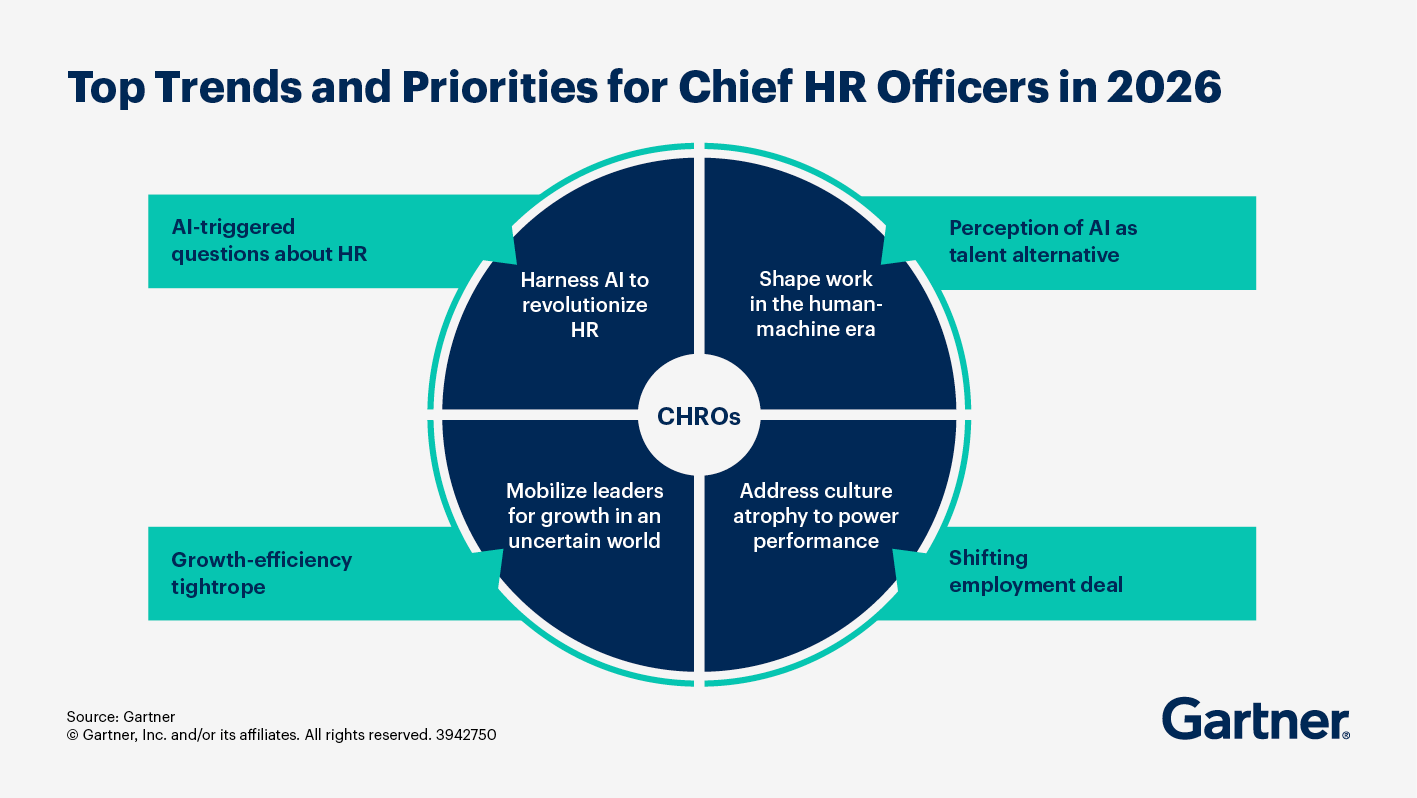
According to Gartner’s 2026 Top Priorities for CHROs report, the year ahead will challenge HR leaders to balance humanity with technology, growth with efficiency, and culture with change.
AI is no longer a distant disruptor; it’s a colleague, a strategist, and in some cases, a replacement.
Organizations are learning to walk what Gartner calls a 'growth-efficiency tightrope,' where the quest for scale meets the demand for smarter, leaner operations. And amid this, the employee deal is evolving, 'give more, expect less.'
So what does this mean for HR leaders charting the course ahead? The survey, which covered 426 CHROs across 23 industries and 4 regions, outlines four priorities that will define the next chapter of HR.
#1 Harness AI to revolutionize HR
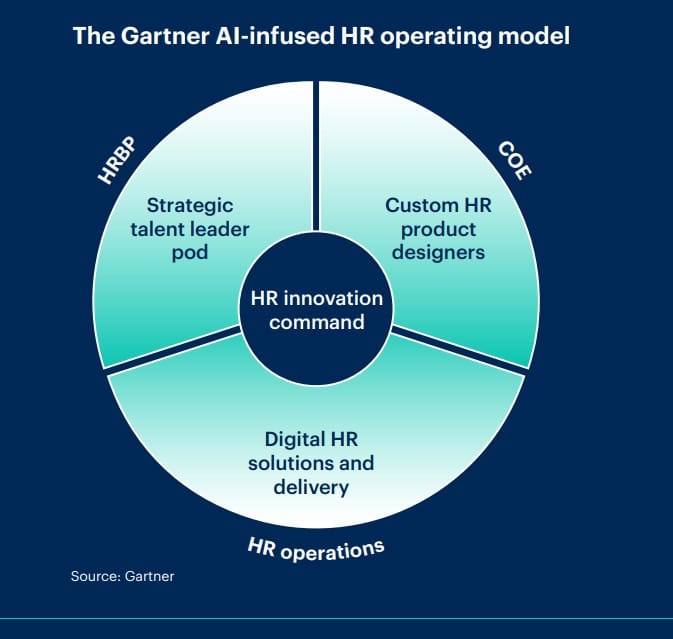
AI is not just a tool, it’s a transformational force. The report urges CHROs to craft AI strategies that align with enterprise goals, starting with a complete rethink of the HR operating model.
Evolving that model could unlock nearly 29% of potential productivity gains, but it’s not just about efficiency. It’s about shifting roles. From HR business partners who react to HR strategists who lead, from centers of excellence that manage to custom HR product designers who innovate, and from manual operations to digital-first, AI-enabled delivery.
The first step is to build an HR innovation command center, one that brings strategy, change management, and digital transformation under a single roof.
#2 Shaping work in the Human–Machine era
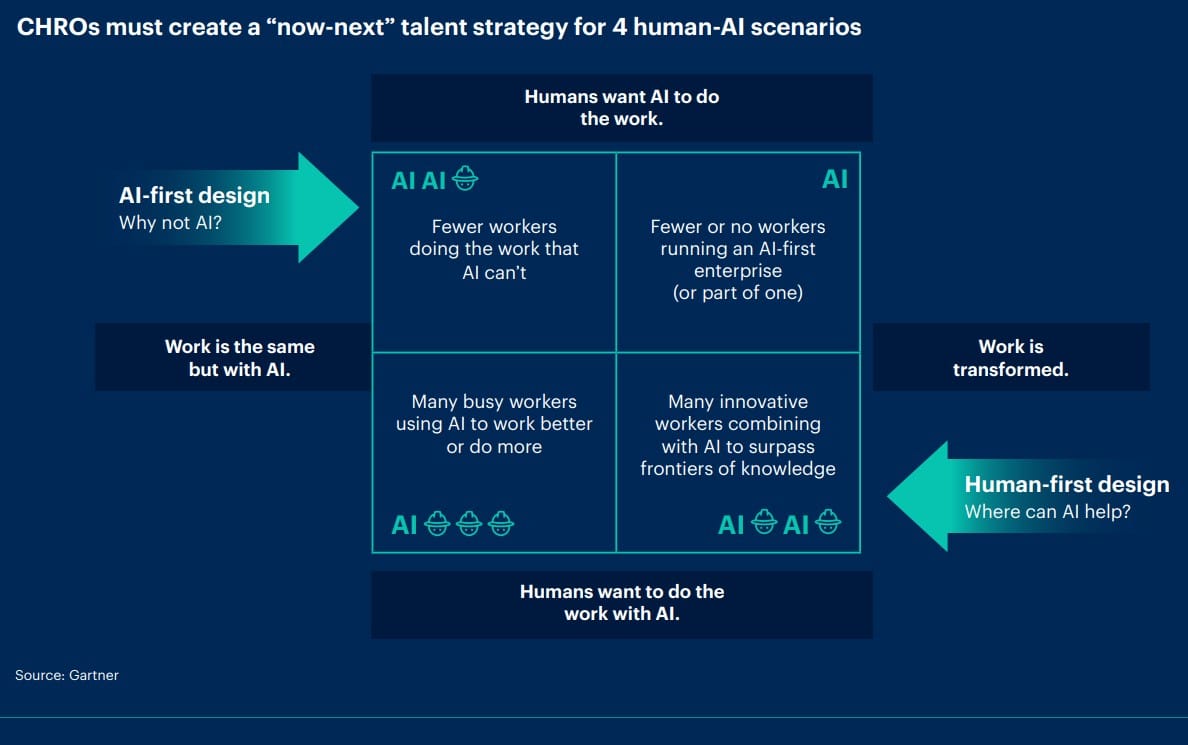
The next challenge is redefining the work itself. Gartner calls for a 'now-next' talent strategy. This calls for a dual focus on maximizing today’s workforce while preparing for the next phase of human-AI collaboration.
The report envisions four future-of-work scenarios, from fewer humans doing the work AI can’t, to entire AI-first enterprises where humans play a supporting role, which was also predicted in Microsoft's report.
Therefore, CHROs are urged to design for a blended workforce, balancing short-term performance with long-term readiness. That means building capabilities competitors can’t easily copy, managing dual KPIs for “now” and “next,” and viewing AI not as a bolt-on, but as a co-worker.
#3 Mobilize leaders for growth in uncertain times
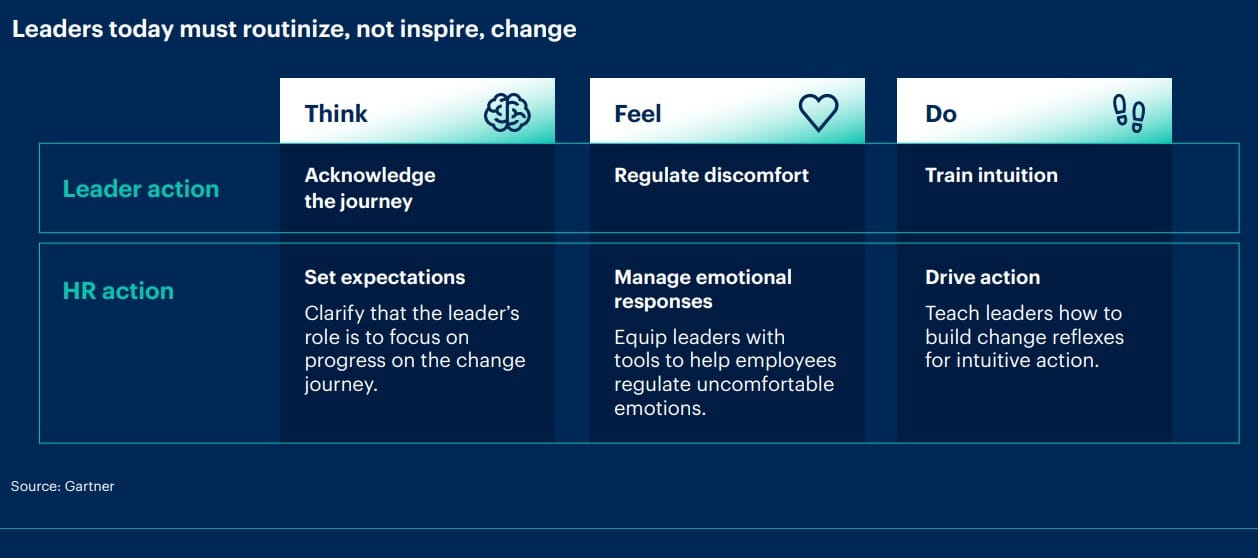
Uncertainty has become a reality today, and the report underlines a clear message to leaders: don’t just inspire change — routinize it.
What does this mean? In an age of constant disruption, organizations where change feels natural have a threefold higher chance of successful adoption. That requires rethinking leadership development, not around charisma or vision, but around emotional intelligence, intuition, and adaptability.
CHROs should reset leadership expectations, teach leaders to manage emotional discomfort, and create space for employees to build change reflexes in their day-to-day work.
The future leader won’t be the loudest in the room, but the calmest amid chaos.
#4 Address culture atrophy to power performance
As AI transforms work and uncertainty tests resilience, organizational culture risks erosion. The report calls it 'culture atrophy', which is the slow fading of shared values and behaviors.
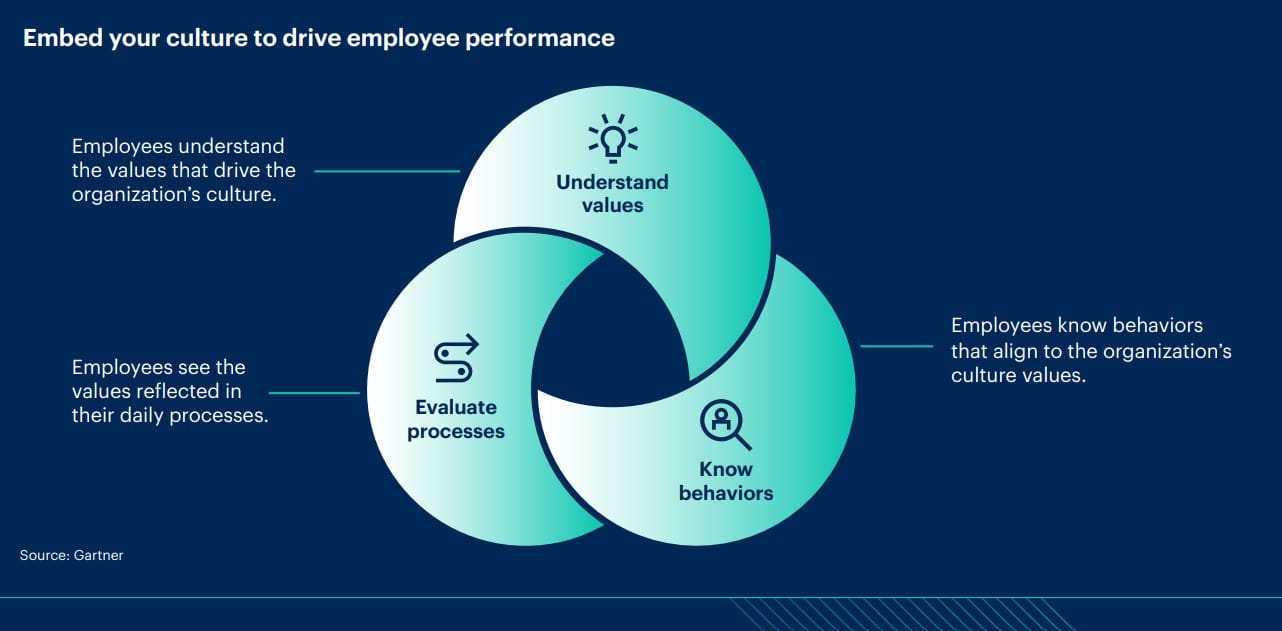
To combat this, CHROs must embed culture into everyday work. When values are clearly understood, lived, and reflected in daily processes, performance can rise by as much as 34%.
And the simple 3-tier formula is:
- Understand values
- Know behaviors
- Evaluate processes
Culture, after all, isn’t what’s written on a wall, it’s what people do when no one’s watching.
The new HR blueprint:
You may also like:
- What People Officers need to thrive in 2026
- Oman reduces work permits fee by 30% for employers meeting Omanization targets; Check new rules and exemptions here
- KSA HR Ministry begins 40% Saudization in 44 accounting professions
- UAE’s MoHRE warns jobseekers against fraud and working on visit visas
- MoHRE unveils AI-powered ‘Eye’ system to transform UAE’s work permit procedures
- Qatar amends Civil HR Law; Job-based allowances raised, Paid maternity & Postnatal leave extended to 3 months, Increments up to 150%
- Women make up 32% of Renewable Energy jobs, Only 19% in leadership roles: Report
The report suggests that CHRO of 2026 will not be a custodian of processes, but a designer of human–machine ecosystems.
They will lead strategic talent pods, drive customized HR design, and oversee digital HR delivery models where AI handles the repetitive, freeing humans to focus on purpose, innovation, and connection.
As the report notes, HR leaders must begin with one question, “Where can AI help, and where must humans still lead?”
In the end, the future won’t just test HR’s adaptability. It will test its humanity.
Because even as algorithms rise and workplaces evolve, it’s still people, guided by empathy, creativity, and leadership, who will decide how the future of work truly feels.